
Carbon Footprint India: Complete Guide to Emissions, ESG & Reduction (2026)
By United Carbon Technologies | Climate Knowledge Hub India
Join 1,500+ readers exploring climate & ESG insights
Understanding carbon footprint in India is essential for individuals, businesses, and policymakers. This guide explains emissions, calculation methods, ESG connections, and how to reduce your impact.
What is a carbon footprint?
A carbon footprint is the total greenhouse gas emissions generated directly and indirectly by an individual, organization, or activity.
Table of Contents
- Types of Emissions (Scope 1, 2, 3)
- Major Sources in India
- How to Calculate
- How to Reduce
- Business & ESG Impact
- Net Zero Connection
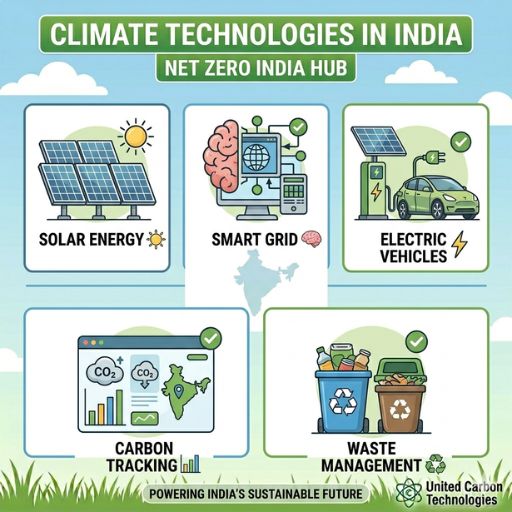
Carbon emissions are embedded in everyday activities—from electricity usage to transportation and industrial operations. Measuring and managing these emissions is the first step toward sustainability.
India-specific carbon footprint calculator by United Carbon Technologies (ACIS) to help individuals and businesses measure emissions accurately.
Types of Carbon Emissions (Scope 1, 2, 3)
- Scope 1: Direct emissions (fuel, vehicles)
- Scope 2: Electricity-related emissions
- Scope 3: Supply chain emissions
Major Sources of Carbon Footprint in India
- Electricity consumption
- Transportation
- Industrial operations
- Waste generation
- Food and lifestyle
Start optimizing your home energy usage today and see immediate reductions in your electricity bill.
Get expert support for ESG and sustainability.
How to Measure Carbon Footprint
- Identify emission sources
- Collect data
- Apply emission factors
- Calculate total emissions
How to Reduce Carbon Footprint
- Improve energy efficiency
- Use renewable energy
- Reduce waste
- Optimize transportation
Business & ESG Impact
Carbon footprint measurement is essential for ESG reporting, regulatory compliance, and investor confidence in India.
Carbon Footprint and Net Zero
Reducing emissions is the first step toward achieving net zero goals.
Related Reads (Important)
- Scope 1, 2, 3 Emissions Explained
- Electricity Impact on Carbon
- How to Measure Carbon Footprint
- Net Zero vs Carbon Neutral
Explore More (Full Topic Hub)
Browse all carbon footprint insights: Carbon Footprint Category
- Carbon footprint = total emissions
- Includes Scope 1, 2, 3
- Measurement is first step
- Essential for ESG & sustainability
Frequently Asked Questions
What is carbon footprint?
Total greenhouse gas emissions caused by an activity or entity.
How to reduce carbon footprint?
Improve efficiency, reduce energy use, adopt sustainable habits.
Why is it important in India?
Supports sustainable growth and climate goals.
Start Your Climate Learning Journey
Learn ESG, sustainability, and climate strategies.
Join early learners building climate intelligence.
Comments
Post a Comment