

Carbon Neutral vs Net Zero: Which Is Better for Businesses?
By United Carbon Technologies | Climate Knowledge Hub India
Join 1,500+ readers exploring climate & ESG insights
Carbon neutral vs net zero is one of the most searched sustainability topics today. For Indian businesses, understanding the difference is critical for ESG compliance, investor expectations, and long-term growth strategy.
What is the difference between carbon neutral and net zero?
Carbon neutral focuses on offsetting emissions, while net zero prioritizes reducing emissions first and only offsetting what cannot be eliminated.
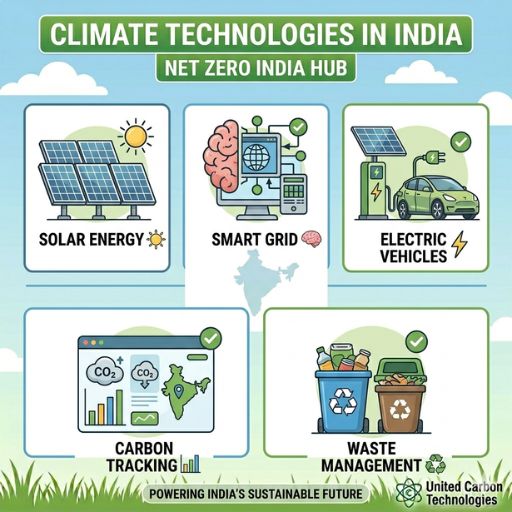
As climate regulations tighten and global pressure increases, businesses are expected to take measurable action on emissions. Terms like carbon neutral and net zero are widely used—but they are not the same.
Choosing the right approach can impact compliance readiness, cost structures, and long-term sustainability positioning.
Did you know? Net zero commitments are increasingly required by global supply chains and investors, making them more strategic than simple carbon neutrality claims.
What Is Carbon Neutral?
Carbon neutrality means balancing total emissions by purchasing carbon offsets or investing in environmental projects like afforestation or renewable energy.
- Focus on offsetting emissions
- Quick to implement
- Lower operational changes required
- Common starting point for businesses
Learn how emissions impact your business and sustainability goals.
Confused between carbon neutral and net zero strategies?
What Is Net Zero?
Net zero is a more advanced approach that focuses on reducing emissions across operations, supply chains, and energy usage before offsetting only the unavoidable emissions.
- Reduction-first strategy
- Aligned with global climate goals
- Requires operational transformation
- Long-term sustainability focus
Key Differences
- Carbon Neutral: Offset-driven approach
- Net Zero: Emission reduction-first approach
- Carbon Neutral: Short-term and flexible
- Net Zero: Long-term and structured
Which Is Better for Businesses?
Net zero is generally the preferred approach because it builds long-term resilience and aligns with global ESG expectations. However, carbon neutrality can serve as a practical entry point for businesses beginning their sustainability journey.
Carbon Strategy in India
With evolving ESG regulations, BRSR reporting, and global investor expectations, Indian businesses are gradually shifting toward net zero strategies. Companies that adopt early will have a competitive advantage in compliance and market positioning.
Built as part of ongoing climate-tech research and innovation initiatives supported by early-stage incubation and grant programs.
Related Climate Insights
Explore how carbon data improves business decisions, ESG reporting for MSMEs, and net zero strategies.
- Carbon neutral focuses on offsetting emissions
- Net zero focuses on reducing emissions first
- Net zero is more sustainable long-term
- Businesses can transition from carbon neutral to net zero
Frequently Asked Questions
Is net zero better than carbon neutral?
Yes, because it focuses on reducing emissions rather than only offsetting them.
Can MSMEs in India achieve net zero?
Yes, by gradually improving efficiency, adopting clean energy, and optimizing operations.
Why do companies start with carbon neutrality?
Because it is faster to implement and requires fewer operational changes initially.
Start Your Climate Learning Journey
Understand net zero, carbon footprint, and sustainability strategies.
Join early learners building climate intelligence.