

Earth Day 2026: Why It Matters for India and the World
Search Description: Discover why Earth Day 2026 matters for India and the world, its history, 2026 theme, climate challenges, sustainability actions, and how individuals and businesses can make a difference.
By United Carbon Technologies | Climate Knowledge Hub India
Published: April 22, 2026 | Updated: July 2026
Join thousands of readers learning about climate change, ESG, carbon markets, sustainability, and climate technology in India.
Every year on 22 April, millions of people across the globe celebrate Earth Day, one of the world's largest environmental awareness movements. Earth Day 2026 comes at a crucial moment as countries accelerate climate action, businesses strengthen ESG commitments, and individuals seek practical ways to reduce their environmental impact.
For India, Earth Day is more than a symbolic event. It reflects the country's growing role in renewable energy, sustainable development, circular economy initiatives, climate innovation, and achieving its long-term Net Zero ambitions.
Why is Earth Day important in 2026?
Earth Day 2026 is important because it encourages governments, businesses, communities, and individuals to take meaningful action against climate change, reduce carbon emissions, protect biodiversity, and build a more sustainable future. For India, it also highlights opportunities in clean energy, climate technology, ESG reporting, and green innovation.
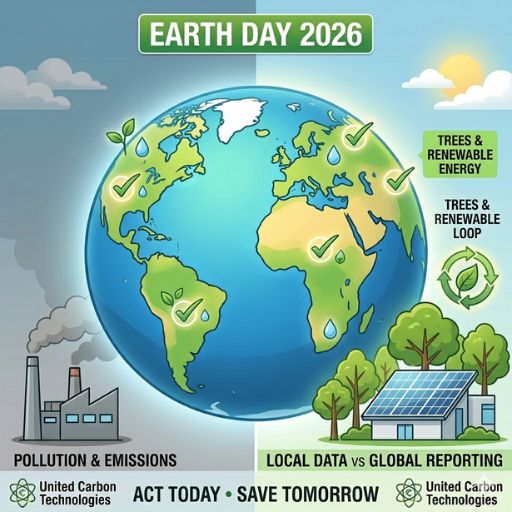
The first Earth Day was celebrated in 1970 to raise awareness about pollution and environmental degradation. More than five decades later, the movement has evolved into a global call for climate action involving over 190 countries.
In 2026, the challenges are larger than ever. Rising global temperatures, frequent heatwaves, floods, biodiversity loss, water scarcity, and increasing greenhouse gas emissions demand immediate action. Earth Day reminds us that protecting the environment is not only the responsibility of governments—it requires participation from businesses, educational institutions, communities, and every individual.
For India, where rapid economic growth must be balanced with environmental sustainability, Earth Day serves as an opportunity to promote cleaner technologies, responsible business practices, and climate awareness across society.
🌱 Learn Climate Action with UCT Academy
Understand climate science, carbon footprints, ESG reporting, Net Zero strategies, and sustainability through beginner-friendly learning resources created for India.
- Earth Day is celebrated annually on 22 April.
- More than 1 billion people participate worldwide.
- Over 190 countries organize Earth Day events.
- It is one of the largest civic environmental movements in history.
What is Earth Day?
Earth Day is an international environmental movement dedicated to raising awareness about climate change, pollution, biodiversity conservation, renewable energy, sustainable living, and environmental protection.
Since its beginning in 1970, Earth Day has inspired governments to enact environmental legislation, encouraged businesses to adopt sustainability practices, and motivated individuals to reduce their environmental impact.
Today, Earth Day focuses not only on awareness but also on measurable action—from reducing carbon emissions and plastic pollution to restoring ecosystems and accelerating the global transition toward clean energy.
Why Earth Day Matters More Than Ever in 2026
Climate change is no longer a future concern—it is affecting lives today. Across the world, communities are experiencing increasingly frequent extreme weather events, heatwaves, floods, droughts, and ecosystem disruptions.
Earth Day 2026 emphasizes that climate action must happen at every level:
- Individuals adopting sustainable lifestyles
- Businesses integrating ESG and Net Zero strategies
- Cities investing in climate resilience
- Governments accelerating clean energy policies
- Global collaboration to reduce greenhouse gas emissions
Every action, whether small or large, contributes to building a more resilient future.
🌍 Calculate Your Carbon Footprint
Understanding your emissions is the first step toward meaningful climate action. Learn how carbon footprints are measured and discover practical ways to reduce your environmental impact.
For Businesses: Earth Day Should Be Every Day
Leading organizations use Earth Day as an opportunity to launch sustainability initiatives, publish ESG commitments, improve energy efficiency, engage employees, and strengthen stakeholder trust. Climate responsibility is increasingly becoming a competitive advantage.
India's Role in Global Climate Action
India is home to nearly one-fifth of the world's population, making its climate actions globally significant. While the country's per-capita emissions remain lower than many developed economies, India's rapid industrialization and urban growth mean that sustainable development must remain a national priority.
Over the last decade, India has emerged as a global leader in renewable energy, electric mobility, green hydrogen, climate finance, and digital climate innovation. The country's climate commitments aim to balance economic growth with environmental responsibility.
Key areas where India is driving climate action include:
- Rapid expansion of solar and wind energy capacity.
- Development of the National Green Hydrogen Mission.
- Growth of electric vehicles and charging infrastructure.
- Promotion of sustainable agriculture and water conservation.
- Implementation of ESG and BRSR reporting among listed companies.
- Development of India's Carbon Credit Trading Scheme (CCTS).
These initiatives demonstrate how India is positioning itself as both a developing economy and a contributor to global climate solutions.
How Businesses Can Celebrate Earth Day Throughout the Year
Earth Day should not be viewed as a one-day event. Forward-looking businesses integrate environmental responsibility into everyday operations, making sustainability a core part of long-term strategy.
Companies can strengthen their climate impact by:
- Measuring their carbon footprint annually.
- Setting science-based emission reduction targets.
- Publishing ESG and sustainability reports.
- Improving energy efficiency across facilities.
- Reducing waste through circular economy practices.
- Encouraging employees to participate in green initiatives.
- Working with suppliers to reduce Scope 3 emissions.
- Investing in renewable energy and clean technologies.
Beyond environmental benefits, these initiatives often improve operational efficiency, enhance investor confidence, strengthen brand reputation, and prepare organizations for evolving sustainability regulations.
How Individuals Can Make Every Day Earth Day
Meaningful climate action begins with everyday choices. While governments and corporations play major roles, millions of individual actions collectively create significant environmental benefits.
Simple actions include:
- Reduce electricity consumption by using energy-efficient appliances.
- Choose public transport, cycling, or walking whenever possible.
- Reduce food waste and support locally produced food.
- Avoid single-use plastics and carry reusable alternatives.
- Plant native trees and support biodiversity conservation.
- Practice proper waste segregation and recycling.
- Conserve water at home and at work.
- Educate friends and family about climate change.
These habits not only reduce carbon emissions but also inspire wider community participation in environmental stewardship.
Earth Day in the Indian Context
India faces unique climate challenges including heatwaves, water scarcity, glacier retreat in the Himalayas, coastal vulnerability, changing rainfall patterns, and rapid urbanization. Earth Day provides an opportunity to discuss solutions that are relevant to India's social and economic landscape.
Across the country, schools, colleges, businesses, NGOs, startups, and government institutions organize activities such as:
- Tree plantation drives.
- Community clean-up campaigns.
- Climate education workshops.
- Plastic-free awareness programs.
- Renewable energy demonstrations.
- ESG and sustainability awareness events.
- Environmental innovation competitions.
These initiatives help build climate literacy while encouraging practical environmental action at the grassroots level.
Why You Can Trust United Carbon Technologies
United Carbon Technologies (UCT) develops climate knowledge resources focused on carbon intelligence, ESG reporting, sustainability education, climate technology, and India's evolving low-carbon economy. Our content is written to simplify complex environmental topics for students, professionals, startups, MSMEs, and corporate decision-makers.
Continue Your Climate Learning
- Climate Action Guides
- Climate Technology
- Carbon Footprint Explained
- Net Zero Resources
- ESG Knowledge Hub
- India Climate Articles
Quick Summary
- Earth Day is celebrated globally every year on 22 April.
- Earth Day 2026 highlights the urgent need for climate action and sustainable development.
- India plays a major role in the global transition toward renewable energy and Net Zero.
- Businesses can use Earth Day to strengthen ESG initiatives and sustainability strategies.
- Individuals can reduce their carbon footprint through simple everyday actions.
- Climate education, innovation, and collaboration are essential for a sustainable future.
Key Takeaways
- Earth Day is more than an annual celebration—it is a global call to action.
- Climate change affects everyone, making collective responsibility essential.
- India's renewable energy expansion and climate policies are shaping global sustainability efforts.
- Businesses that embrace ESG and carbon management gain long-term resilience.
- Small individual actions, when adopted by millions, create meaningful environmental impact.
- Climate literacy is the foundation of informed climate action.
Frequently Asked Questions (FAQs)
1. When is Earth Day celebrated?
Earth Day is celebrated every year on 22 April in more than 190 countries worldwide.
2. Why is Earth Day important?
Earth Day raises awareness about climate change, pollution, biodiversity loss, and environmental protection while encouraging individuals, businesses, and governments to take action.
3. What is the purpose of Earth Day 2026?
Earth Day 2026 encourages stronger climate action, faster adoption of sustainable practices, renewable energy, and greater public participation in protecting the planet.
4. How does Earth Day help India?
Earth Day promotes environmental awareness, supports climate education, encourages renewable energy adoption, and inspires sustainable development across India.
5. How can businesses participate in Earth Day?
Businesses can organize employee awareness programs, measure carbon emissions, publish ESG initiatives, reduce waste, improve energy efficiency, and launch sustainability campaigns.
6. What can students do on Earth Day?
Students can participate in tree plantation drives, environmental campaigns, recycling projects, climate education activities, and community clean-up programs.
7. How can families celebrate Earth Day?
Families can plant trees, reduce plastic use, conserve water and electricity, recycle household waste, and spend time learning about environmental protection together.
8. Does Earth Day really make a difference?
Yes. Earth Day increases awareness, influences environmental policies, encourages sustainable business practices, and inspires millions of people to adopt greener lifestyles.
9. What role does climate technology play in Earth Day?
Climate technologies such as renewable energy, electric vehicles, carbon accounting software, AI-powered monitoring, and sustainable manufacturing help reduce emissions and accelerate climate action.
10. How can I contribute beyond Earth Day?
You can reduce your carbon footprint, support sustainable businesses, conserve natural resources, promote environmental awareness, and continue making climate-conscious decisions throughout the year.
Celebrate Earth Day by Taking Climate Action Every Day
Protecting our planet is not limited to one day each year. Whether you are an individual, student, startup, MSME, or large enterprise, every decision contributes to a more sustainable future.
Start by understanding your carbon footprint, explore ESG practices, learn about climate technology, and become part of India's growing climate movement.
Learn • Measure • Reduce • Act