

How Food Choices Affect Climate Change in India: A Practical Guide to Sustainable Eating
By United Carbon Technologies Pvt. Ltd. | Climate Knowledge Hub India | Updated July 2026
Get practical climate guides, ESG insights, sustainability resources, and carbon intelligence updates designed for Indian individuals, businesses, students, and professionals.
Every meal we eat has an environmental footprint. From growing crops and raising livestock to transporting food across the country, each stage of the food system produces greenhouse gas emissions that contribute to climate change. Fortunately, our daily food choices can also become part of the solution. Choosing seasonal vegetables, reducing food waste, supporting local farmers, and consuming resources more responsibly can significantly lower an individual's carbon footprint while promoting healthier lifestyles and stronger local food systems. As India works toward its climate commitments and sustainable development goals, understanding the relationship between food and climate has become increasingly important for households, students, businesses, policymakers, and sustainability professionals alike.
How do food choices affect climate change?
Food choices affect climate change because producing, processing, transporting, storing, and disposing of food generates greenhouse gas emissions. Foods requiring intensive land, water, fertilizers, livestock production, or long-distance transportation generally have a larger carbon footprint. Choosing more plant-based meals, reducing food waste, and buying seasonal local produce can help lower emissions and support more sustainable food systems.
Introduction
When discussing climate change, people often think about factories, power plants, vehicles, or air pollution. However, one of the largest contributors to greenhouse gas emissions is something much closer to home—our food. Globally, food systems account for a substantial share of greenhouse gas emissions through farming, livestock production, fertilizer use, land-use change, food processing, refrigeration, packaging, transportation, retail operations, and food waste. Every stage consumes energy and natural resources, influencing the overall carbon footprint of what eventually reaches our plates.
India's food system is unique. It supports more than 1.4 billion people, employs millions in agriculture, and includes one of the world's richest culinary traditions. While many traditional Indian diets naturally contain a high proportion of cereals, pulses, vegetables, and legumes, rapid urbanization, changing lifestyles, processed food consumption, and increasing food waste are creating new environmental challenges.
Making climate-friendly food choices does not necessarily mean eliminating favorite foods or following restrictive diets. Instead, it involves understanding where food comes from, how it is produced, how much is wasted, and how small everyday decisions can collectively reduce environmental impact.
This guide explores how food choices influence climate change, why sustainable diets matter in India, and practical steps individuals, families, educational institutions, and businesses can take to build a more resilient and environmentally responsible food system.
🌍 Understand Your Carbon Footprint
Climate action starts with awareness. Food is only one part of your environmental impact. Understanding emissions from energy, transportation, consumption, and daily activities helps individuals and organizations make informed sustainability decisions.
United Carbon Technologies (UCT) is building India's Carbon Intelligence ecosystem through climate education, ESG solutions, carbon accounting tools, and sustainability innovation for businesses and communities.
💡 Did You Know?
- Food systems contribute significantly to global greenhouse gas emissions.
- Methane released from livestock and decomposing food waste is far more powerful than carbon dioxide over the short term.
- India loses millions of tonnes of food every year due to inefficient storage, transportation, and post-harvest losses.
- Reducing food waste is considered one of the simplest climate actions households can take.
Why Food Choices Matter for Climate Change
Every food item carries an environmental footprint before it reaches your dining table. Farmers use land, irrigation, fertilizers, machinery, electricity, and fuel to grow crops or raise livestock. The harvested food is then processed, packaged, transported, stored in warehouses, refrigerated in retail outlets, and eventually purchased by consumers. Each stage consumes energy and generates greenhouse gas emissions.
When millions of consumers make similar purchasing decisions every day, those choices influence agricultural production, market demand, resource use, and ultimately national emissions. In other words, consumers play an indirect but meaningful role in shaping the future of food systems.
Major emission sources include:
- Crop cultivation
- Livestock farming
- Methane emissions from cattle
- Fertilizer production and application
- Food processing industries
- Cold-chain refrigeration
- Packaging materials
- Transportation and logistics
- Food waste disposal in landfills
Understanding the Carbon Footprint of Different Foods
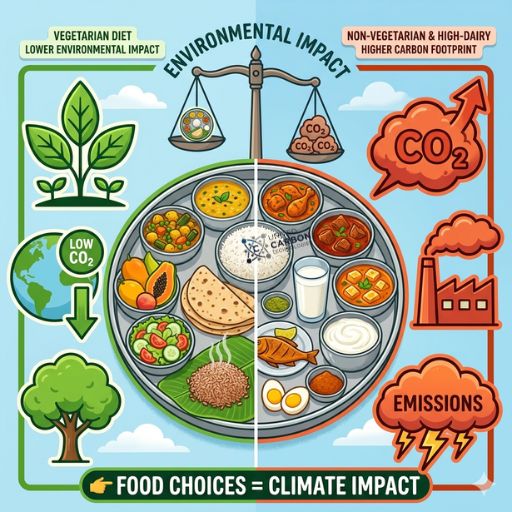
Not all foods have the same environmental impact. Some require significantly more land, water, energy, and agricultural inputs than others. Animal-based foods generally produce higher greenhouse gas emissions because livestock require feed, water, grazing land, veterinary care, and generate methane during digestion. Plant-based foods, especially locally grown seasonal crops, typically have much lower carbon footprints.
However, sustainability is influenced by multiple factors. A locally grown vegetable usually creates fewer emissions than one imported over long distances. Similarly, heavily processed packaged foods often require additional manufacturing, refrigeration, preservatives, and packaging materials, increasing their overall environmental impact.
Generally lower-carbon food choices include:
- Seasonal fruits and vegetables
- Pulses and legumes
- Millets
- Whole grains
- Locally grown produce
- Traditional Indian vegetarian meals
🌿 Want to Reduce Your Personal Carbon Footprint?
Small lifestyle changes can create meaningful environmental benefits. Choosing seasonal foods, reducing food waste, conserving energy, and understanding your emissions are practical first steps toward sustainable living.
🏢 Sustainability Starts Across the Food Value Chain
Food manufacturers, retailers, restaurants, agri-businesses, and supply chain companies are increasingly expected to measure emissions, reduce waste, improve resource efficiency, and strengthen ESG reporting.
United Carbon Technologies helps organizations build carbon intelligence capabilities through climate education, sustainability consulting, ESG readiness, carbon accounting solutions, and environmental awareness initiatives.
Why Meat and Dairy Have a Higher Climate Impact
One of the biggest contributors to food-related greenhouse gas emissions is livestock farming. Cattle, buffaloes, sheep, and goats produce methane during digestion through a natural process known as enteric fermentation. Methane is a powerful greenhouse gas that traps much more heat than carbon dioxide over a 20-year period.
Livestock farming also requires large quantities of feed crops, grazing land, freshwater, veterinary resources, transportation, and energy for processing and refrigeration. These combined activities make many animal-based foods more emission-intensive than most plant-based alternatives.
Major contributors include:
- Methane emissions from ruminant animals
- Large land requirements for grazing and feed production
- High freshwater consumption
- Feed cultivation using fertilizers
- Cold-chain transportation and refrigeration
- Energy-intensive meat processing facilities
This does not necessarily mean everyone must become vegetarian. Rather, reducing excessive meat consumption and diversifying diets with plant-based proteins can significantly lower individual carbon footprints.
The Environmental Benefits of Plant-Based Diets
Plant-based diets generally require fewer natural resources than animal-based diets. Pulses, lentils, beans, vegetables, fruits, grains, and millets often require less land and generate fewer greenhouse gas emissions while providing essential nutrients.
Traditional Indian meals already include many climate-friendly ingredients such as dal, chickpeas, rajma, millets, rice, vegetables, and locally grown fruits. Preserving these dietary habits can contribute to both environmental sustainability and public health.
Benefits include:
- Lower greenhouse gas emissions
- Reduced water consumption
- Lower land-use pressure
- Improved biodiversity protection
- Better long-term food security
- Healthier dietary patterns
Food Waste: An Overlooked Climate Challenge
Food waste is one of the most preventable sources of greenhouse gas emissions. When edible food is discarded and decomposes in landfills without oxygen, it releases methane—a greenhouse gas far more potent than carbon dioxide in the short term.
Food waste also represents wasted land, water, fertilizers, labor, fuel, electricity, and transportation. Every kilogram of wasted food carries all the emissions generated during its production and distribution.
Common causes of food waste include:
- Over-purchasing groceries
- Poor storage practices
- Restaurant plate waste
- Post-harvest losses
- Retail spoilage
- Large social event leftovers
Buying Local and Seasonal Food Makes a Difference
Local food often travels shorter distances before reaching consumers, reducing transportation emissions and supporting regional farmers. Seasonal produce generally requires fewer artificial growing conditions and less energy-intensive storage.
In India, purchasing fruits and vegetables during their natural growing seasons also improves freshness while supporting local agricultural economies.
Advantages of local food:
- Lower transport emissions
- Supports Indian farmers
- Reduced refrigeration needs
- Fresher produce
- Lower packaging requirements
- Strengthens local food systems
Climate-Smart Agriculture and India's Future
Climate-smart agriculture aims to increase food production while reducing greenhouse gas emissions and improving resilience against climate change. Indian agriculture is increasingly adopting sustainable farming practices that improve productivity while conserving natural resources.
Examples include:
- Precision irrigation
- Drip irrigation systems
- Organic farming practices
- Natural farming
- Integrated nutrient management
- Agroforestry
- Solar-powered irrigation pumps
- Improved crop management
Consumers who support sustainably produced food indirectly encourage wider adoption of environmentally responsible agricultural practices.
Simple Everyday Food Choices That Help the Climate
Sustainability begins with small everyday decisions. Individuals do not need to change everything overnight. Gradual improvements in shopping, cooking, and eating habits can collectively create significant environmental benefits.
Practical actions:
- Plan meals before shopping.
- Buy only what you need.
- Store food properly.
- Finish leftovers.
- Reduce unnecessary packaging.
- Choose reusable shopping bags.
- Eat more seasonal vegetables.
- Support local farmers' markets.
- Reduce excessive meat consumption.
- Compost biodegradable kitchen waste where possible.
Food Choices and Climate Action in India
India's diverse culinary traditions provide a strong foundation for sustainable eating. Regional diets based on cereals, pulses, vegetables, spices, fermented foods, and millets naturally have relatively lower environmental footprints compared with highly processed diets.
Government initiatives promoting millets, improved agricultural productivity, food security, and sustainable farming can further strengthen India's transition toward climate-resilient food systems.
As urban populations continue to grow, consumers, restaurants, retailers, food manufacturers, educational institutions, and policymakers all have an important role in reducing food waste and encouraging sustainable consumption patterns.
Why This Topic Matters
At United Carbon Technologies (UCT), we believe climate action extends beyond industries and governments. Individual lifestyle decisions—including food choices—play a meaningful role in reducing greenhouse gas emissions and building climate resilience.
Through our Climate Knowledge Hub, ESG initiatives, carbon intelligence tools, and sustainability education programs, we aim to help individuals and organizations make informed environmental decisions based on science and practical action.
Related Reads
- Understanding Carbon Footprints
- Sustainability Guides
- Climate Education Resources
- Net Zero Explained
- Climate Technology Insights
Quick Summary
- Food production contributes significantly to greenhouse gas emissions.
- Livestock farming produces substantial methane emissions.
- Plant-based diets generally have lower carbon footprints.
- Food waste increases unnecessary emissions.
- Buying seasonal and local food supports sustainability.
- Climate-smart agriculture strengthens resilience.
- Small daily food choices collectively create meaningful climate impact.
Frequently Asked Questions
1. How do food choices affect climate change?
Food production, transportation, processing, and waste all generate greenhouse gas emissions that contribute to climate change.
2. Which foods generally have the highest carbon footprint?
Animal-based foods such as beef and dairy generally produce higher emissions than most plant-based foods.
3. Is a vegetarian diet better for the environment?
Many vegetarian diets have lower greenhouse gas emissions because they require fewer natural resources than livestock production.
4. Why is methane important in food systems?
Methane released by livestock and decomposing food waste is a highly potent greenhouse gas.
5. Does buying local food reduce emissions?
Buying locally produced seasonal food often reduces transportation emissions and supports nearby farmers.
6. How does food waste contribute to climate change?
Discarded food releases methane in landfills while wasting all the resources used during production.
7. What is climate-smart agriculture?
Climate-smart agriculture improves productivity while reducing emissions and strengthening resilience against climate change.
8. Can individuals really make a difference?
Yes. Millions of small consumer choices collectively influence demand, agricultural practices, and environmental outcomes.
9. Are processed foods less sustainable?
Many processed foods require additional energy, packaging, and transportation, increasing their environmental footprint.
10. What are the easiest climate-friendly food habits?
Reduce food waste, eat seasonal produce, support local farmers, diversify plant-based meals, and avoid unnecessary overbuying.
Become a Climate-Smart Citizen
Every sustainable meal is a small investment in a healthier planet. By making informed food choices, reducing waste, and supporting sustainable agriculture, you contribute to a more resilient future for India and the world.
Continue your climate learning journey with United Carbon Technologies and discover practical ways to reduce your environmental footprint through science, innovation, and everyday action.