

How to Achieve a Net Zero Lifestyle in India: A Practical Guide for Everyday Living
By United Carbon Technologies | Climate Knowledge Hub India
Published: April 20, 2026 | Last Updated: July 19, 2026
Receive practical climate guides, Net Zero insights, carbon calculators, ESG updates, and sustainability resources designed for individuals and businesses across India.
Achieving a Net Zero lifestyle in India is possible through simple, consistent choices made every day. From reducing household energy consumption to choosing sustainable transport and minimizing waste, every action helps lower your carbon footprint. This guide explains practical ways individuals can contribute to India's climate goals while saving money and living more sustainably.
How can individuals achieve a Net Zero lifestyle in India?
Individuals can move toward a Net Zero lifestyle by reducing energy consumption, choosing low-carbon transportation, minimizing waste, consuming responsibly, conserving water, and offsetting unavoidable emissions. Small daily actions, when adopted consistently, can significantly reduce personal carbon emissions.
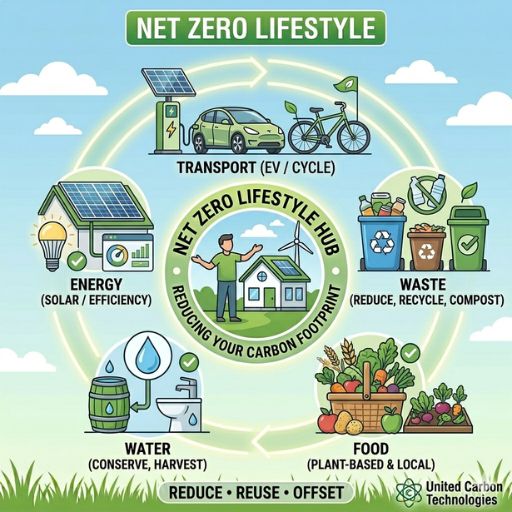
Climate change is often discussed in terms of governments and corporations, but individuals also play a vital role. Every decision—from the way we travel to the electricity we consume—creates greenhouse gas emissions that contribute to our personal carbon footprint.
Living a Net Zero lifestyle does not require perfection. Instead, it focuses on reducing emissions wherever possible and balancing unavoidable emissions through responsible environmental actions. As India advances toward its national climate commitments, millions of small individual actions can collectively create a significant positive impact.
Whether you are a student, professional, entrepreneur, or homeowner, this guide will help you understand practical steps that make sustainable living achievable without dramatically changing your lifestyle.
Start Measuring Your Carbon Footprint
Understanding your emissions is the first step toward achieving Net Zero. United Carbon Technologies is developing climate intelligence tools that help individuals and businesses measure, understand, and reduce their environmental impact.
An average person's carbon footprint comes largely from transportation, electricity consumption, food choices, shopping habits, and household waste. Improving even a few of these areas can substantially lower annual emissions.
What Does a Net Zero Lifestyle Mean?
A Net Zero lifestyle means reducing your greenhouse gas emissions as much as possible and balancing any unavoidable emissions through verified climate-positive actions. Rather than eliminating all emissions overnight, the goal is continuous improvement and responsible living.
A Net Zero lifestyle includes:
- Reducing unnecessary energy consumption.
- Choosing sustainable transportation.
- Avoiding wasteful consumption.
- Supporting renewable energy whenever possible.
- Making environmentally conscious purchasing decisions.
- Offsetting emissions that cannot yet be avoided.
Know Your Biggest Sources of Personal Emissions
Before reducing emissions, it is important to understand where they come from. For most households in India, emissions generally originate from five major categories.
- Electricity usage and cooling appliances.
- Private vehicle travel and air travel.
- Food production and food waste.
- Shopping for clothing, electronics, and household products.
- Waste generation and disposal.
Tracking these categories helps identify the areas where simple improvements can produce the greatest environmental benefits.
To better understand these concepts, explore our guides on Carbon Footprint, Net Zero, Sustainable Living, and Climate Action.
Understanding your current emissions is the easiest way to identify practical improvements that save money while reducing environmental impact.
United Carbon Technologies Climate Intelligence
Climate action begins with awareness. United Carbon Technologies is building practical carbon intelligence solutions, educational resources, and ESG tools that help individuals, educational institutions, MSMEs, startups, and enterprises understand and reduce emissions.
- Personal Carbon Awareness Resources
- Carbon Footprint Measurement
- Climate Education Programs
- ESG & Sustainability Learning
- Carbon Intelligence Tools
- Net Zero Knowledge Hub
Your Action. Our Planet. Together We Build a Sustainable Future.
10 Practical Ways to Achieve a Net Zero Lifestyle
Achieving Net Zero does not require expensive technology or drastic lifestyle changes. The biggest impact comes from adopting small, consistent habits that reduce emissions every day.
1. Reduce Electricity Consumption
Electricity generation remains a major source of greenhouse gas emissions. Using less electricity immediately reduces your indirect carbon footprint while lowering household expenses.
- Replace conventional bulbs with LED lighting.
- Turn off appliances when not in use.
- Purchase energy-efficient appliances with higher star ratings.
- Use natural lighting and ventilation whenever possible.
2. Choose Sustainable Transportation
Transportation is one of the largest contributors to personal emissions. Even small changes in commuting habits can significantly reduce annual carbon emissions.
- Walk or cycle for short distances.
- Use metro, buses, and public transport.
- Carpool whenever possible.
- Consider electric vehicles for future purchases.
- Combine multiple errands into one trip.
3. Reduce Food Waste
Producing food requires land, water, energy, and transportation. Wasting food means wasting all the resources used to produce it.
- Buy only what you need.
- Store food properly.
- Use leftovers creatively.
- Compost kitchen waste where possible.
4. Shop More Responsibly
Every product carries a hidden carbon footprint from manufacturing, transportation, packaging, and disposal.
- Purchase durable products.
- Repair instead of replacing items.
- Support local manufacturers.
- Choose products with minimal packaging.
- Avoid unnecessary purchases.
5. Conserve Water
Treating and distributing water consumes energy. Conserving water indirectly reduces greenhouse gas emissions.
- Fix leaking taps.
- Install water-efficient fixtures.
- Harvest rainwater where feasible.
- Reuse greywater for gardening.
You don't need to change everything overnight. Begin with one habit this week and gradually build a sustainable routine that benefits both your family and the environment.
Support Renewable Energy
India is rapidly expanding renewable energy through solar, wind, and other clean technologies. Individuals can contribute by adopting renewable energy wherever possible.
- Install rooftop solar if feasible.
- Choose green electricity options where available.
- Support businesses using renewable energy.
- Purchase energy-efficient electronic devices.
Practice the 5Rs of Sustainable Living
The 5Rs provide a practical framework for reducing environmental impact.
- Refuse unnecessary products.
- Reduce overall consumption.
- Reuse products whenever possible.
- Repair instead of replacing.
- Recycle materials responsibly.
Can You Really Reach Net Zero?
For most individuals, achieving absolute zero emissions is difficult because some emissions remain unavoidable. The practical goal is to minimize emissions first and then offset the remaining footprint through verified climate-positive projects.
Net Zero is therefore a journey of continuous improvement rather than a single destination. Every improvement contributes to cleaner air, lower resource consumption, and a more sustainable future.
Learn how United Carbon Technologies helps organizations with carbon accounting, ESG reporting, climate intelligence, and sustainability strategy.
Quick Summary
- A Net Zero lifestyle focuses on reducing emissions before offsetting unavoidable ones.
- Transportation, electricity, food, shopping, and waste are the largest contributors to personal carbon footprints.
- Simple daily habits such as using public transport, saving electricity, and reducing food waste can significantly lower emissions.
- Renewable energy and energy-efficient appliances help reduce household emissions.
- Measuring your carbon footprint is the first step toward achieving Net Zero.
- Every individual action contributes to India's broader climate and sustainability goals.
Key Takeaways
- Net Zero begins with reducing emissions—not buying offsets.
- Daily lifestyle choices collectively have a major environmental impact.
- Energy efficiency offers one of the quickest ways to lower emissions.
- Sustainable transport significantly reduces your carbon footprint.
- Reducing waste supports both climate action and resource conservation.
- Individuals play an essential role alongside businesses and governments.
- Tracking your emissions helps identify improvement opportunities.
Frequently Asked Questions
1. What is a Net Zero lifestyle?
A Net Zero lifestyle aims to reduce personal greenhouse gas emissions as much as possible and balance any unavoidable emissions through verified carbon removal or offset projects.
2. Can individuals really achieve Net Zero?
Yes. While eliminating every emission is difficult, individuals can dramatically reduce their footprint through sustainable choices and responsibly offset remaining emissions.
3. What is the first step toward Net Zero?
Measure your carbon footprint to understand where your emissions come from.
4. Which activities produce the most household emissions?
Transportation, electricity consumption, cooling, food choices, shopping, and waste disposal are among the biggest contributors.
5. How can I reduce electricity emissions?
Use LED lighting, efficient appliances, rooftop solar where feasible, and switch off unused electrical devices.
6. Does public transport reduce carbon emissions?
Yes. Public transportation, cycling, walking, and carpooling lower emissions per passenger compared to private vehicles.
7. Can food choices reduce my carbon footprint?
Yes. Eating seasonal food, reducing food waste, and consuming more plant-based meals can significantly lower emissions.
8. Are carbon offsets necessary?
Offsets should only be considered after reducing emissions as much as possible through lifestyle changes.
9. Why is Net Zero important for India?
India faces increasing climate risks including heatwaves, changing rainfall, and water stress. Individual action supports national climate goals.
10. How can I calculate my carbon footprint?
Carbon footprint calculators estimate emissions from your lifestyle and help identify areas where you can reduce your environmental impact.
Ready to Start Your Net Zero Journey?
Climate action begins with awareness and small daily improvements. Learn how to measure your carbon footprint, understand emissions, and build practical sustainability habits with United Carbon Technologies.
Free climate learning resources • Practical sustainability guides • India-focused content