
How MSMEs in India Can Reduce Carbon Emissions Using ESG Practices
By United Carbon Technologies | Climate Knowledge Hub India
MSMEs in India play a critical role in economic growth, but they also contribute to carbon emissions through energy use, manufacturing, and supply chains. Adopting ESG practices can help MSMEs reduce their carbon footprint while improving efficiency and sustainability.
How can MSMEs reduce carbon emissions in India?
MSMEs can reduce carbon emissions by adopting ESG practices such as improving energy efficiency, switching to renewable energy, reducing waste, and using carbon tracking tools to monitor and manage emissions.
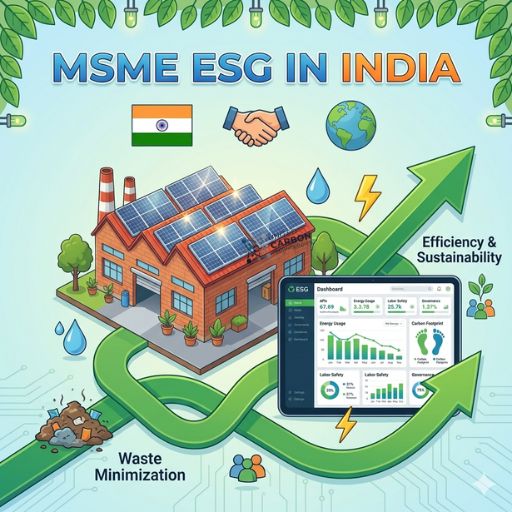
Micro, Small, and Medium Enterprises (MSMEs) form the backbone of India’s economy. With millions of enterprises operating across sectors, their collective environmental impact is significant.
As India moves toward sustainability and Net Zero goals, MSMEs have a unique opportunity to reduce emissions while improving business performance through ESG (Environmental, Social, Governance) practices.
Did you know? MSMEs contribute significantly to India’s industrial output, making their role in reducing carbon emissions critical for achieving national climate goals.
Why MSMEs Matter in Climate Action
Although individual MSMEs may have smaller emissions compared to large corporations, their collective impact is substantial.
- Large number of enterprises across India
- High energy consumption in manufacturing
- Growing role in supply chains
- Opportunity to adopt sustainable practices early
Key Sources of Carbon Emissions in MSMEs
Understanding emission sources helps MSMEs take targeted actions.
- Electricity consumption in operations
- Fuel usage in machinery and transport
- Waste generation and disposal
- Supply chain and logistics emissions
Start with simple tools and learn how to track emissions effectively.
How ESG Practices Help MSMEs Reduce Emissions
ESG provides a structured approach for businesses to improve sustainability and reduce environmental impact.
- Track and measure carbon emissions
- Improve energy efficiency
- Adopt renewable energy solutions
- Reduce waste and optimize resources
- Improve supply chain sustainability
Role of ESG Dashboards and Carbon Tools
Digital tools such as ESG dashboards help MSMEs monitor and manage emissions effectively.
- Real-time emission tracking
- Automated reporting for compliance
- Better decision-making with data insights
- Alignment with BRSR and ESG frameworks
MSMEs and Sustainability in India
India is increasingly focusing on sustainable business practices through policies and incentives. MSMEs adopting ESG practices can gain competitive advantages, improve compliance, and attract investors.
Understanding ESG for MSMEs in India helps businesses reduce emissions, improve efficiency, and align with future sustainability regulations.
- MSMEs have a significant combined carbon impact
- ESG practices help reduce emissions
- Energy efficiency and tracking are key
- Digital tools simplify ESG reporting
Learn more about climate technology, Net Zero, and carbon footprint.
Frequently Asked Questions
Why are MSMEs important for climate action?
MSMEs collectively contribute to a large portion of emissions due to their scale and widespread operations.
What is ESG for MSMEs?
ESG refers to environmental, social, and governance practices that help businesses operate sustainably and responsibly.
How can MSMEs start reducing emissions?
They can begin by measuring emissions, improving efficiency, reducing waste, and using ESG tools.
Start Your Climate Learning Journey
Learn how to measure emissions and implement ESG practices in your business.
Join early learners building climate awareness across India.
Comments
Post a Comment