

Sustainable Living Tips for Urban India: A Practical Guide to Eco-Friendly City Life
By United Carbon Technologies Pvt. Ltd. | Climate Knowledge Hub India | Updated July 2026
Explore practical climate solutions, sustainability guides, carbon footprint calculators, climate education resources, and everyday actions that help individuals, families, students, and professionals build a greener future.
Urban India is growing at an unprecedented pace. Expanding cities, increasing energy demand, traffic congestion, air pollution, waste generation, and water scarcity are placing enormous pressure on natural resources. While governments and industries play a vital role in addressing these challenges, individual lifestyle choices also have a meaningful impact on building sustainable cities.
Sustainable living does not require dramatic lifestyle changes or expensive investments. Simple everyday decisions—such as reducing electricity consumption, choosing public transport, conserving water, minimizing waste, and making thoughtful purchasing decisions—can collectively reduce carbon emissions while improving health, saving money, and supporting a cleaner environment.
Whether you live in Mumbai, Delhi, Bengaluru, Ahmedabad, Chennai, Hyderabad, Pune, Kolkata, or any other Indian city, adopting sustainable habits can help create healthier communities while contributing to India's climate goals.
How can people practice sustainable living in urban India?
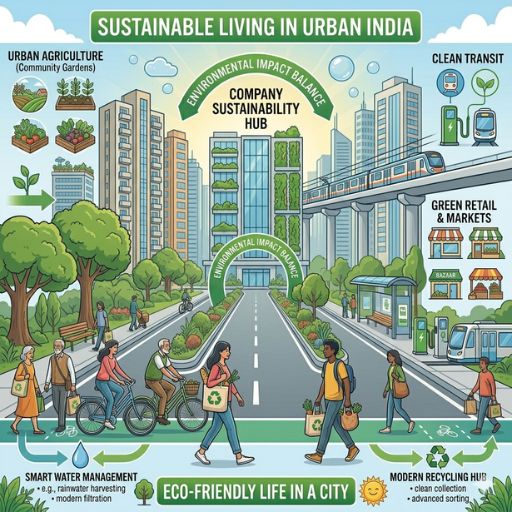
People can practice sustainable living by conserving electricity and water, reducing waste, choosing public transportation, supporting local products, minimizing single-use plastics, eating sustainably, recycling, composting organic waste, and making environmentally responsible choices in everyday life.
Introduction
Cities are engines of economic growth, innovation, education, and employment. However, they also account for a significant share of global energy consumption, greenhouse gas emissions, and resource use. As India's urban population continues to expand, sustainable living has become an essential part of creating resilient and climate-friendly communities.
Many people assume that sustainability requires expensive technologies or major lifestyle sacrifices. In reality, small daily actions can produce meaningful long-term benefits. Switching off unnecessary lights, carrying reusable bags, reducing food waste, choosing public transportation, and conserving water are simple habits that collectively reduce environmental impact.
Sustainable living also benefits individuals by lowering household expenses, improving health, reducing pollution, and creating cleaner neighborhoods. These actions support not only climate change mitigation but also a higher quality of life for current and future generations.
This guide explores practical sustainable living strategies specifically suited to urban India and explains how anyone can begin making environmentally responsible choices without disrupting their daily routine.
🌍 Every Sustainable Habit Starts with Awareness
Understanding your daily environmental impact is the first step toward sustainable living. From electricity use and transportation choices to food consumption and waste generation, every decision influences your personal carbon footprint.
United Carbon Technologies (UCT) promotes climate literacy through Carbon Intelligence, sustainability education, climate awareness programs, and practical tools that empower individuals and businesses to make informed environmental decisions.
💡 Did You Know?
- Urban areas consume a large share of the world's electricity and natural resources.
- Household energy use, transportation, food choices, and waste generation all contribute to an individual's carbon footprint.
- Simple efficiency improvements can reduce household utility bills while lowering greenhouse gas emissions.
- Millions of small sustainable actions across Indian cities can collectively create a significant environmental impact.
What Is Sustainable Living?
Sustainable living is a lifestyle that seeks to reduce the negative impact of daily activities on the environment while supporting social well-being and responsible use of natural resources. It encourages individuals to consume only what they need, minimize waste, conserve energy and water, and make choices that help protect ecosystems for future generations.
Rather than focusing on perfection, sustainable living emphasizes continuous improvement. Small changes made consistently over time often have a greater long-term impact than occasional large efforts.
Key principles of sustainable living include:
- Reducing energy consumption
- Conserving water resources
- Minimizing waste generation
- Choosing reusable products
- Supporting local businesses
- Reducing plastic pollution
- Protecting biodiversity
- Making climate-conscious purchasing decisions
- Using resources responsibly
- Lowering personal carbon emissions
Why Sustainable Living Matters in Urban India
Indian cities are experiencing rapid urbanization, bringing both opportunities and environmental challenges. Increased vehicle ownership, construction activity, electricity demand, waste generation, and water consumption place growing pressure on urban infrastructure and natural ecosystems.
By adopting sustainable habits, city residents can help reduce pollution, improve resource efficiency, and support healthier neighborhoods. Sustainable living also strengthens resilience against climate-related challenges such as heatwaves, water shortages, flooding, and declining air quality.
Every household, apartment complex, school, office, and community has the potential to contribute toward building cleaner, greener, and more livable cities.
Benefits of sustainable living include:
- Lower carbon emissions
- Reduced electricity and water bills
- Cleaner air and healthier communities
- Less household waste
- Conservation of natural resources
- Reduced dependence on single-use plastics
- Support for India's sustainability goals
- Improved quality of urban life
🌿 Start Measuring Your Lifestyle Impact
Every sustainable decision begins with understanding your environmental footprint. Learn how your everyday activities influence carbon emissions and discover practical ways to reduce your impact on the planet.
♻️ Build Climate Awareness with United Carbon Technologies
United Carbon Technologies is committed to making climate knowledge accessible for everyone. Through Carbon Intelligence, sustainability education, practical climate resources, and innovative digital solutions, UCT empowers individuals, students, professionals, and organizations to make informed environmental decisions.
Whether you're beginning your sustainability journey or helping your organization reduce emissions, every informed action contributes to a cleaner and more resilient future.
Understanding Your Everyday Carbon Footprint
Many people associate climate change with factories, power plants, or large industries, but our everyday lifestyle choices also contribute to greenhouse gas emissions. The electricity we consume, the transportation we use, the food we eat, the products we purchase, and even the waste we generate all form part of our personal carbon footprint.
While a single person's emissions may appear small, millions of people making similar choices every day create a substantial environmental impact. The encouraging news is that small improvements, when adopted consistently across households and communities, can collectively reduce emissions significantly.
Major contributors to an urban household's carbon footprint include:
- Electricity consumption
- Private vehicle usage
- Air conditioning and cooling
- Food choices and food waste
- Online shopping and packaging waste
- Single-use plastics
- Water consumption
- Electronic waste
Build a More Sustainable Home
Creating a sustainable home doesn't require expensive renovations. Most households can reduce their environmental impact through simple, low-cost improvements that also lower monthly utility bills.
Practical ideas include:
- Replace incandescent bulbs with LED lighting.
- Switch off appliances when not in use.
- Purchase energy-efficient appliances.
- Use natural daylight whenever possible.
- Improve ventilation before relying on air conditioners.
- Repair leaking taps and pipes immediately.
- Use reusable cleaning products and containers.
- Reduce unnecessary consumption.
Sustainability is not about buying more eco-friendly products—it is about consuming less and using existing resources more efficiently.
Reduce Electricity Consumption
Electricity generation remains one of the largest sources of greenhouse gas emissions in many countries. Conserving electricity not only lowers carbon emissions but also reduces household expenses.
Simple energy-saving habits:
- Turn off lights when leaving a room.
- Unplug chargers after use.
- Use ceiling fans before switching on air conditioners.
- Maintain AC temperatures around 24–26°C.
- Choose five-star rated appliances whenever possible.
- Use washing machines with full loads.
- Air dry clothes instead of using dryers.
- Install rooftop solar panels where feasible.
Conserve Water Every Day
Water scarcity is becoming an increasing concern across many Indian cities. Sustainable water management helps protect freshwater resources while reducing the energy required for pumping and treatment.
Easy water conservation practices:
- Fix leaking taps immediately.
- Install water-efficient fixtures.
- Take shorter showers.
- Collect rainwater where practical.
- Reuse greywater for gardening.
- Avoid unnecessary water wastage while washing vehicles.
- Water plants during early morning or evening.
Choose Sustainable Food Habits
Food choices influence climate change through farming practices, transportation, processing, refrigeration, and food waste. Sustainable eating focuses on reducing unnecessary emissions while maintaining a healthy diet.
Climate-friendly food habits include:
- Eat seasonal fruits and vegetables.
- Support local farmers.
- Reduce food waste.
- Store food properly.
- Plan meals before shopping.
- Choose balanced plant-rich diets.
- Avoid excessive packaged foods.
Traditional Indian diets already include many sustainable ingredients such as pulses, millets, vegetables, and locally grown produce that generally have a lower environmental impact.
Reduce Plastic Waste
Plastic pollution has become one of the most visible environmental challenges in urban India. Single-use plastics often end up in rivers, landfills, and oceans, affecting wildlife and ecosystems.
Easy plastic reduction tips:
- Carry reusable shopping bags.
- Use refillable water bottles.
- Avoid disposable cutlery.
- Purchase products with minimal packaging.
- Choose reusable lunch boxes.
- Support refill stores whenever available.
- Reuse containers before recycling them.
Small Daily Habits Create Big Climate Impact
Every unit of electricity saved, every litre of water conserved, and every kilogram of waste avoided contributes toward a more sustainable future. Climate action begins at home.
Segregate Waste Properly
Waste segregation is one of the simplest yet most effective environmental practices. Separating biodegradable, recyclable, and hazardous waste improves recycling efficiency while reducing landfill pollution.
Basic household segregation:
- Wet waste
- Dry recyclable waste
- E-waste
- Hazardous waste such as batteries and paints
- Sanitary waste
Compost Organic Waste at Home
Kitchen waste such as fruit peels, vegetable scraps, tea leaves, and garden waste can be composted instead of being sent to landfills. Composting produces nutrient-rich organic fertilizer while reducing methane emissions from decomposing waste.
Many apartment communities in India have successfully adopted community composting systems that convert daily organic waste into valuable compost for gardens.
Choose Sustainable Transportation
Transportation is one of the largest contributors to urban air pollution and greenhouse gas emissions. Choosing cleaner modes of transport can substantially reduce an individual's carbon footprint.
Better transportation choices include:
- Metro rail systems
- Public buses
- Carpooling
- Cycling
- Walking short distances
- Electric vehicles where suitable
- Combining multiple errands into one trip
Practice Responsible Shopping
Sustainable living also involves purchasing only what is necessary. Every manufactured product requires energy, raw materials, transportation, and packaging before reaching consumers.
Smart shopping habits:
- Buy durable products.
- Repair instead of replacing.
- Support local businesses.
- Choose environmentally responsible brands.
- Avoid impulse purchases.
- Reduce fast fashion consumption.
- Borrow or rent rarely used items.
Create Green Spaces at Home
Even small apartments can support biodiversity through balcony gardens, terrace gardens, or indoor plants. Urban gardening improves air quality, supports pollinators, reduces heat, and creates healthier living environments.
Easy options include:
- Kitchen herb gardens
- Terrace vegetable gardens
- Native flowering plants
- Indoor air-purifying plants
- Rainwater-supported gardening
Digital Sustainability Matters Too
Modern lifestyles rely heavily on digital devices, cloud storage, streaming services, and electronic equipment. While digital technologies improve convenience, they also consume electricity through devices and data centres.
Simple actions such as extending device life, recycling electronics responsibly, deleting unnecessary files, and purchasing energy-efficient electronics contribute to digital sustainability.
India's Journey Towards Sustainable Cities
Across India, governments, businesses, educational institutions, and communities are investing in sustainable urban development. Metro rail networks, electric buses, renewable energy, smart waste management, green buildings, and urban afforestation projects are gradually transforming cities into cleaner and more resilient places.
Citizen participation remains one of the most important drivers of urban sustainability. Every household that adopts sustainable practices contributes to broader environmental progress.
Sustainable Living in the Indian Context
India has long embraced resource-efficient lifestyles through practices such as repairing household items, using reusable containers, conserving water, and consuming seasonal foods. Modern sustainability builds upon many of these traditional values while integrating new technologies such as renewable energy, electric mobility, energy-efficient buildings, and circular economy practices.
As India advances toward its climate commitments and sustainable development goals, informed citizens will play an increasingly important role in shaping resilient, low-carbon cities.
Why Trust United Carbon Technologies?
United Carbon Technologies (UCT) develops Carbon Intelligence solutions, climate education initiatives, sustainability resources, and ESG knowledge for individuals and businesses. Our Climate Knowledge Hub simplifies complex environmental topics into practical guidance that empowers informed climate action across India.
Related Climate Guides
- How Food Choices Affect Climate Change in India
- What Is Renewable Energy and Why It Matters
- Understanding Your Carbon Footprint
- Rainwater Harvesting Explained
- What Is a Circular Economy?
- How Plastic Pollution Contributes to Climate Change
- Climate Change and Everyday Life
- Renewable Energy Certificates Explained
Quick Summary
- Sustainable living begins with small everyday habits.
- Energy conservation reduces both emissions and household expenses.
- Water conservation supports climate resilience.
- Waste segregation and composting reduce landfill emissions.
- Public transport and walking lower transportation emissions.
- Responsible shopping reduces resource consumption.
- Traditional Indian lifestyles already include many sustainable practices.
- Collective citizen action can transform India's cities.
Frequently Asked Questions
1. What is sustainable living?
Sustainable living means making everyday choices that reduce environmental impact while conserving natural resources for future generations.
2. Why is sustainable living important in cities?
Urban areas consume large amounts of energy and resources, making sustainable lifestyles essential for reducing pollution and emissions.
3. Can one person's actions really make a difference?
Yes. When millions of individuals adopt sustainable habits, the combined environmental benefits become substantial.
4. What is the easiest sustainable habit to adopt?
Switching off unused lights and appliances, reducing waste, and carrying reusable bags are simple starting points.
5. How does public transport help the environment?
Public transportation reduces fuel consumption, traffic congestion, and greenhouse gas emissions per passenger.
6. Why is waste segregation important?
It improves recycling efficiency and reduces landfill pollution.
7. Does composting reduce emissions?
Yes. Composting organic waste helps reduce methane emissions generated in landfills.
8. How can families reduce plastic waste?
By choosing reusable products, avoiding single-use plastics, and buying products with minimal packaging.
9. What role does renewable energy play in sustainable living?
Renewable energy helps reduce dependence on fossil fuels and lowers greenhouse gas emissions.
10. How can I calculate my lifestyle carbon footprint?
You can use a carbon footprint calculator to estimate emissions from transportation, electricity, food, and daily activities.
Explore the Future of Climate Intelligence
Learn ESG, sustainability, carbon intelligence, and climate-tech concepts shaping the future of business and environmental strategy..
Join readers building climate intelligence knowledge for a sustainable future.