

What Is Net Zero? (Simple Explanation)
By United Carbon Technologies | Climate Knowledge Hub India
Join 1,500+ readers exploring climate & ESG insights
Net Zero has become one of the most important concepts in climate change and sustainability. Governments, businesses, investors, and organizations around the world are setting Net Zero targets to reduce greenhouse gas emissions and slow global warming. This guide explains Net Zero in simple language, how it works, why it matters, and how India is working toward its Net Zero goal.
What is Net Zero?
Net Zero means balancing the amount of greenhouse gases released into the atmosphere with the amount removed or offset. The goal is to reduce emissions as much as possible and neutralize any remaining emissions through natural or technological solutions.
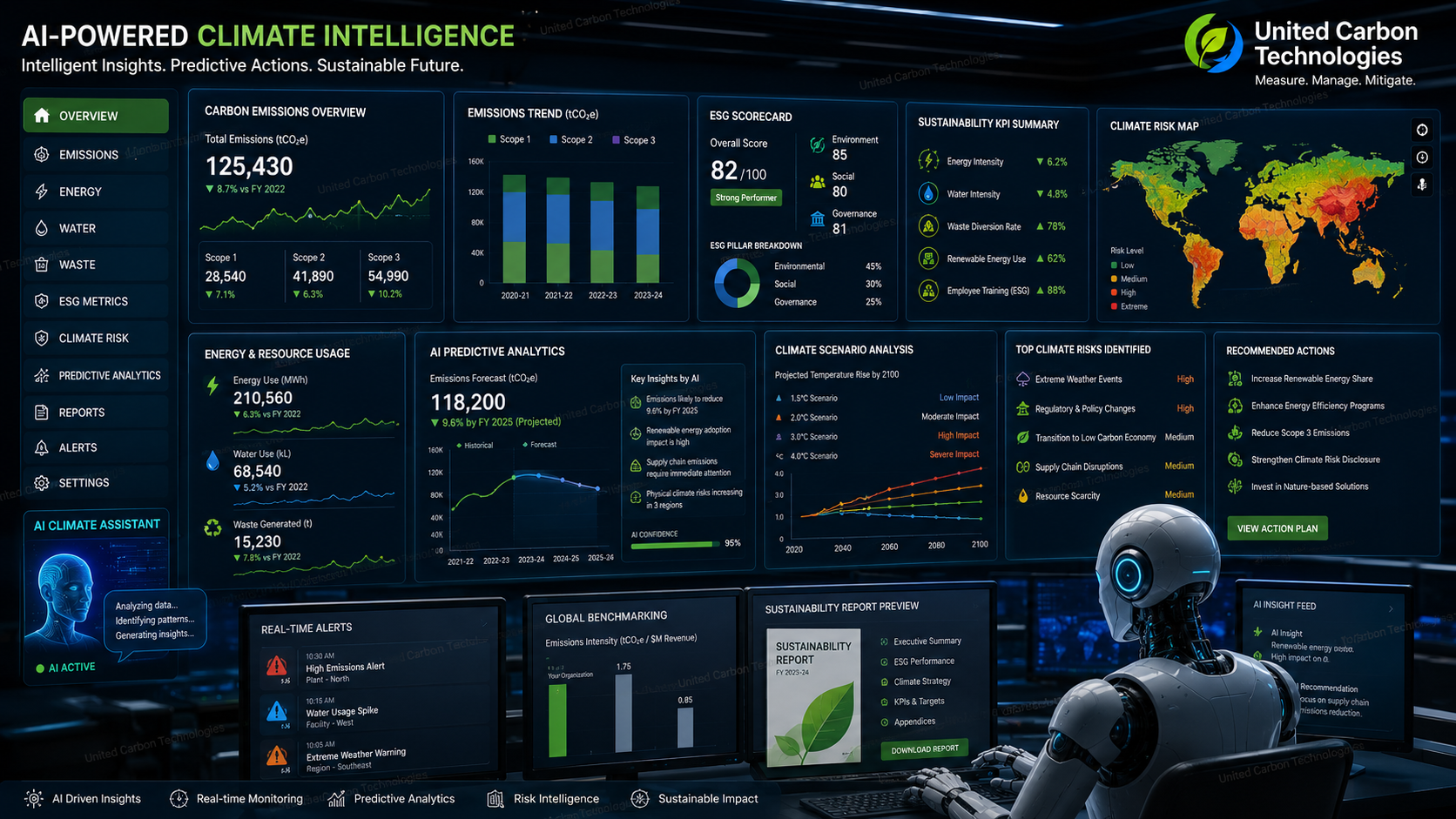
Climate change is primarily caused by the accumulation of greenhouse gases such as carbon dioxide (CO₂), methane (CH₄), and nitrous oxide (N₂O) in the atmosphere. As countries continue to develop and industries expand, reducing emissions has become essential for limiting global temperature rise.
Rather than eliminating every source of emissions immediately, the Net Zero approach focuses on significantly reducing emissions first and balancing any remaining emissions through activities that remove greenhouse gases from the atmosphere.
More than 140 countries have announced or are considering Net Zero targets, covering a large share of the world's greenhouse gas emissions and economic activity.
Understanding Net Zero
Net Zero does not mean producing zero emissions. Instead, it means reducing emissions as much as possible and balancing the remaining emissions with activities that remove carbon from the atmosphere, such as forests, soil restoration, carbon capture technologies, or verified carbon removal projects.
Greenhouse Gas Emissions − Greenhouse Gas Removals = Net Zero
How Net Zero Works
Organizations and countries generally follow four major steps.
- Measure greenhouse gas emissions.
- Reduce emissions wherever possible.
- Improve energy efficiency and adopt renewable energy.
- Balance unavoidable emissions through verified removal methods.
Reducing emissions should always come before using carbon removal or offset strategies. The primary goal of Net Zero is to minimize emissions across operations, products, and supply chains.
Preparing for a low-carbon economy starts with understanding your greenhouse gas emissions. Measuring emissions and improving energy efficiency can help organizations strengthen sustainability strategies and ESG reporting.
Net Zero vs Carbon Neutral vs Climate Neutral
Although these terms are often used interchangeably, they have different meanings. Understanding the differences helps businesses, students, and citizens better interpret sustainability commitments.
| Term | Meaning |
|---|---|
| Net Zero | Reduce greenhouse gas emissions as much as possible and balance remaining emissions through carbon removals. |
| Carbon Neutral | Balance carbon dioxide emissions, often by purchasing verified carbon offsets. |
| Climate Neutral | Address the overall climate impact of activities, including greenhouse gases and other environmental effects. |
Why Is Net Zero Important?
Greenhouse gases trap heat in the Earth's atmosphere, contributing to global warming and climate change. Achieving Net Zero helps slow the accumulation of these gases and supports international efforts to limit global temperature rise.
- Helps reduce the impacts of climate change.
- Supports cleaner air and healthier communities.
- Encourages renewable energy and innovation.
- Improves long-term energy security.
- Supports sustainable economic growth.
- Helps businesses prepare for future climate regulations.
How Countries Achieve Net Zero
Achieving Net Zero requires coordinated action across governments, industries, and society. Countries typically combine policy measures, technological innovation, and public participation to reduce greenhouse gas emissions over time.
| Action | Purpose |
|---|---|
| Renewable Energy | Reduce dependence on fossil fuels. |
| Energy Efficiency | Lower energy consumption across sectors. |
| Cleaner Transportation | Reduce emissions from vehicles and logistics. |
| Forest Conservation | Increase natural carbon absorption. |
| Climate Innovation | Develop technologies that reduce or remove emissions. |
How Businesses Achieve Net Zero
Businesses play a vital role in achieving Net Zero by measuring greenhouse gas emissions, improving operational efficiency, adopting renewable energy, and integrating sustainability into long-term business strategies.
- Measure Scope 1, Scope 2, and Scope 3 emissions.
- Improve energy efficiency across operations.
- Switch to renewable electricity where feasible.
- Reduce waste and improve resource efficiency.
- Strengthen sustainable supply chain management.
- Use verified carbon removals only for unavoidable emissions.
India's Net Zero Target
India has announced its commitment to achieve Net Zero greenhouse gas emissions by 2070. Alongside this long-term goal, the country is expanding renewable energy capacity, improving energy efficiency, encouraging cleaner transportation, and promoting sustainable industrial development to support economic growth while reducing emissions.
- ☀ Expand renewable energy generation.
- ⚡ Improve energy efficiency.
- 🚗 Encourage cleaner transportation.
- 🏭 Promote sustainable industrial growth.
- 🌳 Increase carbon sinks through forests and ecosystems.
Challenges in Achieving Net Zero
Transitioning to a Net Zero economy is a long-term process that requires investment, innovation, supportive policies, and collaboration across governments, businesses, and communities.
- Growing global energy demand.
- Dependence on fossil fuels in many sectors.
- Need for affordable clean technologies.
- Infrastructure development.
- Financing sustainable projects.
- Balancing economic growth with environmental goals.
Common Misconceptions About Net Zero
| Myth | Reality |
|---|---|
| Net Zero means zero emissions. | Net Zero allows limited unavoidable emissions that are balanced through carbon removals. |
| Only governments are responsible. | Governments, businesses, and individuals all contribute to Net Zero. |
| Carbon offsets alone achieve Net Zero. | Reducing emissions remains the primary objective before using removals or offsets. |
Achieving Net Zero is not about eliminating every greenhouse gas emission overnight. It is a long-term journey of reducing emissions wherever possible while balancing unavoidable emissions through credible carbon removal solutions. Governments, businesses, and citizens all have a role in building a low-carbon future.
Coming Soon from United Carbon Technologies
United Carbon Technologies is developing the Automated Carbon Intelligence System (ACIS), an India-focused carbon accounting platform designed to help organizations estimate, monitor, and manage greenhouse gas emissions. Follow our Climate Knowledge Hub for updates on climate intelligence, ESG reporting, and sustainability solutions.
India's Transition to a Low-Carbon Future
India's commitment to achieving Net Zero by 2070 reflects its long-term vision of balancing economic development with environmental sustainability. Through renewable energy expansion, energy-efficient technologies, sustainable infrastructure, cleaner transportation, and responsible resource management, India is steadily advancing toward a more climate-resilient future. Businesses, educational institutions, policymakers, and citizens all have important roles to play in supporting this transition.
Related Climate Insights
- What Is Climate Change?
- What Is a Carbon Footprint?
- India's Climate Goals Explained
- What Is ESG?
- Carbon Accounting Explained
Key Takeaways
- Net Zero means balancing greenhouse gas emissions with carbon removals.
- Reducing emissions is the first priority before using carbon removal methods.
- Governments, businesses, and individuals all contribute to achieving Net Zero.
- Renewable energy and energy efficiency are key drivers of the transition.
- India has committed to achieving Net Zero greenhouse gas emissions by 2070.
- Understanding Net Zero helps support informed climate action and sustainable development.
Frequently Asked Questions
1. What is Net Zero?
Net Zero means balancing greenhouse gas emissions released into the atmosphere with an equal amount removed or absorbed through natural or technological methods.
2. Does Net Zero mean zero emissions?
No. Net Zero allows some unavoidable emissions, provided they are balanced by verified carbon removal or sequestration activities after significant emission reductions have been achieved.
3. Why is Net Zero important?
Net Zero helps reduce greenhouse gas concentrations in the atmosphere, supporting efforts to limit global warming and reduce the impacts of climate change.
4. What is the difference between Net Zero and Carbon Neutral?
Net Zero prioritizes reducing greenhouse gas emissions before balancing any remaining emissions. Carbon Neutral generally focuses on offsetting carbon dioxide emissions and may not require the same level of emission reduction.
5. How do businesses achieve Net Zero?
Businesses work toward Net Zero by measuring emissions, improving energy efficiency, adopting renewable energy, reducing waste, optimizing supply chains, and addressing unavoidable emissions through credible carbon removal methods.
6. What role does renewable energy play in Net Zero?
Renewable energy reduces dependence on fossil fuels and helps lower greenhouse gas emissions from electricity generation, transportation, and industrial activities.
7. What is India's Net Zero target?
India has announced its commitment to achieve Net Zero greenhouse gas emissions by 2070 while continuing to support sustainable economic growth and development.
8. Can individuals contribute to Net Zero?
Yes. Individuals can support Net Zero by conserving energy, reducing waste, choosing sustainable transportation, adopting responsible consumption habits, and increasing climate awareness.
9. What industries are most affected by Net Zero?
Energy, manufacturing, transportation, construction, agriculture, and heavy industries are among the sectors most involved in the transition toward Net Zero due to their greenhouse gas emissions.
10. Why is Net Zero important for businesses?
Net Zero helps businesses improve operational efficiency, prepare for evolving climate regulations, strengthen ESG performance, manage climate-related risks, and meet growing stakeholder expectations.
Build Your Climate Intelligence
Explore practical guides on climate change, ESG, carbon accounting, Net Zero, and sustainability designed for students, professionals, and businesses.
Join thousands of readers learning about climate and ESG every month.