

What Is Renewable Energy? Types, Benefits, Challenges & India's Clean Energy Future
By United Carbon Technologies Pvt. Ltd. | Climate Knowledge Hub India | Updated July 2026
Stay updated with practical climate guides, carbon intelligence insights, ESG resources, renewable energy developments, and sustainability knowledge designed for Indian businesses, students, professionals, and climate-conscious citizens.
Renewable energy is transforming how the world generates electricity, powers industries, and combats climate change. Unlike fossil fuels, renewable energy comes from naturally replenishing sources such as sunlight, wind, flowing water, biomass, and geothermal heat, making it a cleaner and more sustainable alternative for long-term development.
As countries work toward reducing greenhouse gas emissions and achieving Net Zero targets, renewable energy has become one of the most important pillars of the global clean energy transition. It not only reduces dependence on coal, oil, and natural gas but also improves air quality, strengthens energy security, creates employment opportunities, and supports sustainable economic growth.
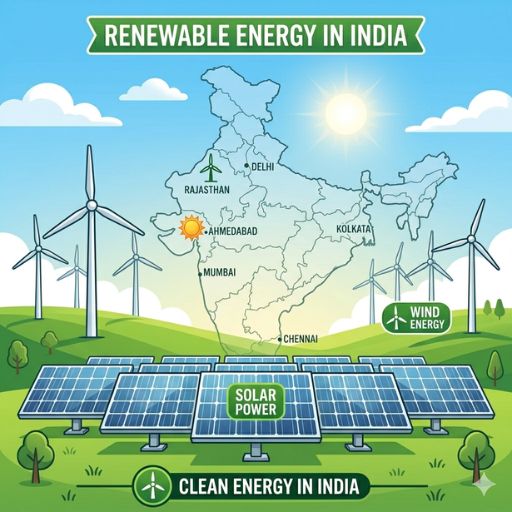
India is emerging as one of the world's fastest-growing renewable energy markets. Massive investments in solar parks, wind farms, rooftop solar systems, battery storage, and green hydrogen are accelerating the country's transition toward a low-carbon economy while meeting the rising energy demands of more than 1.4 billion people.
What is renewable energy and why is it important?
Renewable energy is energy generated from naturally replenishing resources such as sunlight, wind, water, biomass, and geothermal heat. It is important because it reduces greenhouse gas emissions, decreases dependence on fossil fuels, improves air quality, enhances energy security, and supports sustainable economic development while helping countries address climate change.
Introduction
Energy powers nearly every aspect of modern life—from lighting homes and running factories to charging electric vehicles and supporting digital infrastructure. However, for more than a century, the global economy has relied heavily on fossil fuels such as coal, oil, and natural gas. While these energy sources have driven industrial growth, they have also become one of the largest contributors to greenhouse gas emissions and climate change.
Renewable energy offers a cleaner and more sustainable alternative. Unlike fossil fuels, renewable resources are naturally replenished and can be used continuously without being depleted on a human timescale. Solar panels convert sunlight into electricity, wind turbines capture energy from moving air, hydropower generates electricity from flowing water, and biomass transforms organic materials into usable energy.
The transition to renewable energy is no longer just an environmental priority—it has become an economic, technological, and strategic necessity. Governments, businesses, and households around the world are investing in renewable energy to improve energy security, reduce fuel imports, lower operating costs, and meet ambitious climate commitments.
India is playing a significant role in this global transformation. With abundant sunshine, favorable wind corridors, expanding renewable energy infrastructure, and strong policy support, the country is rapidly increasing its clean energy capacity. These efforts are helping reduce carbon emissions while supporting sustainable industrial growth and improving access to affordable electricity.
This guide explains what renewable energy is, explores the different types of renewable energy technologies, discusses their environmental and economic benefits, examines India's clean energy transition, and highlights why renewable energy is essential for achieving a more sustainable future.
🌍 Renewable Energy Is a Key Part of Carbon Intelligence
Reducing emissions starts with understanding where energy comes from. Renewable energy helps lower carbon footprints, supports ESG goals, and accelerates the transition toward Net Zero. Measuring energy-related emissions is one of the first steps in developing an effective climate strategy.
United Carbon Technologies (UCT) is building India's Carbon Intelligence ecosystem through climate education, ESG solutions, carbon accounting tools, sustainability consulting, and environmental innovation that empowers businesses and communities to make informed climate decisions.
💡 Did You Know?
- Solar energy is now one of the world's fastest-growing sources of electricity generation.
- Renewable energy technologies continue to become more affordable due to advances in innovation and manufacturing.
- India is among the global leaders in renewable energy capacity expansion, particularly in solar and wind power.
- Switching to renewable electricity helps reduce greenhouse gas emissions while improving long-term energy security.
What Is Renewable Energy?
Renewable energy refers to energy generated from natural resources that are continuously replenished through natural processes. Unlike fossil fuels, which take millions of years to form and exist in limited quantities, renewable resources are available repeatedly and can provide long-term sustainable energy when managed responsibly.
The primary renewable energy sources include sunlight, wind, flowing water, biomass, geothermal heat, and ocean energy. Modern technologies convert these natural resources into electricity, heating, cooling, and transportation fuels that power homes, businesses, industries, and public infrastructure.
Although renewable energy systems require initial investments in infrastructure and technology, they generally have lower operating emissions than conventional fossil fuel-based power generation. This makes renewable energy one of the most effective tools for reducing carbon emissions while supporting sustainable development.
Main characteristics of renewable energy:
- Derived from naturally replenishing resources
- Produces significantly lower greenhouse gas emissions
- Reduces dependence on fossil fuels
- Supports long-term energy security
- Encourages sustainable economic growth
- Can power homes, industries, transportation, and businesses
Major Types of Renewable Energy
Renewable energy includes several technologies, each using different natural resources to generate power. Together, these energy sources form the foundation of the global clean energy transition.
☀️ Solar Energy
Solar energy captures sunlight using photovoltaic (PV) panels or concentrated solar power systems. It is widely used for residential rooftops, commercial buildings, industries, and large-scale solar parks.
🌬️ Wind Energy
Wind turbines convert the kinetic energy of moving air into electricity. Wind farms are commonly located in coastal regions, open plains, and areas with strong and consistent wind patterns.
💧 Hydropower
Hydropower generates electricity by utilizing the movement of flowing or falling water through turbines. It remains one of the world's largest renewable electricity sources.
🌱 Biomass Energy
Biomass energy converts agricultural residues, forestry waste, animal waste, and other organic materials into electricity, heat, or biofuels.
🌍 Geothermal Energy
Geothermal systems utilize heat stored beneath the Earth's surface to generate electricity or provide direct heating.
🌊 Ocean Energy
Emerging technologies harness tidal movements, ocean waves, and temperature differences in seawater to generate renewable electricity.
⚡ Ready to Reduce Your Carbon Footprint?
Understanding your energy consumption is the first step toward lowering emissions. Whether you're an individual, student, or business, switching to cleaner energy sources can significantly contribute to climate action and long-term sustainability.
🏢 Renewable Energy Powers Sustainable Businesses
Businesses worldwide are integrating renewable energy into their operations to reduce carbon emissions, improve ESG performance, manage energy costs, and strengthen long-term resilience. Renewable electricity is becoming an essential component of corporate sustainability and Net Zero strategies.
United Carbon Technologies supports organizations through climate education, carbon accounting, ESG readiness, sustainability consulting, and Carbon Intelligence solutions that help businesses navigate the clean energy transition with confidence.
How Renewable Energy Works
Renewable energy technologies capture naturally occurring energy and convert it into usable electricity or heat. Unlike conventional power plants that burn fossil fuels, renewable systems generate energy with little or no direct greenhouse gas emissions during operation.
Each renewable technology works differently. Solar panels convert sunlight directly into electricity using photovoltaic cells. Wind turbines transform the kinetic energy of moving air into electrical power. Hydropower plants use flowing water to rotate turbines, while biomass facilities convert organic materials into heat, electricity, or biofuels. Geothermal systems harness heat from beneath the Earth's surface, and emerging ocean technologies generate electricity from tides and waves.
Advances in battery storage, smart grids, artificial intelligence, and digital energy management are making renewable energy systems more reliable, efficient, and accessible than ever before.
Renewable Energy vs. Non-Renewable Energy
Understanding the difference between renewable and non-renewable energy is essential for appreciating why the global energy transition is accelerating.
| Renewable Energy | Non-Renewable Energy |
|---|---|
| Naturally replenished | Finite resources |
| Low operating emissions | High greenhouse gas emissions |
| Sustainable over the long term | Resources eventually deplete |
| Examples: Solar, Wind, Hydro | Coal, Oil, Natural Gas |
| Supports climate goals | Major contributor to climate change |
Environmental Benefits of Renewable Energy
Renewable energy plays a critical role in reducing the environmental impacts associated with conventional energy production. Replacing fossil fuels with renewable electricity lowers greenhouse gas emissions while helping protect ecosystems and public health.
Key environmental benefits include:
- Reduced carbon dioxide emissions
- Lower methane emissions from fossil fuel extraction
- Cleaner air and reduced air pollution
- Improved public health outcomes
- Lower water consumption for electricity generation
- Reduced dependence on finite natural resources
- Supports biodiversity conservation through sustainable energy planning
- Helps countries achieve climate commitments and Net Zero targets
Economic Benefits of Renewable Energy
Renewable energy is not only an environmental solution but also a significant driver of economic development. Investments in clean energy stimulate innovation, create employment opportunities, strengthen domestic manufacturing, and improve long-term energy affordability.
Economic advantages include:
- Job creation across manufacturing, installation, and maintenance
- Reduced dependence on imported fossil fuels
- Stable long-term electricity costs
- Growth of green industries and climate technologies
- Improved energy security
- Attraction of domestic and international investments
- Support for sustainable industrial development
Renewable Energy in India
India has emerged as one of the world's fastest-growing renewable energy markets. Rapid urbanization, rising electricity demand, and national climate commitments have accelerated investments in clean energy infrastructure across the country.
Large solar parks, wind energy projects, rooftop solar systems, floating solar installations, battery storage projects, and renewable energy transmission networks are expanding India's clean energy capacity while supporting economic development.
Major renewable energy sectors in India include:
- Utility-scale solar parks
- Rooftop solar installations
- Onshore wind farms
- Small and large hydropower projects
- Biomass power plants
- Waste-to-energy facilities
- Green hydrogen initiatives
Government Initiatives Driving India's Clean Energy Transition
India has introduced several policies and national missions to accelerate renewable energy adoption while improving energy access and reducing carbon emissions.
- National Solar Mission
- PM Surya Ghar rooftop solar initiative
- National Green Hydrogen Mission
- Renewable Purchase Obligations (RPOs)
- Production Linked Incentive (PLI) schemes
- Solar Parks Programme
- Biofuel and ethanol blending initiatives
- Grid modernization and transmission expansion
Together, these initiatives support India's ambition of becoming a global leader in clean energy while strengthening energy independence.
Challenges Facing Renewable Energy
Although renewable energy offers enormous benefits, several challenges must be addressed to ensure reliable and widespread adoption.
Key challenges include:
- High upfront installation costs
- Intermittent solar and wind generation
- Need for large-scale battery storage
- Grid integration challenges
- Land acquisition for utility-scale projects
- Transmission infrastructure expansion
- Recycling of renewable energy equipment
- Skilled workforce development
Continuous technological innovation and supportive policies are helping overcome these barriers, making renewable energy increasingly competitive with conventional power generation.
Renewable Energy and ESG for Businesses
Businesses across industries are integrating renewable electricity into their operations to reduce Scope 2 emissions, improve ESG performance, strengthen investor confidence, and meet evolving sustainability reporting requirements.
Renewable energy adoption helps organizations:
- Lower operational carbon emissions
- Improve BRSR and ESG reporting
- Meet corporate sustainability goals
- Reduce long-term electricity costs
- Enhance brand reputation
- Strengthen supply chain resilience
- Support Net Zero commitments
The Future of Renewable Energy
The future of renewable energy extends beyond solar panels and wind turbines. Emerging innovations such as artificial intelligence, battery storage, smart grids, hydrogen technologies, carbon capture integration, and decentralized energy systems are transforming the global energy landscape.
As renewable technologies become more affordable and efficient, clean electricity is expected to power transportation, manufacturing, buildings, agriculture, and digital infrastructure, supporting a more resilient low-carbon economy.
India's Renewable Energy Journey
India's clean energy transition represents one of the world's largest sustainable development opportunities. With abundant solar radiation, favorable wind resources, expanding renewable infrastructure, and supportive government policies, the country is well positioned to become a global clean energy leader.
For Indian households, businesses, educational institutions, startups, and industries, renewable energy is no longer simply an environmental choice—it is becoming an economic and strategic advantage.
Why United Carbon Technologies Covers Renewable Energy
Renewable energy is one of the most effective pathways for reducing greenhouse gas emissions and building climate resilience. At United Carbon Technologies (UCT), we believe understanding clean energy is essential for individuals, businesses, and policymakers working toward sustainability and Net Zero.
Through our Climate Knowledge Hub, Carbon Intelligence initiatives, ESG solutions, sustainability education, and climate innovation programs, we help organizations understand how renewable energy fits into broader carbon management and environmental strategies.
Related Reads
- What Is a Carbon Footprint?
- Net Zero Explained
- Climate Technology Guide
- Understanding ESG
- Sustainability Resources
Quick Summary
- Renewable energy comes from naturally replenishing resources.
- Major renewable sources include solar, wind, hydropower, biomass, geothermal, and ocean energy.
- Renewable energy reduces greenhouse gas emissions and improves air quality.
- India is rapidly expanding its clean energy infrastructure.
- Renewable energy supports economic growth, ESG goals, and Net Zero ambitions.
- Advances in battery storage and smart grids are accelerating adoption.
- Businesses increasingly use renewable electricity to reduce operational emissions.
Frequently Asked Questions
1. What is renewable energy?
Renewable energy is energy generated from naturally replenishing resources such as sunlight, wind, water, biomass, and geothermal heat.
2. What are the main types of renewable energy?
The primary types include solar, wind, hydropower, biomass, geothermal, and ocean energy.
3. Why is renewable energy important?
It helps reduce greenhouse gas emissions, improves air quality, enhances energy security, and supports sustainable development.
4. Is renewable energy better than fossil fuels?
Renewable energy generally produces significantly lower operating emissions and relies on naturally replenishing resources.
5. Which renewable energy source is growing fastest?
Solar energy is among the fastest-growing renewable electricity technologies worldwide.
6. Why is renewable energy important for India?
It helps meet rising electricity demand, reduce fossil fuel dependence, strengthen energy security, and support India's climate commitments.
7. Can businesses benefit from renewable energy?
Yes. Renewable electricity can reduce emissions, improve ESG performance, lower long-term energy costs, and support sustainability reporting.
8. What challenges does renewable energy face?
Challenges include intermittency, energy storage, grid integration, infrastructure development, and upfront investment costs.
9. What is the role of battery storage?
Battery storage helps store excess renewable electricity for use when sunlight or wind availability decreases.
10. How does renewable energy support Net Zero?
By replacing fossil fuel-based electricity with cleaner energy sources, renewable energy significantly reduces greenhouse gas emissions and supports long-term decarbonization.
Power the Future with Clean Energy
Renewable energy is reshaping the future of electricity, business, and climate action. Whether you're an individual exploring sustainable living or an organization pursuing ESG and Net Zero goals, understanding clean energy is the first step toward a more resilient future.
Continue learning with United Carbon Technologies and discover practical insights into carbon intelligence, climate technology, renewable energy, ESG reporting, and sustainability solutions for India.