

Why ESG Matters for Startups and MSMEs in India: A Complete Guide to Sustainable Business Growth
By United Carbon Technologies Pvt. Ltd. | Climate Knowledge Hub India | Updated July 2026
Stay updated with practical ESG insights, climate intelligence resources, carbon accounting guides, sustainability strategies, and business-ready climate solutions designed specifically for Indian startups, MSMEs, sustainability professionals, and corporate leaders.
Environmental, Social, and Governance (ESG) has evolved from a corporate reporting concept into a strategic business framework that influences investment decisions, customer trust, regulatory preparedness, and long-term competitiveness. While ESG was once associated mainly with large listed companies, it is now becoming increasingly relevant for startups and Micro, Small, and Medium Enterprises (MSMEs) across India.
Today, investors, financial institutions, multinational corporations, procurement teams, and customers expect businesses of all sizes to demonstrate responsible environmental practices, ethical governance, and positive social impact. Companies that integrate ESG into their operations are often better positioned to manage risks, improve operational efficiency, access sustainable finance, and build resilient businesses.
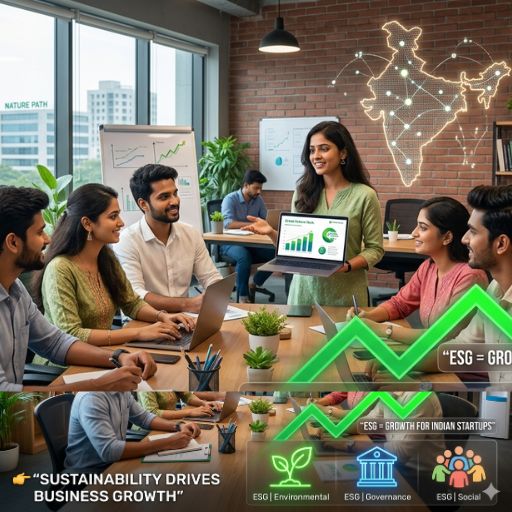
For India's growing startup ecosystem and more than 63 million MSMEs, ESG represents an opportunity—not just to meet evolving expectations but to unlock innovation, strengthen market credibility, and prepare for the future of sustainable business.
Why is ESG important for startups and MSMEs in India?
ESG is important for startups and MSMEs because it improves business resilience, strengthens investor confidence, supports regulatory readiness, reduces operational risks, enhances brand reputation, and helps businesses prepare for emerging sustainability requirements such as carbon reporting, responsible supply chains, and ESG disclosures.
Introduction
India's startup ecosystem is one of the fastest-growing in the world, while MSMEs contribute significantly to employment, manufacturing, exports, and economic development. As businesses expand into domestic and international markets, sustainability is becoming an increasingly important factor influencing investment, procurement, customer preferences, and regulatory compliance.
Large corporations are strengthening their ESG commitments and setting ambitious climate goals. As a result, suppliers, vendors, logistics providers, manufacturers, technology partners, and service providers—including startups and MSMEs—are increasingly expected to demonstrate responsible business practices throughout the value chain.
Fortunately, ESG is not simply about compliance. It is a practical business strategy that helps organizations improve operational efficiency, reduce unnecessary costs, manage environmental and social risks, strengthen governance, and build trust with customers, employees, investors, and financial institutions.
Early adoption of ESG also prepares businesses for future reporting requirements, emerging sustainability regulations, and growing expectations surrounding climate disclosures, carbon accounting, and responsible sourcing.
This guide explains why ESG matters for Indian startups and MSMEs, explores its business benefits, discusses common implementation challenges, and provides practical insights into building a future-ready, sustainable business.
🌍 ESG Starts with Better Business Intelligence
Strong ESG performance begins with understanding your environmental impact, governance practices, and sustainability data. Measuring carbon emissions, monitoring resource consumption, and tracking ESG indicators help businesses make informed decisions while preparing for future reporting and investor expectations.
United Carbon Technologies (UCT) is building India's Carbon Intelligence ecosystem through ESG solutions, carbon accounting tools, climate education, sustainability consulting, and digital platforms that help organizations confidently begin their ESG journey.
💡 Did You Know?
- Large companies increasingly request ESG information from suppliers and vendors before awarding contracts.
- Many investors now evaluate sustainability performance alongside financial performance when assessing investment opportunities.
- Good governance practices often reduce operational risks and improve long-term business resilience.
- Businesses that begin measuring sustainability data early are generally better prepared for future ESG reporting requirements.
What Is ESG?
ESG stands for Environmental, Social, and Governance—a framework used to evaluate how responsibly a business manages its environmental impact, relationships with people, and governance practices. Rather than focusing solely on financial performance, ESG considers how companies create long-term value while managing sustainability-related risks and opportunities.
For startups and MSMEs, ESG provides a structured approach to building responsible businesses from the beginning. Companies that integrate ESG into their operations often strengthen customer trust, improve operational efficiency, reduce environmental impacts, and become more attractive to investors and business partners.
The three pillars of ESG include:
🌿 Environmental
- Carbon emissions
- Energy consumption
- Water management
- Waste reduction
- Renewable energy adoption
- Climate risk management
🤝 Social
- Employee well-being
- Health and safety
- Diversity and inclusion
- Customer satisfaction
- Community engagement
- Human rights
🏛 Governance
- Business ethics
- Board oversight
- Transparency
- Risk management
- Regulatory compliance
- Data security and accountability
Why ESG Matters More Than Ever
The business landscape is changing rapidly. Sustainability expectations are no longer driven only by governments or environmental organizations. Investors, banks, multinational corporations, procurement teams, customers, and even employees increasingly expect businesses to demonstrate responsible environmental and social performance.
For startups and MSMEs, this shift presents a significant opportunity. Companies that adopt ESG early can establish stronger governance systems, improve operational resilience, differentiate themselves from competitors, and build long-term relationships with investors and customers.
Rather than viewing ESG as an additional cost, forward-looking businesses increasingly recognize it as an investment in future competitiveness and sustainable growth.
Key drivers behind ESG adoption include:
- Growing investor expectations
- Increasing customer awareness
- Supply chain sustainability requirements
- Climate-related business risks
- Emerging ESG regulations
- BRSR and sustainability reporting trends
- International market access
- Corporate procurement standards
- Responsible financing opportunities
- Long-term business resilience
📊 Ready to Begin Your ESG Journey?
Understanding your carbon footprint, resource consumption, governance practices, and sustainability metrics is the first step toward building a resilient and future-ready business.
🏢 Build ESG Readiness with United Carbon Technologies
Whether you're an early-stage startup, a growing MSME, or an established enterprise, ESG readiness can strengthen investor confidence, improve operational efficiency, and prepare your organization for evolving sustainability expectations.
United Carbon Technologies supports businesses through Carbon Intelligence solutions, ESG readiness assessments, carbon accounting, BRSR support, sustainability consulting, climate education, and digital ESG platforms designed for Indian organizations.
Benefits of ESG for Indian Startups
Startups often focus on innovation, customer acquisition, fundraising, and rapid scaling. However, today's investors increasingly evaluate whether a startup is building a resilient, responsible, and future-ready business. ESG helps startups establish strong foundations from the beginning instead of making expensive changes later.
Integrating ESG early demonstrates that founders understand long-term business risks and opportunities. It also improves operational discipline and builds confidence among investors, employees, customers, and strategic partners.
Key benefits for startups include:
- Greater investor confidence during fundraising
- Stronger brand reputation
- Better operational efficiency
- Reduced environmental and regulatory risks
- Improved employee engagement and retention
- Competitive differentiation in crowded markets
- Improved customer trust
- Preparation for future compliance requirements
- Better governance and decision-making
- Enhanced long-term business valuation
Why ESG Matters for MSMEs
Micro, Small, and Medium Enterprises (MSMEs) account for a significant share of India's manufacturing output, exports, employment, and economic growth. As large corporations strengthen ESG commitments, MSMEs are becoming increasingly important contributors to sustainable supply chains.
Many MSMEs mistakenly believe ESG applies only to listed companies. In reality, suppliers, manufacturers, exporters, logistics providers, and service companies are increasingly expected to demonstrate responsible environmental and governance practices when working with larger organizations.
ESG helps MSMEs:
- Reduce energy and operating costs
- Improve waste management
- Strengthen workplace safety
- Increase supply chain competitiveness
- Improve access to financing
- Build stronger customer relationships
- Prepare for future sustainability reporting
- Support long-term business continuity
How ESG Attracts Investors
Investment decisions today increasingly extend beyond financial performance. Venture capital firms, institutional investors, impact funds, private equity firms, and banks are paying greater attention to how companies manage sustainability-related risks.
Although investment decisions vary by sector and stage, businesses with stronger governance, transparent operations, and sustainability strategies are often viewed as better prepared for long-term growth.
Investors commonly evaluate:
- Corporate governance practices
- Environmental risk management
- Climate-related risks
- Business ethics
- Regulatory compliance
- Employee policies
- Supply chain transparency
- Long-term sustainability strategy
ESG and Access to Finance
Banks and financial institutions increasingly recognize sustainability as an important component of business resilience. While traditional financial indicators remain essential, organizations that actively manage environmental and governance risks may improve their credibility with lenders and investors.
Strong ESG practices can support:
- Better financial transparency
- Lower operational risks
- Improved investor confidence
- Eligibility for sustainability-linked financing
- Access to green finance opportunities
- Enhanced long-term financial planning
Measure Before You Improve
Every successful ESG journey starts with understanding your current environmental impact. Measuring your carbon footprint and tracking sustainability data enables better decisions and more effective ESG planning.
ESG and BRSR: Understanding the Connection
India's Business Responsibility and Sustainability Reporting (BRSR) framework primarily applies to certain listed companies. However, its influence extends beyond those organizations because many large businesses increasingly seek sustainability information from suppliers and business partners.
As ESG reporting becomes more common, startups and MSMEs that already maintain sustainability data are likely to find it easier to respond to customer requirements, procurement questionnaires, and future reporting expectations.
Preparing early helps businesses:
- Respond to customer ESG questionnaires
- Support procurement requirements
- Maintain sustainability records
- Improve reporting readiness
- Strengthen stakeholder confidence
Carbon Footprint: The Foundation of ESG
Environmental performance is one of the core pillars of ESG, and measuring greenhouse gas emissions is often one of the first practical steps. Understanding a company's carbon footprint helps identify emission sources, improve operational efficiency, and develop meaningful sustainability strategies.
Businesses commonly begin by assessing emissions from energy use, fuel consumption, transportation, business travel, and waste generation before expanding to broader supply chain impacts.
Common emission sources include:
- Electricity consumption
- Fuel usage
- Company vehicles
- Business travel
- Waste disposal
- Purchased goods and services
- Logistics and transportation
Common Challenges in ESG Adoption
Many startups and MSMEs recognize the importance of ESG but face practical implementation challenges. Fortunately, these barriers can often be addressed through gradual planning, employee engagement, and the use of digital tools.
Typical challenges include:
- Limited ESG awareness
- Lack of dedicated sustainability teams
- Budget constraints
- Difficulty collecting environmental data
- Limited reporting experience
- Changing regulations
- Resource limitations
- Technology adoption challenges
A Practical ESG Roadmap for Startups and MSMEs
Businesses do not need to become sustainability experts overnight. A phased approach allows organizations to gradually strengthen ESG performance while aligning with business priorities.
Step 1
Measure your carbon footprint and environmental impact.
Step 2
Identify material ESG risks and opportunities.
Step 3
Develop realistic sustainability goals.
Step 4
Track key ESG indicators regularly.
Step 5
Improve governance policies and transparency.
Step 6
Engage employees and leadership.
Step 7
Communicate ESG progress with stakeholders.
The Future of ESG in India
India's sustainability ecosystem is evolving rapidly. Climate disclosures, carbon accounting, responsible procurement, renewable energy adoption, sustainable finance, and ESG reporting are expected to become increasingly integrated into business operations across industries.
Businesses that begin building ESG capabilities today are likely to be better positioned to manage future risks, access emerging opportunities, and remain competitive in both domestic and international markets.
India's Growing ESG Landscape
India is steadily advancing toward a more sustainable economy through climate commitments, renewable energy expansion, improved corporate governance, and responsible business practices. As sustainability expectations increase, startups and MSMEs have an opportunity to become active contributors to India's low-carbon transition.
Building ESG capabilities today can help businesses strengthen resilience, improve market access, and prepare for the future of sustainable economic growth.
Why United Carbon Technologies Focuses on ESG
United Carbon Technologies (UCT) is building practical Carbon Intelligence solutions that make ESG accessible for Indian businesses—not just large corporations. Through climate education, carbon accounting, ESG readiness, sustainability consulting, digital tools, and innovation, UCT aims to help startups and MSMEs begin their sustainability journey with confidence.
Related Reads
- What is ESG Reporting?
- BRSR Explained
- Carbon Accounting Guide
- Carbon Footprint Explained
- Net Zero Guide
Quick Summary
- ESG helps startups and MSMEs build resilient businesses.
- Strong ESG practices improve investor and customer confidence.
- Carbon footprint measurement is an important starting point.
- ESG supports operational efficiency and long-term competitiveness.
- Businesses should adopt ESG gradually through a practical roadmap.
- India's sustainability ecosystem is creating new opportunities for responsible businesses.
Frequently Asked Questions
1. Is ESG only for large companies?
No. ESG principles can benefit businesses of all sizes, including startups and MSMEs.
2. Why should startups adopt ESG early?
Early adoption improves governance, builds investor confidence, and prepares businesses for future sustainability expectations.
3. Does ESG help attract investment?
Many investors consider governance, sustainability risks, and long-term resilience alongside financial performance.
4. Is ESG mandatory for MSMEs?
Most MSMEs are not directly required to publish ESG reports, but customers and supply chain partners may increasingly request ESG-related information.
5. What is the first step in ESG implementation?
Understanding your business operations and measuring your environmental impact, including carbon emissions, is a practical starting point.
6. How is ESG connected to BRSR?
BRSR encourages structured sustainability reporting, and its influence is expanding across supply chains and business ecosystems.
7. Can ESG reduce business costs?
Yes. Better energy efficiency, waste reduction, and resource management can improve operational performance over time.
8. What role does governance play in ESG?
Governance promotes transparency, ethical decision-making, compliance, accountability, and risk management.
9. How can MSMEs begin their ESG journey?
Start with simple sustainability initiatives, measure emissions, improve governance, and gradually build ESG practices.
10. Why is ESG becoming more important in India?
Growing investor expectations, sustainability regulations, responsible procurement, and climate commitments are driving ESG adoption across industries.
Build a Future-Ready Business with ESG
ESG is no longer just a reporting framework—it is becoming a competitive advantage for startups and MSMEs. Organizations that begin measuring their environmental impact, strengthening governance, and embracing responsible business practices today will be better prepared for tomorrow's opportunities.
Continue your sustainability journey with United Carbon Technologies and explore practical resources on Carbon Intelligence, ESG, BRSR, carbon accounting, climate technology, and sustainable business growth.