

ESG Trends in India 2026: What Businesses Need to Prepare For
By United Carbon Technologies | Climate Knowledge Hub India
ESG is rapidly evolving in India, and businesses must stay ahead of emerging trends to remain compliant and competitive. From stricter regulations to data-driven sustainability, 2026 will bring significant changes.
What are the key ESG trends in India for 2026?
Key ESG trends in India include stricter compliance requirements, increased focus on carbon tracking, investor-driven reporting, and adoption of sustainability technologies.
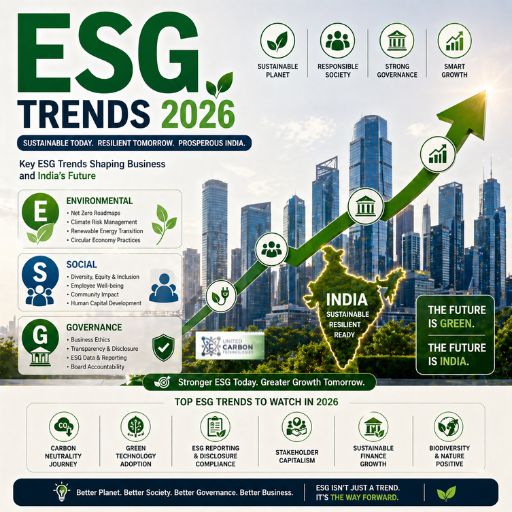
As ESG becomes central to business strategy, companies in India are facing increasing pressure to adopt sustainable practices. The coming years will require deeper integration of ESG into operations, reporting, and decision-making.
Understanding upcoming trends helps businesses stay prepared and gain a competitive advantage.
Did you know? Investors are increasingly prioritizing companies with strong ESG performance and transparent reporting.
1. Stricter ESG Regulations
Regulatory bodies in India are strengthening ESG requirements, making compliance essential for businesses.
- Expansion of BRSR requirements
- Increased disclosure expectations
- Stronger monitoring and audits
Start optimizing your home energy usage today and see immediate reductions in your electricity bill.
Get expert support for ESG and sustainability.
2. Carbon Tracking Becomes Essential
Businesses will increasingly be required to measure and manage their carbon emissions.
- Scope 1, 2, and 3 emissions tracking
- Carbon footprint reporting
- Reduction targets and strategies
3. Technology-Driven ESG Solutions
Companies are adopting digital tools to track and manage ESG data efficiently.
- Automated reporting systems
- AI-driven data analysis
- Real-time monitoring tools
4. Investor and Market Pressure
Investors are demanding better ESG performance, making sustainability a key factor in funding decisions.
- ESG-linked investments
- Transparency requirements
- Risk assessment based on ESG factors
5. Integration into Business Strategy
ESG is no longer optional—it is becoming part of core business strategy.
- Board-level ESG decisions
- Long-term sustainability planning
- Competitive differentiation
What This Means for Indian Businesses
Businesses that act early will gain a competitive advantage, while those that delay may face compliance challenges and market pressure.
Built as part of ongoing climate-tech research and ESG innovation initiatives supported by early-stage incubation and grant programs.
Related ESG Audits Insights
Explore
🔗 Start ESG Reporting for MSMEs
🔗 ESG Reporting Tools
🔗 BRSR India Guide
🔗 ESG Trends 2026.
- ESG regulations are becoming stricter
- Carbon tracking is essential
- Technology is transforming ESG reporting
- Investor pressure is increasing
- ESG is becoming part of core business strategy
Frequently Asked Questions
Why are ESG trends important for businesses?
They help businesses stay compliant and competitive in a changing market.
What is the biggest ESG trend in India?
Stricter regulations and increased focus on carbon tracking.
How can businesses prepare for ESG trends?
By adopting ESG frameworks, tracking data, and integrating sustainability into strategy.
Start Your Climate Learning Journey
Learn ESG, sustainability, and climate strategies.
Join early learners building climate intelligence.