

How Renewable Energy Reduces Carbon Emissions
By United Carbon Technologies | Climate Knowledge Hub India
Join early readers exploring ESG, sustainability, and climate technology in India.
Renewable energy plays a major role in reducing carbon emissions by replacing fossil fuel-based electricity with cleaner and more sustainable energy sources.
How does renewable energy reduce carbon emissions?
Renewable energy reduces carbon emissions by generating electricity from clean sources like solar and wind power instead of fossil fuels that release greenhouse gases into the atmosphere.
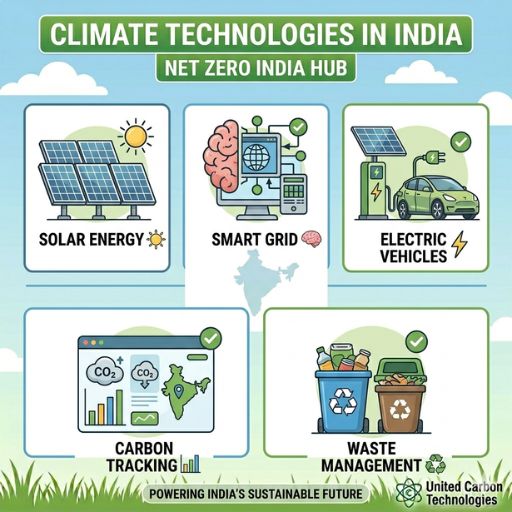
Carbon emissions from fossil fuels are one of the biggest contributors to climate change. Renewable energy offers a cleaner alternative that reduces greenhouse gas emissions and supports long-term sustainability goals.
As India expands renewable energy infrastructure, businesses and individuals are increasingly adopting solar and clean energy systems to reduce environmental impact.
Did you know?
Electricity generation from coal and fossil fuels is one of the largest sources of global carbon emissions.
What Is Renewable Energy?
Renewable energy comes from naturally replenishing sources that generate electricity with lower environmental impact.
- Solar energy
- Wind energy
- Hydropower
- Biomass energy
- Geothermal energy
Why Fossil Fuels Increase Carbon Emissions
- Burning coal releases greenhouse gases
- Oil and gas production increases emissions
- Industrial energy systems depend heavily on fossil fuels
- Traditional electricity systems contribute to climate change
How Renewable Energy Helps Reduce Emissions
- Reduces dependence on fossil fuels
- Generates cleaner electricity
- Lowers greenhouse gas emissions
- Improves energy sustainability
- Supports climate and net zero goals
- Encourages cleaner industrial operations
Benefits of Renewable Energy for Businesses
- Lower long-term energy costs
- Improved ESG performance
- Reduced operational emissions
- Better sustainability reporting
- Stronger climate resilience
Start optimizing your home energy usage today and see immediate reductions in your electricity bill.
Get expert support for ESG and sustainability.
Role of Climate Technology in Energy Management
Modern climate intelligence systems help businesses track energy usage, monitor emissions, and analyze sustainability performance using digital climate data tools.
United Carbon Technologies is developing ACIS — an India-focused climate intelligence and carbon measurement platform designed to support emissions analysis and sustainability tracking.
Related Reads (Important)
- Green Energy Options for Indian Businesses
- How Electricity Usage Impacts Carbon Footprint
- What Is Decarbonization?
- Complete Guide to Carbon Footprint in India
India and Global Perspective
India is rapidly expanding renewable energy infrastructure as part of long-term climate and sustainability goals. Globally, renewable energy adoption is becoming essential for reducing carbon emissions and improving climate resilience.
Built as part of ongoing climate-tech research and sustainability initiatives.
- Renewable energy reduces fossil fuel dependence
- Helps lower greenhouse gas emissions
- Supports sustainability and ESG goals
- Climate technology improves energy tracking
Frequently Asked Questions
What is renewable energy?
Renewable energy comes from sustainable natural sources like solar and wind power.
How does renewable energy reduce carbon emissions?
It generates electricity without heavily relying on fossil fuels that produce greenhouse gases.
Why is renewable energy important for businesses?
It helps reduce emissions, improve sustainability, and support ESG goals.
Start Your Climate Learning Journey
Learn ESG, sustainability, and climate strategies.
Join early learners building climate intelligence.