

How to Reduce Energy Consumption at Home (Save Electricity & Costs)
By United Carbon Technologies | Climate Knowledge Hub India
Join 1,500+ readers exploring climate & ESG insights
Reducing energy consumption at home in India is one of the easiest ways to lower electricity bills and support sustainability. With rising power costs and increasing demand, simple changes can help households save money and reduce carbon footprint effectively.
How can you reduce energy consumption at home?
You can reduce energy consumption at home by switching to energy-efficient appliances, turning off unused devices, optimizing AC usage, and adopting smart daily habits. In India, simple changes like LED lighting and setting AC at 24–26°C can significantly lower electricity bills.
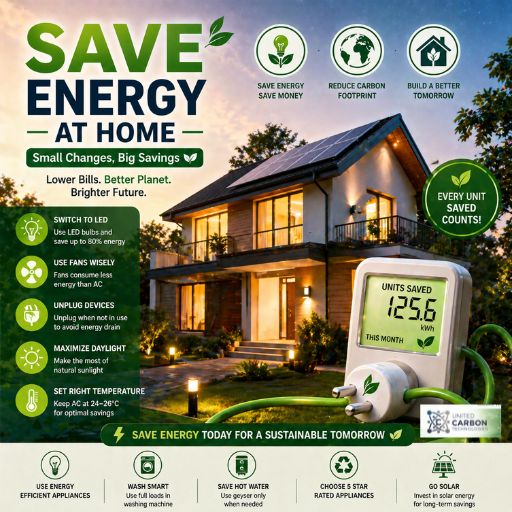
Electricity consumption in Indian homes is increasing due to appliances like air conditioners, refrigerators, and electronic devices. While these improve comfort, they also increase monthly electricity bills.
The good news is that you don’t need expensive upgrades to save energy. Small, practical changes in daily habits and appliance usage can lead to noticeable savings and long-term efficiency.
Did you know? Air conditioners alone can contribute up to 40–60% of a typical Indian household’s electricity bill during summer months.
Section 1: Use Energy-Efficient Appliances
Switching to energy-efficient appliances is one of the most effective ways to reduce electricity consumption. Look for higher star ratings when buying appliances in India.
- Choose 5-star rated ACs, refrigerators, and washing machines
- Replace old bulbs with LED lights
- Use inverter technology appliances for better efficiency
Start optimizing your home energy usage today and see immediate reductions in your electricity bill.
Get expert support for ESG and sustainability.
Section 2: Optimize Air Conditioner and Cooling Usage
- Set AC temperature between 24–26°C for efficiency
- Use ceiling fans to reduce AC load
- Clean filters regularly for better performance
- Close doors and windows to prevent cool air loss
Section 3: Reduce Standby Power Consumption
Many devices consume electricity even when turned off but still plugged in. This is known as standby power or phantom load. Unplug chargers, TVs, and kitchen appliances when not in use or use power strips.
Section 4: Improve Daily Energy Habits
Simple behavior changes can significantly reduce energy consumption without any cost. Turn off lights when leaving rooms, use natural daylight, and avoid overusing appliances to build long-term savings.
Section 5: Energy Saving in Indian Homes
In India, energy consumption is heavily influenced by climate conditions, especially during summers. Urban households with multiple appliances face higher electricity costs. Government initiatives and energy labeling help consumers choose efficient products, but daily habits remain the biggest driver of savings.
Built as part of ongoing climate-tech research and ESG innovation initiatives supported by early-stage incubation and grant programs.
🔗 ESG in India Guide
🔗 Carbon Footprint Guide
🔗 Carbon Markets & Credits
🔗 Climate Technology
🔗 Climate Basics
- Use energy-efficient appliances to reduce electricity usage
- Optimize AC settings and cooling habits
- Eliminate standby power consumption
- Adopt simple daily energy-saving habits
Frequently Asked Questions
What is the easiest way to reduce electricity bills at home?
Switching to LED lights, using energy-efficient appliances, and turning off unused devices are the easiest ways to reduce electricity bills.
Does setting AC at 24°C really save electricity?
Yes, setting your AC between 24–26°C improves efficiency and reduces power consumption compared to lower temperatures.
Do appliances consume power when turned off?
Yes, plugged-in devices consume standby power. Unplugging them helps reduce electricity waste.
Start Your Climate Learning Journey
Learn ESG, sustainability, and climate strategies.
Join early learners building climate intelligence.