

Top Climate Risks Facing Indian Cities
By United Carbon Technologies | Climate Knowledge Hub India
Join early readers exploring ESG, sustainability, and climate technology in India.
Indian cities are increasingly experiencing climate-related challenges such as heatwaves, flooding, water stress, and pollution due to rapid urbanization and changing environmental conditions.
What are the major climate risks facing Indian cities?
Major climate risks facing Indian cities include extreme heat, urban flooding, water shortages, air pollution, infrastructure stress, and climate-related disruptions to public health and economic activity.
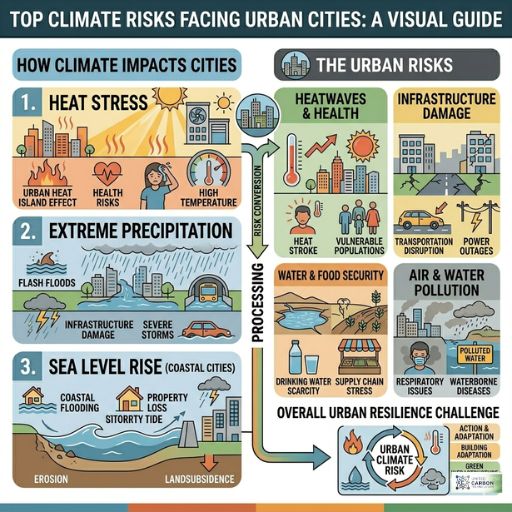
Urban areas across India are becoming more vulnerable to climate-related disruptions. Rapid population growth, infrastructure pressure, and environmental stress are increasing the impact of climate change on cities.
From rising temperatures to water scarcity and flooding, climate risks are affecting public health, transportation systems, energy demand, and economic stability.
Climate Risks Affecting Major Indian Cities
Different Indian cities face different climate-related risks depending on geography, population density, infrastructure, and environmental conditions.
- Mumbai: Coastal flooding and extreme rainfall
- Delhi: Heatwaves, pollution, and water stress
- Bengaluru: Urban flooding and water shortages
- Chennai: Cyclones, flooding, and water scarcity
- Kolkata: Rising temperatures and flood risks
- Ahmedabad: Extreme heat and urban heat island effects
Did you know?
Urban areas often experience higher temperatures than surrounding regions due to the “urban heat island” effect caused by concrete infrastructure and reduced green cover.
Extreme Heat and Heatwaves
- Increasing summer temperatures
- Urban heat island effect
- Higher electricity demand for cooling
- Public health risks during heatwaves
- Reduced outdoor productivity
Urban Flooding and Heavy Rainfall
- Drainage infrastructure challenges
- Flooding during intense rainfall
- Traffic and transport disruptions
- Damage to homes and businesses
- Water contamination risks
Water Stress and Resource Scarcity
- Declining groundwater levels
- Growing urban water demand
- Irregular rainfall patterns
- Pressure on water infrastructure
- Increased competition for resources
Air Pollution and Environmental Stress
- Vehicle and industrial emissions
- Poor urban air quality
- Health-related climate impacts
- Environmental degradation
- Reduced urban livability
Most Climate-Vulnerable Cities in India
Several Indian cities are increasingly exposed to climate-related risks due to rapid urbanization, infrastructure pressure, and environmental stress.
- Mumbai – coastal flooding and sea-level rise risks
- Delhi – extreme heatwaves and air pollution
- Bengaluru – water scarcity and urban expansion
- Chennai – flooding and groundwater depletion
- Kolkata – cyclone and flooding vulnerability
- Ahmedabad – rising heat stress and urban heat island effects
Climate resilience planning is becoming essential for Indian smart cities, businesses, and urban infrastructure systems.
Start optimizing your home energy usage today and see immediate reductions in your electricity bill.
Get expert support for ESG and sustainability.
How Climate Technology Helps Cities and Businesses
Modern climate intelligence systems help organizations analyze environmental data, monitor emissions, and improve sustainability planning using digital climate tools.
United Carbon Technologies is developing ACIS — an India-focused climate intelligence and carbon measurement platform designed to support sustainability analysis and climate awareness for businesses and institutions.
Related Reads (Important)
- ESG Risks Indian Businesses Must Know
- Understanding Climate Risk and Its Impact on Businesses
- How Renewable Energy Reduces Carbon Emissions
- Complete Guide to Carbon Footprint in India
Why Businesses Should Monitor Climate Risks
Climate risks affect supply chains, operations, employee health, infrastructure reliability, and long-term business sustainability.
- Operational disruptions from extreme weather
- Rising cooling and energy costs
- Water availability risks
- ESG and climate disclosure pressure
- Urban infrastructure vulnerability
Businesses are increasingly adopting climate intelligence platforms and ESG monitoring systems to improve climate preparedness and sustainability planning.
Built as part of ongoing climate-tech research and sustainability initiatives.
- Indian cities face rising climate risks
- Heatwaves and flooding are increasing challenges
- Water stress and pollution impact urban sustainability
- Climate technology supports environmental monitoring
Understanding climate risks facing Indian cities is important for urban sustainability, ESG planning, climate resilience, and future infrastructure development.
Frequently Asked Questions
What are the biggest climate risks for Indian cities?
Heatwaves, flooding, water shortages, and pollution are major climate risks affecting urban areas.
Why are Indian cities vulnerable to climate change?
Rapid urbanization, infrastructure stress, and environmental pressure increase climate vulnerability.
How can cities improve climate resilience?
Cities can improve sustainability planning, infrastructure management, and environmental monitoring systems.
Start Your Climate Learning Journey
Learn ESG, sustainability, and climate strategies.
Join early learners building climate intelligence.