

Why Businesses Need Climate Risk Planning
By United Carbon Technologies | Climate Knowledge Hub India
Join early readers exploring ESG, sustainability, and climate technology in India.
Climate risks are increasingly affecting businesses through extreme weather events, operational disruptions, resource challenges, and changing sustainability expectations.
Why do businesses need climate risk planning?
Businesses need climate risk planning to identify environmental threats, improve operational resilience, manage sustainability risks, and prepare for climate-related disruptions.
"mainEntityOfPage":{ "@type":"WebPage", "@id":"POST URL" } "keywords":"climate risk planning, ESG India, BRSR, sustainability, climate intelligence"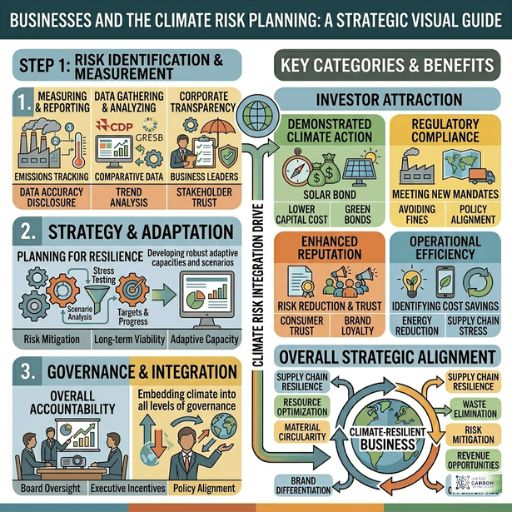
Climate change is creating new operational challenges for businesses worldwide. Rising temperatures, floods, heatwaves, resource shortages, and environmental disruptions can directly affect operations, infrastructure, and supply chains.
Climate risk planning helps organizations identify vulnerabilities, improve preparedness, and strengthen long-term business resilience in a changing environmental landscape.
Did you know?
Businesses across industries are increasingly integrating climate risk analysis into ESG strategies, sustainability planning, and operational decision-making.
Main Types of Climate Risks
- Flooding and water-related disruptions
- Heatwaves and temperature stress
- Supply chain interruptions
- Energy and resource challenges
- Extreme weather impacts
- Infrastructure and operational risks
How Climate Risks Affect Businesses
- Operational disruptions
- Increased business uncertainty
- Damage to facilities and infrastructure
- Higher energy and operational costs
- Supply chain instability
- Reduced long-term resilience
Climate intelligence systems help businesses monitor environmental risks, emissions, and sustainability performance more effectively.
Climate intelligence and carbon measurement systems can help businesses improve environmental visibility and climate risk awareness.
Benefits of Climate Risk Planning
- Improves operational preparedness
- Supports sustainability planning
- Strengthens long-term resilience
- Enhances climate-related visibility
- Supports ESG readiness
- Improves risk management awareness
How Businesses Can Start Climate Risk Planning
- Identify climate-related vulnerabilities
- Analyze operational risks
- Improve sustainability tracking
- Monitor emissions and resource usage
- Strengthen supply chain resilience
- Develop long-term climate strategies
Role of Climate Technology in Risk Planning
Modern climate intelligence systems help organizations analyze environmental data, monitor emissions trends, and improve climate-related decision-making using digital climate analysis tools.
United Carbon Technologies is developing ACIS — an India-focused climate intelligence and carbon measurement platform designed to support emissions analysis, ESG visibility, sustainability tracking, and climate risk awareness for businesses..
Related Reads (Important)
- Top Climate Risks Facing Indian Cities
- How Climate Data Helps Businesses Make Decisions
- What Is Climate Intelligence?
- Complete Guide to Carbon Footprint in India
India and Global Perspective
Globally, climate risk planning is becoming an important part of sustainability and ESG strategies. In India, rising environmental challenges and increasing climate awareness are encouraging businesses to improve resilience and sustainability preparedness.
Built as part of ongoing climate-tech research and sustainability initiatives.
- Climate risks can disrupt operations and supply chains
- Climate risk planning improves resilience and preparedness
- Businesses use sustainability and climate data for planning
- Climate technology supports environmental visibility and risk analysis
Frequently Asked Questions
What is climate risk planning?
Climate risk planning helps businesses identify and prepare for environmental and operational climate-related risks.
Why is climate risk planning important?
It improves resilience, operational preparedness, and sustainability awareness.
How can businesses improve climate risk planning?
Businesses can monitor environmental risks, track emissions, and strengthen sustainability strategies.
Start Your Climate Learning Journey
Learn ESG, sustainability, and climate strategies.
Join early learners building climate intelligence.