
How Plastic Pollution Contributes to Climate Change
By United Carbon Technologies | Climate Knowledge Hub India
Join readers exploring climate change, sustainability, ESG, carbon accounting, and environmental innovation.
Plastic pollution is often viewed as an environmental problem, but it is also a growing climate challenge. From fossil fuel extraction to manufacturing, transportation, and waste disposal, plastic generates greenhouse gas emissions throughout its lifecycle. Understanding this connection is essential for businesses, policymakers, and consumers working toward a more sustainable future.
How does plastic pollution contribute to climate change?
Plastic contributes to climate change because it is primarily made from fossil fuels. Greenhouse gas emissions are released during oil and gas extraction, plastic manufacturing, transportation, disposal, and incineration, making plastic pollution both an environmental and climate issue.
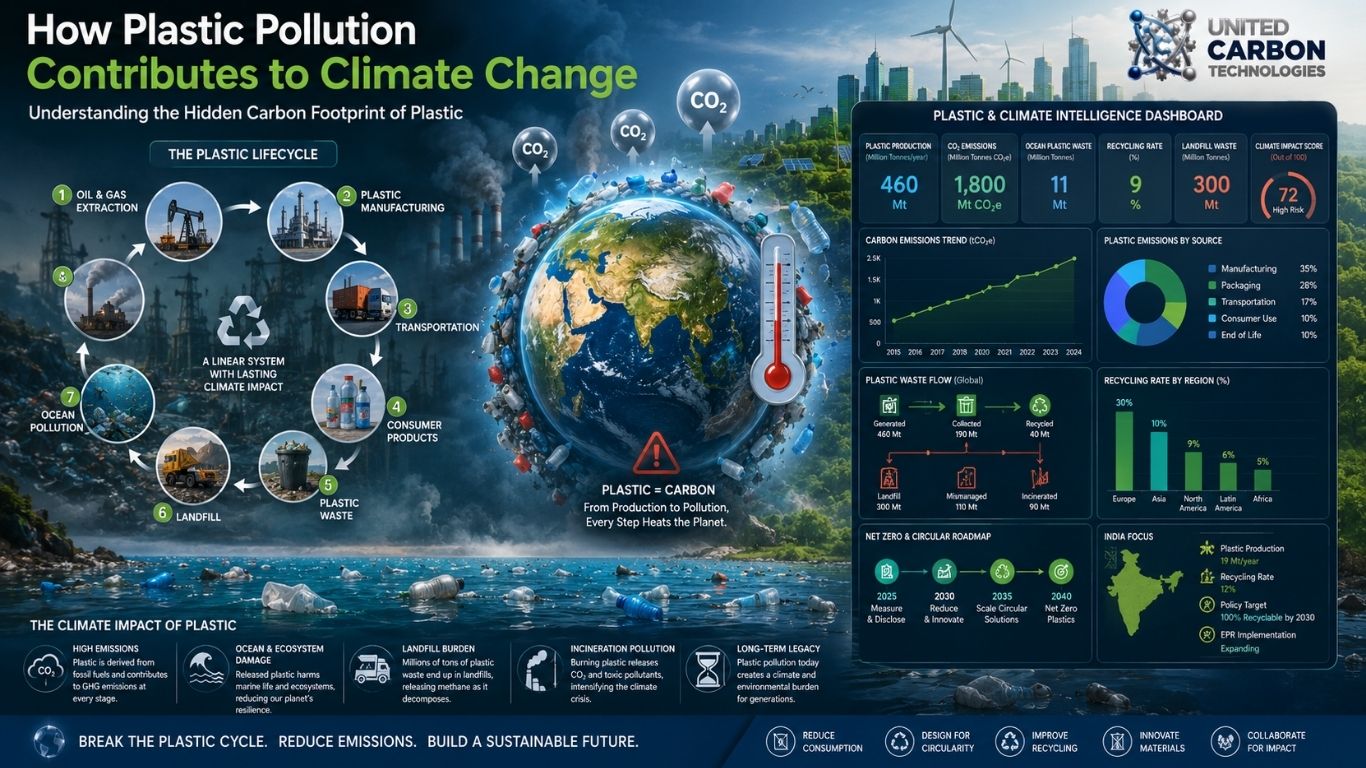
More than just littering oceans and landscapes, plastic pollution affects the climate by increasing greenhouse gas emissions across every stage of its lifecycle. As global plastic production continues to grow, its contribution to climate change is also increasing.
Reducing plastic waste is therefore not only important for protecting ecosystems but also for supporting climate action, reducing carbon emissions, and promoting a circular economy.
Did you know?
Nearly every piece of plastic begins as a fossil fuel. From extraction to disposal, plastics generate greenhouse gas emissions that contribute to global warming.
Why Plastic Is a Climate Issue
Many people associate plastic pollution with marine life and waste management, but plastic also has a significant carbon footprint. Because most plastics are produced from oil and natural gas, they are closely connected to fossil fuel use and greenhouse gas emissions.
- Produced from fossil fuels
- Energy-intensive manufacturing
- Global transportation emissions
- Waste disposal emissions
- Growing worldwide production
The Plastic Lifecycle and Carbon Emissions
Plastic generates emissions throughout its entire lifecycle—from extracting raw materials to manufacturing products, transporting goods, consumer use, and final disposal.
- Oil and natural gas extraction
- Plastic resin production
- Manufacturing consumer products
- Transportation and logistics
- Landfills and incineration
- Recycling and waste management
Each stage contributes to greenhouse gas emissions, making plastic an important part of the global climate conversation.
Reducing plastic use helps decrease pollution, lower emissions, and support long-term climate action.
Fossil Fuels and Plastic Production
Most plastics are manufactured using petrochemicals derived from crude oil and natural gas. Extracting these fossil fuels requires significant energy and releases greenhouse gases before plastic production even begins.
- Oil extraction
- Natural gas processing
- Petrochemical refining
- High-energy industrial operations
- Carbon-intensive production processes
Climate intelligence and carbon accounting solutions help businesses identify emissions sources, improve sustainability performance, and support ESG reporting.
Manufacturing Plastic Releases Greenhouse Gases
Plastic manufacturing requires heat, electricity, and industrial processing. Depending on the energy source, these activities generate carbon dioxide and other greenhouse gases that contribute to climate change.
- High energy consumption
- Industrial process emissions
- Electricity demand
- Manufacturing waste
- Chemical processing emissions
Transportation Adds to Plastic's Carbon Footprint
After plastic products are manufactured, they are transported through global supply chains before reaching consumers. Every stage of transportation consumes fuel and generates greenhouse gas emissions.
- Road transportation
- Shipping and maritime logistics
- Air freight
- Warehouse operations
- Distribution networks
- Retail supply chains
Reducing unnecessary packaging, sourcing locally, and optimizing logistics can help lower transportation-related emissions associated with plastic products.
Plastic Waste, Landfills, and Incineration
Plastic does not simply disappear after use. Most plastic waste ends up in landfills, is burned, or leaks into the environment. Each disposal method has climate implications.
- Landfills release greenhouse gases over time.
- Open burning creates harmful air pollution.
- Plastic incineration releases carbon dioxide.
- Poor waste management increases environmental damage.
- Low recycling rates increase demand for new plastic production.
Improving waste management systems and increasing recycling can reduce both pollution and emissions.
Ocean Plastic Pollution and Climate Change
Millions of tonnes of plastic enter rivers and oceans every year, harming marine ecosystems while indirectly affecting the planet's ability to regulate climate.
Healthy oceans absorb significant amounts of carbon dioxide from the atmosphere. Plastic pollution damages marine ecosystems that contribute to this natural climate regulation process.
- Damages marine biodiversity
- Threatens coastal ecosystems
- Impacts mangroves and seagrass
- Reduces ecosystem resilience
- Creates long-term environmental challenges
How a Circular Economy Can Reduce Plastic Emissions
A circular economy focuses on reducing waste by designing products that are reused, repaired, recycled, or remanufactured instead of discarded after a single use.
- Reduce unnecessary plastic consumption
- Design reusable products
- Increase recycling rates
- Improve material recovery
- Use recycled materials
- Support sustainable packaging innovations
These approaches reduce demand for virgin plastic while lowering emissions across the product lifecycle.
What Businesses Can Do
Businesses play an important role in reducing plastic-related emissions through better product design, sustainable procurement, and responsible waste management.
- Measure plastic consumption
- Reduce single-use plastics
- Improve packaging efficiency
- Increase recycled material usage
- Work with sustainable suppliers
- Support circular economy initiatives
- Track environmental performance
United Carbon Technologies
Understanding environmental impacts begins with accurate data. United Carbon Technologies is developing climate intelligence, carbon accounting, and sustainability analytics solutions that help organizations measure emissions, improve ESG reporting, and make better environmental decisions.
Related Reads
- What Is Carbon Footprint?
- How Climate Data Helps Businesses Make Decisions
- What Is Climate Intelligence in Business?
- How AI Is Changing Climate Intelligence
- Sustainability KPIs Every Company Should Track
- ESG Reporting Checklist for Businesses
- Carbon Reporting Software: What Businesses Should Look For
- Understanding Carbon Disclosure: What Companies Need to Report
- What Is a Carbon Baseline Assessment?
- How to Set Science-Based Climate Targets for Businesses
Plastic Pollution and Climate Action in India
India has taken several steps to reduce plastic pollution through waste management initiatives, restrictions on certain single-use plastics, and greater emphasis on recycling and circular economy practices. Businesses are also exploring sustainable packaging, improving resource efficiency, and integrating environmental responsibility into ESG strategies.
Reducing plastic pollution supports both cleaner ecosystems and broader climate goals by lowering emissions associated with plastic production and disposal.
- Plastic is primarily made from fossil fuels.
- Its lifecycle generates greenhouse gas emissions.
- Manufacturing and transportation increase carbon emissions.
- Poor waste management contributes to environmental pollution.
- A circular economy can reduce both plastic waste and climate impacts.
Frequently Asked Questions
Does plastic contribute to climate change?
Yes. Plastic contributes to climate change through fossil fuel extraction, manufacturing, transportation, waste management, and incineration, all of which release greenhouse gases.
Why is plastic made from fossil fuels?
Most conventional plastics are produced using petrochemicals derived from crude oil and natural gas, making them closely linked to fossil fuel production.
Can recycling reduce climate impacts?
Recycling helps reduce the need for virgin plastic production, conserving energy and lowering greenhouse gas emissions compared with manufacturing new plastic from raw materials.
How can businesses reduce plastic-related emissions?
Businesses can reduce emissions by minimizing plastic use, improving packaging, increasing recycled content, supporting circular economy practices, and measuring environmental performance.
Why is plastic pollution important for climate action?
Reducing plastic pollution helps decrease greenhouse gas emissions across the plastic lifecycle while protecting ecosystems that support climate resilience.
Build Your Climate Intelligence Knowledge
Explore practical guides on climate change, sustainability, ESG reporting, carbon accounting, and environmental innovation designed for businesses and professionals.
Join readers learning how climate intelligence supports better environmental and business decisions.
Comments
Post a Comment