

What Is Greenwashing?
By United Carbon Technologies | Climate Knowledge Hub India
Join readers exploring sustainability, ESG reporting, climate intelligence, and responsible business practices.
As sustainability becomes a priority for businesses worldwide, environmental claims have become a common part of marketing. While many companies are making genuine progress toward sustainability, others exaggerate or misrepresent their environmental efforts. This misleading practice is known as greenwashing.
What is greenwashing?
Greenwashing is the practice of making false, misleading, or exaggerated environmental claims to make a company, product, or service appear more sustainable than it actually is. Greenwashing can mislead consumers, investors, and other stakeholders while undermining genuine sustainability efforts.
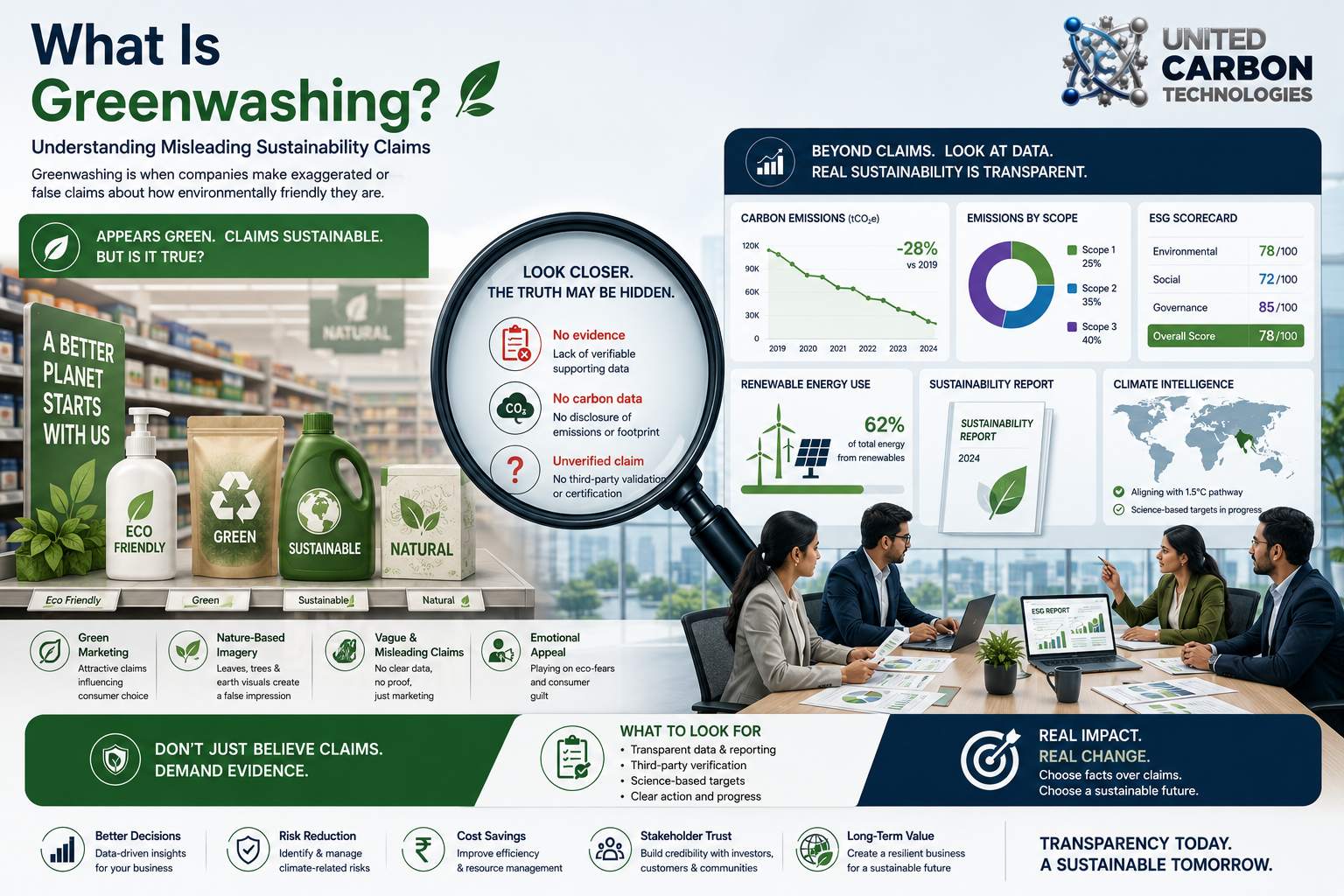
Consumers increasingly prefer environmentally responsible businesses, and investors now consider ESG performance when making investment decisions. As sustainability becomes more valuable, some organizations promote environmental messages without making meaningful operational improvements.
Understanding greenwashing helps consumers make informed purchasing decisions while encouraging businesses to communicate sustainability efforts honestly and transparently.
Did you know?
Transparent sustainability reporting supported by measurable environmental data is becoming increasingly important for businesses seeking long-term trust from customers, investors, and regulators.
Why Does Greenwashing Happen?
Greenwashing often occurs because sustainability has become a competitive advantage. Organizations may believe that environmental marketing improves brand reputation, attracts environmentally conscious consumers, and increases investor interest.
- Growing demand for sustainable products
- Increasing ESG expectations
- Competitive market positioning
- Limited public understanding of sustainability reporting
- Pressure to appear environmentally responsible
Common Types of Greenwashing
- Vague environmental claims
- Misleading product labels
- Hidden trade-offs
- Unverified carbon neutral claims
- Selective disclosure of sustainability achievements
- Green imagery without supporting evidence
- Overstating minor environmental improvements
Credible environmental claims should be supported by measurable emissions data, transparent ESG reporting, and continuous sustainability improvement.
Examples of Greenwashing
- Products marketed as "100% eco-friendly" without evidence.
- Using green packaging to imply environmental benefits.
- Advertising recyclable packaging while ignoring manufacturing emissions.
- Claiming carbon neutrality without explaining how emissions are measured.
- Highlighting a single sustainability initiative while ignoring broader environmental impacts.
Climate intelligence, ESG reporting, and carbon accounting help businesses demonstrate measurable environmental progress rather than relying on marketing claims.
Why Greenwashing Is Harmful
- Misleads consumers
- Reduces trust in sustainability initiatives
- Creates unfair competition
- Discourages genuine climate action
- Confuses investors
- Damages corporate reputation
Greenwashing vs Genuine Sustainability
| Greenwashing | Genuine Sustainability |
|---|---|
| Marketing-focused claims | Data-driven sustainability strategy |
| Little measurable evidence | Transparent reporting and disclosures |
| Broad environmental promises | Specific, measurable climate targets |
| Short-term campaigns | Continuous environmental improvement |
| Limited accountability | Regular ESG reporting and emissions measurement |
How ESG Reporting Reduces Greenwashing
Reliable ESG reporting encourages organizations to disclose measurable sustainability information instead of relying solely on marketing language.
- Carbon emissions reporting
- Sustainability KPIs
- Climate-risk disclosures
- Environmental performance metrics
- Third-party verification
The Role of Climate Intelligence
Climate intelligence platforms help businesses collect environmental data, monitor emissions, analyze sustainability performance, and generate evidence-based reports that improve transparency and accountability.
As climate reporting becomes increasingly data-driven, technology is helping businesses replace vague sustainability claims with measurable environmental performance.
Related Reads
- How to Spot Fake Sustainability Claims
- ESG Reporting Checklist for Businesses
- What Is a Carbon Disclosure Report?
- Carbon Reporting Software: What Businesses Should Look For
- How Climate Data Helps Businesses Make Decisions
- What Is Climate Intelligence in Business?
- How AI Is Changing Climate Intelligence
- How to Set Science-Based Climate Targets for Businesses
- Carbon Accounting Process Step by Step
- Sustainability KPIs Every Company Should Track
Greenwashing in India
As ESG adoption grows across India, businesses are increasingly expected to provide transparent sustainability disclosures backed by measurable environmental data. Consumers and investors are also becoming more aware of misleading environmental claims, making credible reporting more important than ever.
- Greenwashing involves misleading sustainability claims.
- Transparency builds long-term trust.
- ESG reporting helps improve accountability.
- Climate intelligence supports evidence-based sustainability.
- Consumers should look beyond marketing claims.
Frequently Asked Questions
What is greenwashing?
Greenwashing is the practice of exaggerating or misrepresenting environmental performance to appear more sustainable than a company or product actually is.
Why do companies engage in greenwashing?
Some companies use misleading sustainability claims to attract customers, improve brand image, or respond to growing demand for environmentally responsible products.
How does greenwashing affect consumers?
Greenwashing can mislead consumers into supporting products or businesses that do not genuinely deliver the environmental benefits they advertise.
How can businesses avoid greenwashing?
Businesses can avoid greenwashing by measuring environmental performance, publishing transparent ESG reports, setting measurable climate targets, and supporting sustainability claims with reliable data.
Build Your Climate Intelligence Knowledge
Explore practical guides on ESG reporting, carbon accounting, climate intelligence, and sustainable business practices with United Carbon Technologies.
Helping businesses and consumers make informed sustainability decisions.