

The Hidden Carbon Cost of E-Commerce Logistics in India
Search Description: Discover how e-commerce logistics contribute to carbon emissions in India and explore sustainable last-mile delivery, green supply chains, and practical solutions for reducing the e-commerce carbon footprint.
By United Carbon Technologies | Published: August 2026 | Updated: August 2026
Explore expert insights on carbon footprints, sustainable logistics, ESG reporting, green supply chains, climate technology, and practical sustainability solutions for businesses in India.
Convenience Comes with a Climate Cost
Online shopping has transformed how India buys products. From groceries and electronics to fashion and medicines, e-commerce platforms deliver millions of packages every day. While this convenience has improved customer experiences and accelerated digital commerce, it has also created an often-overlooked environmental challenge—the growing carbon footprint of e-commerce logistics.
Every online order involves transportation, packaging, warehousing, and last-mile delivery. These activities consume energy, burn fuel, and generate greenhouse gas emissions that contribute to climate change. As e-commerce continues to expand across India, businesses are increasingly expected to understand and reduce the environmental impact of their logistics operations.
This guide explores where emissions occur across the e-commerce supply chain, why last-mile delivery is particularly carbon-intensive, and how businesses can build greener logistics systems without compromising efficiency.
What is the carbon footprint of e-commerce logistics?
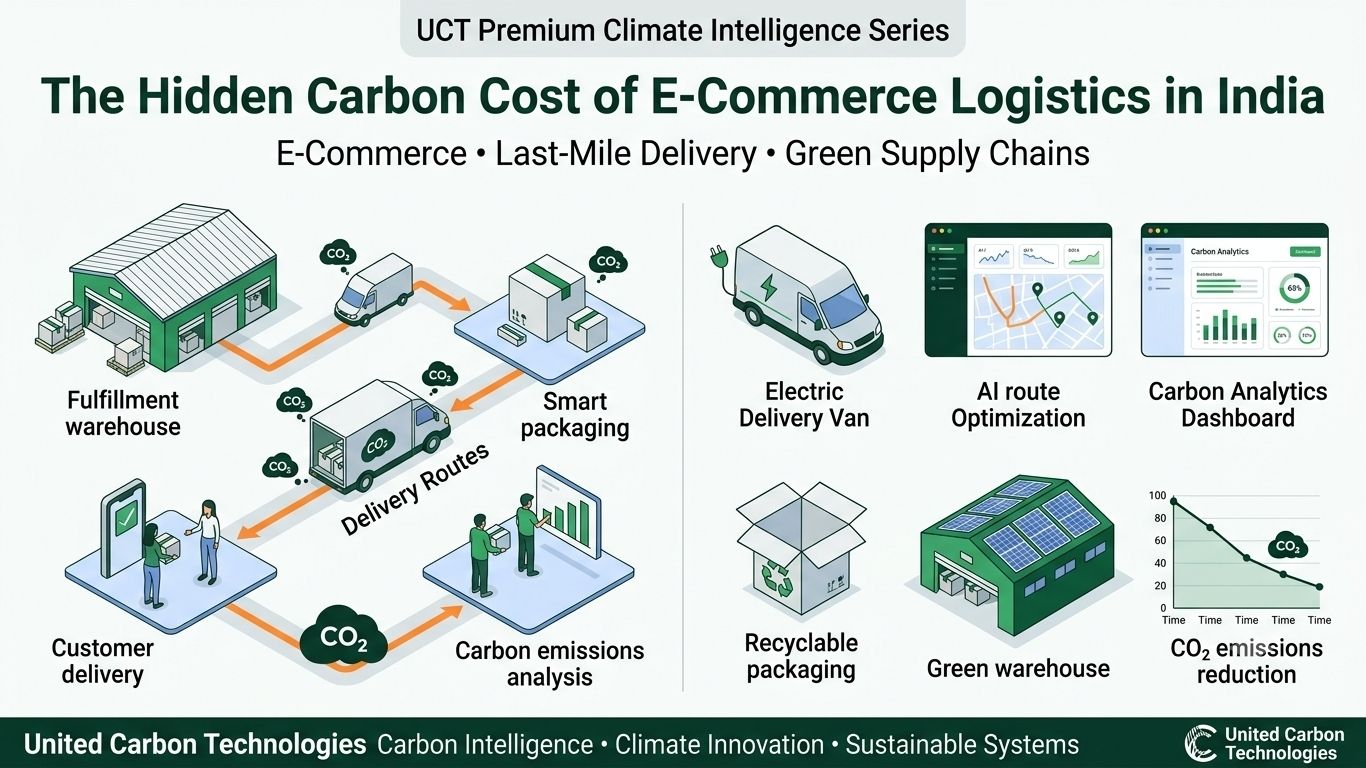
The carbon footprint of e-commerce logistics refers to the greenhouse gas emissions generated during the storage, packaging, transportation, and delivery of online orders. Major emission sources include warehouses, delivery vehicles, packaging materials, and last-mile delivery operations.
Introduction
India is one of the world's fastest-growing e-commerce markets, with millions of consumers relying on online platforms for everyday purchases. Behind every successful delivery lies a complex logistics network involving fulfillment centers, transportation hubs, sorting facilities, and delivery partners working around the clock.
Although digital shopping may seem environmentally friendly compared to traditional retail, the logistics network supporting e-commerce can generate substantial greenhouse gas emissions. Delivery vans, motorcycles, aircraft, packaging production, and warehouse operations all consume energy and contribute to an organization's overall carbon footprint.
As customers become more environmentally conscious and ESG expectations continue to grow, businesses are beginning to recognize that sustainable logistics is not only good for the planet—it also improves operational efficiency, strengthens brand reputation, and prepares organizations for future climate regulations.
🌍 Carbon Intelligence for Smarter Supply Chains
Understanding logistics emissions is the first step toward building a more sustainable supply chain. Measuring transportation, warehousing, and delivery emissions helps organizations identify reduction opportunities, improve efficiency, and support ESG reporting.
Measure • Optimize • Report • Reduce
💡 Did You Know?
Last-mile delivery—the final journey from a distribution hub to a customer's doorstep—is often the most carbon-intensive stage of the e-commerce supply chain because it involves frequent stops, shorter routes, and lower vehicle utilization.
Why E-Commerce Logistics Generates Carbon Emissions
Every online purchase triggers a sequence of activities that consume energy and produce greenhouse gas emissions. Unlike traditional retail, where customers travel to stores, e-commerce shifts much of the transportation burden to logistics providers.
Emissions are generated at multiple stages, including warehousing, packaging, transportation, order fulfillment, and final delivery. The rapid growth of same-day and next-day delivery services has further increased pressure on logistics networks, often leading to less efficient delivery routes and higher fuel consumption.
Major Sources of Emissions
- Warehouse electricity consumption
- Packaging production and disposal
- Road, rail, air, and sea transportation
- Last-mile delivery vehicles
- Reverse logistics and product returns
- Cold-chain logistics for perishable goods
Where Does the Carbon Footprint Come From?
Understanding the key sources of emissions helps businesses prioritize sustainability initiatives and improve operational efficiency.
| Supply Chain Stage | Primary Emission Source | Improvement Opportunity |
|---|---|---|
| Warehousing | Electricity and HVAC systems | Renewable energy and efficient equipment |
| Packaging | Plastic, cardboard, and manufacturing | Recyclable and lightweight packaging |
| Transportation | Diesel and petrol consumption | Route optimization and EV adoption |
| Last-Mile Delivery | Frequent urban deliveries | Electric vehicles and delivery consolidation |
| Returns | Additional transport and packaging | Reducing return rates through better fulfillment |
🎓 Learn Sustainable Supply Chain Management
Explore how carbon accounting, ESG reporting, and climate intelligence can help organizations measure logistics emissions and build greener supply chains through UCT Academy.
Build a Low-Carbon Supply Chain with UCT
United Carbon Technologies helps businesses measure logistics emissions, assess supply chain carbon footprints, prepare ESG reports, and develop practical decarbonization strategies for sustainable growth.
Why Last-Mile Delivery Has the Highest Carbon Footprint
Among all stages of the e-commerce supply chain, last-mile delivery is often the most carbon-intensive. This stage covers the final journey from a distribution center or local hub to the customer's doorstep. Although it represents a relatively short distance, it involves thousands of individual deliveries, frequent stops, traffic congestion, and repeated acceleration and braking, all of which increase fuel consumption and greenhouse gas emissions.
The growing demand for same-day and next-day delivery has made last-mile logistics even more challenging. Delivery vehicles frequently travel partially loaded, making multiple trips across urban areas to meet customer expectations. While these services improve convenience, they also increase the environmental impact of online shopping.
Businesses can reduce last-mile emissions through electric delivery vehicles, route optimization software, parcel lockers, micro-fulfillment centers, and encouraging customers to choose slower, consolidated delivery options.
The Environmental Impact of Packaging
Packaging plays an essential role in protecting products during transportation, but it also contributes significantly to the overall carbon footprint of e-commerce. Every cardboard box, plastic mailer, bubble wrap, and tape used in shipping requires raw materials, manufacturing, transportation, and disposal.
Excessive packaging not only increases waste but also makes shipments heavier, leading to higher transportation emissions. Businesses are therefore focusing on sustainable packaging solutions that balance product protection with environmental responsibility.
Sustainable Packaging Practices
- Using recycled cardboard and paper.
- Replacing plastic fillers with biodegradable alternatives.
- Designing right-sized packaging to reduce material use.
- Encouraging reusable shipping containers where practical.
- Clearly labeling recyclable packaging for consumers.
Reducing packaging waste lowers both environmental impact and logistics costs, making sustainability a business advantage.
How Technology Is Making Logistics More Sustainable
Technology is transforming logistics by helping businesses improve efficiency while reducing greenhouse gas emissions. Modern supply chains increasingly rely on digital tools to optimize transportation, monitor fuel consumption, and improve warehouse operations.
| Technology | Climate Benefit |
|---|---|
| AI Route Optimization | Reduces travel distance and fuel consumption. |
| Fleet Monitoring Systems | Improves driving efficiency and maintenance. |
| Warehouse Automation | Optimizes energy use and operational efficiency. |
| Carbon Accounting Software | Measures logistics emissions for ESG reporting. |
| Electric Fleet Management | Supports transition to low-carbon transportation. |
Building a Green Supply Chain
A green supply chain considers environmental impacts at every stage of a product's journey—from sourcing raw materials to final delivery and product returns. Rather than focusing only on transportation, businesses evaluate emissions across procurement, manufacturing, warehousing, packaging, logistics, and waste management.
Organizations with sustainable supply chains often experience lower operating costs, improved resilience, stronger customer trust, and better ESG performance.
Characteristics of a Green Supply Chain
- Energy-efficient warehouses.
- Renewable electricity adoption.
- Sustainable procurement practices.
- Low-emission transportation.
- Optimized inventory management.
- Waste reduction and recycling initiatives.
- Transparent supplier engagement.
What Can E-Commerce Companies Do Today?
Reducing logistics emissions does not require waiting for future technologies. Many practical improvements can be implemented immediately to lower carbon footprints while improving operational efficiency.
- Adopt electric delivery vehicles where feasible.
- Use AI-powered route optimization.
- Reduce unnecessary packaging.
- Improve warehouse energy efficiency.
- Consolidate deliveries whenever possible.
- Measure logistics emissions regularly.
- Collaborate with sustainable suppliers.
- Educate customers about eco-friendly delivery options.
The Future of Sustainable Logistics in India
India's e-commerce industry continues to grow rapidly, driven by expanding internet access, digital payments, and rising consumer demand. At the same time, businesses face increasing expectations from investors, regulators, and multinational customers to reduce greenhouse gas emissions across their operations.
Government initiatives promoting electric mobility, renewable energy, and digital infrastructure are creating opportunities for cleaner logistics systems. Many logistics providers are investing in electric delivery fleets, solar-powered warehouses, route optimization technologies, and sustainable packaging to improve both environmental and operational performance.
As ESG reporting becomes more widespread, measuring logistics emissions will become an essential part of corporate sustainability strategies for companies operating in India.
What's Next?
Understanding logistics emissions is only the first step. Businesses that measure their carbon footprint can identify emission hotspots, prioritize reduction initiatives, improve supply chain efficiency, and prepare credible ESG reports.
As climate regulations and stakeholder expectations continue to evolve, organizations that invest in sustainable logistics today will be better positioned for long-term resilience and competitive advantage.
Related Reads
- What Is Carbon Accounting? A Complete Beginner's Guide
- How to Build a Carbon Inventory
- Understanding Scope 1, Scope 2 & Scope 3 Emissions
- What Is a Carbon Disclosure Report?
- ESG Reporting Checklist for Businesses
- How AI Is Transforming Climate Intelligence
- Net Zero vs Carbon Neutral
- Sustainable Packaging: Why It Matters
Quick Summary
- E-commerce logistics generate emissions through transportation, warehousing, and packaging.
- Last-mile delivery is often the largest source of logistics emissions.
- Sustainable packaging reduces waste and transportation impacts.
- AI and digital technologies improve logistics efficiency.
- Electric vehicles can significantly reduce delivery emissions.
- Green supply chains strengthen ESG performance.
- Carbon accounting helps businesses measure logistics emissions.
- Indian businesses are increasingly adopting sustainable logistics practices.
Frequently Asked Questions
1. What is the carbon footprint of e-commerce?
It refers to greenhouse gas emissions generated through packaging, warehousing, transportation, and delivery of online purchases.
2. Why is last-mile delivery carbon intensive?
Because it involves numerous short trips, frequent stops, and lower vehicle utilization.
3. Does packaging contribute to emissions?
Yes. Manufacturing, transporting, and disposing of packaging materials all generate greenhouse gas emissions.
4. Can electric vehicles reduce logistics emissions?
Yes. EVs help reduce tailpipe emissions and improve urban air quality, especially when powered by cleaner electricity.
5. What is a green supply chain?
A green supply chain integrates environmental sustainability into sourcing, manufacturing, logistics, and product delivery.
6. How does AI support sustainable logistics?
AI optimizes delivery routes, improves vehicle utilization, and reduces fuel consumption.
7. Why should businesses measure logistics emissions?
Measurement identifies emission hotspots and supports ESG reporting, cost savings, and climate strategies.
8. How can consumers reduce the carbon footprint of online shopping?
Choosing consolidated shipping, avoiding unnecessary returns, and supporting sustainable brands can reduce emissions.
9. Are Indian logistics companies adopting sustainability?
Yes. Many are investing in EV fleets, renewable energy, route optimization, and sustainable packaging.
10. How can United Carbon Technologies help?
UCT supports organizations with carbon accounting, logistics emissions measurement, ESG reporting, supply chain assessments, and Net Zero planning.
Key Takeaways
- E-commerce convenience comes with hidden environmental costs.
- Last-mile delivery is a major contributor to logistics emissions.
- Technology enables more efficient and sustainable logistics operations.
- Carbon accounting provides the data needed to reduce supply chain emissions.
- Building a green supply chain creates long-term business and environmental value.
Measure Your Supply Chain Carbon Footprint with UCT
United Carbon Technologies helps organizations quantify logistics emissions, develop carbon inventories, strengthen ESG reporting, and build data-driven decarbonization strategies for resilient, future-ready supply chains.