

Carbon Accounting Process Step by Step
United Carbon Technologies | Climate Knowledge Hub India
Join readers exploring carbon accounting, sustainability reporting, ESG, and climate intelligence.
Carbon accounting helps organizations measure, calculate, and manage greenhouse gas emissions. Understanding the carbon accounting process is essential for ESG reporting, sustainability strategies, and long-term climate action.
Effective carbon reduction begins with accurate emissions measurement. Carbon accounting provides the data foundation organizations need to track environmental performance and identify improvement opportunities.
What is the carbon accounting process?
The carbon accounting process involves identifying emission sources, collecting operational data, calculating greenhouse gas emissions, classifying Scope 1, Scope 2, and Scope 3 emissions, and reporting results to support sustainability goals, ESG disclosures, and carbon reduction strategies.
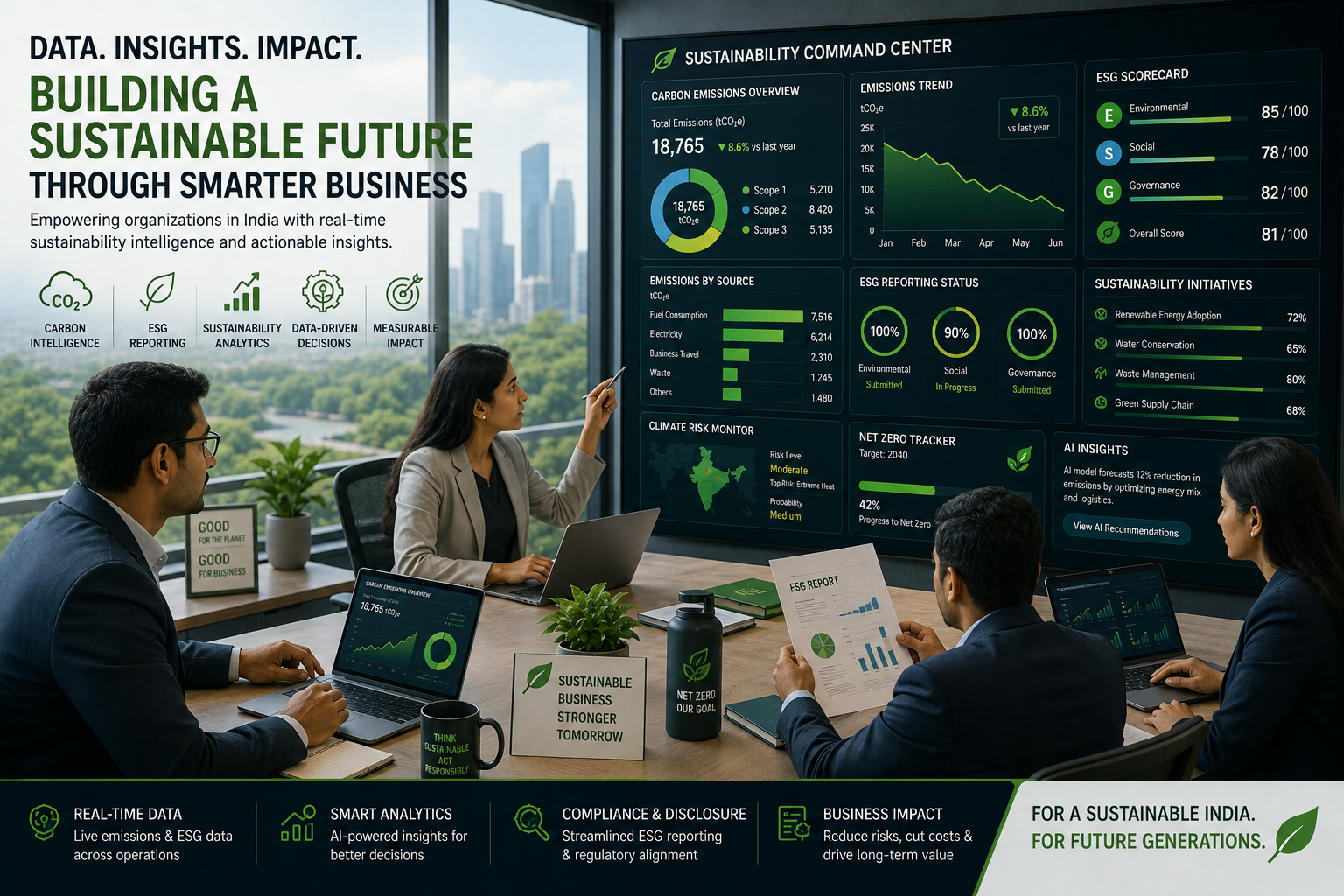
As businesses face growing expectations around sustainability and environmental responsibility, carbon accounting has become a critical business function. Organizations need reliable emissions data to support climate commitments, ESG disclosures, investor communications, and regulatory compliance.
Carbon accounting provides a structured framework for measuring greenhouse gas emissions across operations, energy use, transportation, supply chains, and other business activities.
Did you know?
Most ESG reporting programs and net-zero strategies begin with a structured carbon accounting process to establish emissions baselines and identify reduction opportunities.
Step 1: Define Organizational Boundaries
The first step in carbon accounting is determining which operations, facilities, business units, and activities will be included in the assessment.
- Identify company-owned facilities
- Determine operational control boundaries
- Define reporting period
- Establish organizational scope
- Select reporting methodology
Clear boundaries ensure emissions are measured consistently and accurately.
Carbon accounting helps organizations transform environmental data into actionable sustainability insights and measurable climate strategies.
Build ESG readiness, carbon intelligence, and sustainability reporting capabilities with expert environmental support.
Step 2: Identify Emission Sources
Organizations must identify activities that generate greenhouse gas emissions.
- Electricity consumption
- Fuel combustion
- Company vehicles
- Business travel
- Purchased goods and services
- Waste management
- Logistics and transportation
- Supply chain activities
This stage creates a complete inventory of potential emission sources.
Step 3: Collect Activity Data
Carbon accounting relies on operational data rather than direct emissions measurements in most cases.
- Electricity bills
- Fuel purchase records
- Travel records
- Production data
- Transportation logs
- Procurement information
- Waste disposal records
High-quality data improves the accuracy of carbon calculations and reporting outcomes.
Step 4: Calculate Greenhouse Gas Emissions
Once activity data is collected, emission factors are applied to convert business activities into greenhouse gas emissions measured in carbon dioxide equivalent (CO₂e).
- Apply recognized emission factors
- Convert energy use into emissions
- Calculate transportation emissions
- Estimate supply chain impacts
- Standardize results into CO₂e values
This step transforms operational data into measurable environmental performance indicators.
Step 5: Classify Scope 1, Scope 2, and Scope 3 Emissions
Emissions are generally categorized into three reporting scopes.
- Scope 1: Direct emissions from owned or controlled sources
- Scope 2: Indirect emissions from purchased electricity, steam, or energy
- Scope 3: Other indirect emissions across the value chain
This classification helps organizations understand where emissions occur and prioritize reduction efforts.
Step 6: Analyze Results and Identify Hotspots
After calculations are completed, organizations review emissions data to identify major contributors.
- High-energy operations
- Transportation-intensive activities
- Supply chain impacts
- Resource-intensive processes
- Operational inefficiencies
Emission hotspots often become priority areas for carbon reduction initiatives.
Step 7: Report and Communicate Findings
Carbon accounting results may be used in sustainability reports, ESG disclosures, investor communications, and internal decision-making processes.
- ESG reporting
- Sustainability reporting
- Carbon footprint disclosures
- Climate-risk assessments
- Stakeholder communications
Step 8: Establish Reduction Targets
The final step is using emissions data to create measurable sustainability goals and climate action plans.
- Set reduction targets
- Improve energy efficiency
- Optimize operations
- Monitor future performance
- Track progress annually
Carbon accounting becomes most valuable when data is transformed into continuous environmental improvement.
UNITED CARBON TECHNOLOGIES
Climate & ESG Platform
Building India’s Carbon Intelligence Ecosystem
YOUR ACTION, OUR PLANET, TOGETHER, WE EMPOWER A GREENER FUTURE
Related Sustainability & ESG Resources
- What Is a Carbon Baseline Assessment?
- Carbon Accounting vs Carbon Footprint
- What Is Climate Intelligence?
- ESG Guide India
- BRSR Guide India
Carbon Accounting in India
Indian organizations are increasingly adopting carbon accounting practices to support ESG disclosures, sustainability reporting, investor expectations, and climate transition strategies.
As environmental transparency becomes more important, businesses that establish strong carbon accounting systems are better positioned to manage climate risks and identify operational efficiencies.
- Carbon accounting measures greenhouse gas emissions.
- The process starts with defining organizational boundaries.
- Activity data is collected and converted into emissions.
- Emissions are categorized into Scope 1, Scope 2, and Scope 3.
- Results support ESG reporting and carbon reduction planning.
Frequently Asked Questions
What is carbon accounting?
Carbon accounting is the process of measuring, calculating, and reporting greenhouse gas emissions generated by business activities.
What are Scope 1, Scope 2, and Scope 3 emissions?
These are categories used to classify direct and indirect greenhouse gas emissions within an organization's operations and value chain.
Why is carbon accounting important?
It helps organizations understand environmental impacts, improve sustainability performance, and support ESG reporting requirements.
How often should carbon accounting be performed?
Most organizations conduct carbon accounting annually to track performance and maintain reporting consistency.
Explore the Future of Climate Intelligence
Learn ESG, sustainability, carbon intelligence, and climate-tech concepts shaping the future of business and environmental strategy..
Join readers building climate intelligence knowledge for a sustainable future.