

How Climate Data Helps Businesses Improve ESG Reporting and Sustainability Performance
By United Carbon Technologies | Climate Knowledge Hub India
Join early readers exploring ESG, sustainability, and climate technology in India.
Climate data is becoming increasingly important for businesses as organizations seek to improve sustainability, manage risks, and make informed ESG-related decisions.
How does climate data help businesses?
Climate data helps businesses analyze emissions, monitor sustainability performance, identify environmental risks, and make better operational and strategic decisions.
```html ```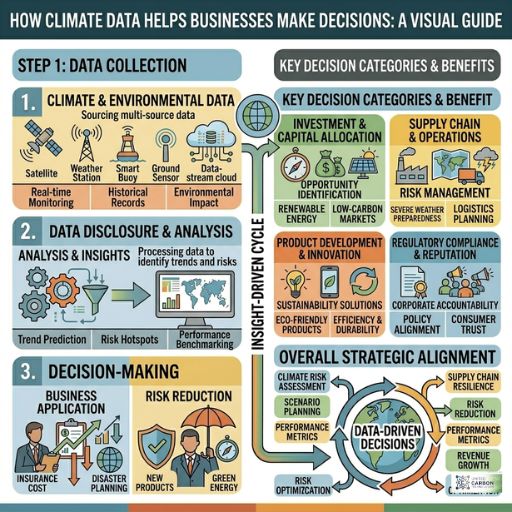
Businesses today generate and manage large amounts of operational and environmental data. Climate data helps organizations understand emissions, energy consumption, sustainability performance, and climate-related risks.
As ESG expectations grow globally and in India, businesses are increasingly using climate intelligence systems to support long-term sustainability and operational planning.
Did you know?
Businesses increasingly use environmental and emissions data to improve sustainability reporting, climate risk management, and operational efficiency.
Types of Climate Data Businesses Use
- Carbon emissions data
- Energy consumption metrics
- Waste generation information
- Water usage analysis
- Supply chain sustainability data
- Climate risk indicators
Why Climate Data Matters for Businesses
- Supports ESG reporting
- Improves sustainability tracking
- Identifies operational inefficiencies
- Helps manage climate-related risks
- Strengthens investor confidence
- Supports long-term business planning
How Climate Data Supports ESG Reporting
Climate data forms the foundation of modern ESG reporting. Businesses use environmental and operational data to measure sustainability performance, track emissions, monitor resource consumption, and evaluate climate-related risks.
As ESG reporting expectations continue to grow, organizations increasingly rely on climate data to improve transparency, support sustainability disclosures, and demonstrate measurable progress toward environmental goals.
- Track Scope 1, Scope 2, and Scope 3 emissions
- Measure sustainability KPIs and performance targets
- Support carbon disclosure and sustainability reporting
- Identify climate-related business risks
- Improve data-driven ESG decision-making
- Monitor environmental performance over time
Business Insight:
Organizations that collect and analyze climate data consistently are better positioned to understand environmental impacts, strengthen ESG readiness, and make informed sustainability decisions.
Examples of Climate Data Businesses Track
| Climate Data Category | Example Metrics |
|---|---|
| Carbon Emissions | Scope 1, Scope 2, Scope 3 Emissions (CO₂e) |
| Energy | Electricity Consumption, Fuel Usage |
| Water | Water Consumption, Recycling Rates |
| Waste | Waste Generation, Recycling Performance |
| Climate Risk | Risk Assessments, Supply Chain Exposure |
| ESG Performance | Sustainability KPIs, ESG Target Achievement |
Businesses that collect and analyze climate data can improve ESG reporting, identify inefficiencies, monitor emissions, and strengthen sustainability performance.
Get expert support for ESG and sustainability.
How Businesses Use Climate Intelligence
- Track carbon footprint and emissions
- Analyze sustainability performance
- Improve resource efficiency
- Monitor climate risks
- Support ESG reporting frameworks
- Plan emissions reduction strategies
Benefits of Climate Data-Driven Decisions
- Better operational efficiency
- Improved sustainability planning
- Enhanced ESG readiness
- Reduced environmental impact
- Improved compliance awareness
- Long-term resilience and competitiveness
Role of Climate Technology Platforms
Modern climate intelligence platforms help organizations collect, analyze, and visualize sustainability data using digital climate analysis tools and emissions tracking systems.
United Carbon Technologies is developing ACIS — an India-focused climate intelligence and carbon measurement platform designed to support sustainability analysis and emissions visibility for businesses.
Related Reads
- Sustainability KPIs Every Company Should Track
- What Is Climate Intelligence in Business?
- Carbon Reporting Software: What Businesses Should Look For
- What Is Carbon Disclosure Reporting?
- How Businesses Collect Scope 3 Data
- Carbon Accounting Process Step by Step
- Why Carbon Data Matters for ESG Reporting
- Guide to Start ESG Reporting for MSMEs
India and Global Perspective
Globally, businesses are increasingly using climate data to improve sustainability and ESG readiness. In India, growing awareness around emissions and climate risk is accelerating the adoption of climate intelligence and sustainability analytics.
Built as part of ongoing climate-tech research and sustainability initiatives.
Climate Intelligence and the Future of Business Decision-Making
As climate-related risks, ESG expectations, and sustainability reporting requirements continue to evolve, organizations increasingly rely on climate intelligence systems to transform environmental data into actionable business insights.
Climate intelligence combines emissions data, sustainability metrics, climate risk indicators, and operational information to support more informed decision-making and long-term business resilience.
- Climate data improves sustainability visibility
- Businesses use climate intelligence for ESG and emissions tracking
- Data-driven insights support better operational decisions
- Climate technology strengthens sustainability planning
Frequently Asked Questions
What is climate data?
Climate data includes environmental and sustainability-related information such as emissions, energy usage, and climate risks.
Why is climate data important for businesses?
It helps businesses improve sustainability planning, ESG reporting, and climate risk management.
How can businesses use climate data effectively?
Businesses can use climate intelligence systems to analyze emissions, monitor sustainability metrics, and improve decision-making.
What is climate intelligence?
Climate intelligence refers to the use of environmental, emissions, and sustainability data to support business decision-making.
How does climate data support ESG reporting?
Climate data provides measurable information that organizations use for emissions tracking, sustainability metrics, and ESG disclosures.
What climate data do businesses typically collect?
Businesses commonly track emissions, energy consumption, water use, waste generation, and climate-related risk indicators.
Why is climate data important for sustainability strategies?
Climate data helps organizations identify improvement opportunities, monitor performance, and measure sustainability progress.
Explore the Future of Climate Intelligence
Learn ESG, sustainability, carbon intelligence, and climate-tech concepts shaping the future of business and environmental strategy..
Join readers building climate intelligence knowledge for a sustainable future.