
How Businesses Collect Scope 3 Data
United Carbon Technologies | Climate Knowledge Hub India
Join readers exploring ESG, sustainability reporting, carbon accounting, and climate intelligence.
Scope 3 emissions are often the largest portion of an organization's carbon footprint. Collecting accurate Scope 3 data helps businesses understand value chain emissions, improve ESG reporting, and identify opportunities for carbon reduction.
For many organizations, Scope 3 emissions can represent more than 70% of total greenhouse gas emissions because they include supply chain, transportation, procurement, and product lifecycle impacts.
How do businesses collect Scope 3 data?
Businesses collect Scope 3 data by gathering information from suppliers, procurement systems, logistics providers, business travel records, waste management partners, and other value chain activities. The collected data is then converted into greenhouse gas emissions using recognized carbon accounting methodologies.
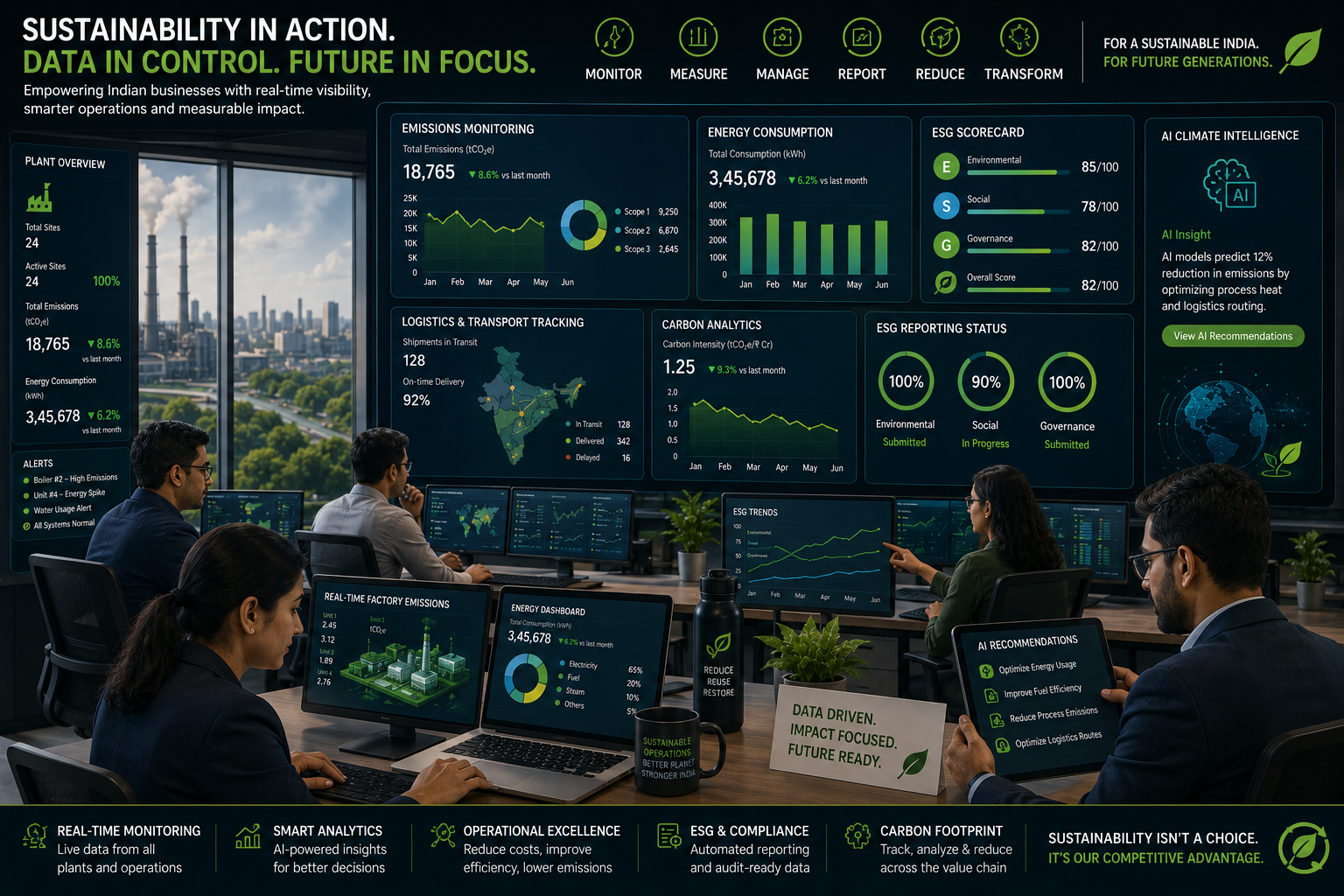
Unlike Scope 1 and Scope 2 emissions, which originate from direct operations and purchased energy, Scope 3 emissions occur throughout an organization's value chain. These emissions can come from suppliers, transportation providers, product usage, employee commuting, waste disposal, and many other indirect activities.
Because Scope 3 emissions involve multiple external stakeholders, collecting accurate data often requires collaboration across suppliers, vendors, logistics partners, and internal departments.
Did you know?
Many organizations discover that their largest carbon reduction opportunities exist within Scope 3 emissions rather than direct operational emissions.
Why Scope 3 Data Collection Matters
- Provides a complete view of organizational emissions
- Supports ESG and sustainability reporting
- Identifies supply chain carbon hotspots
- Improves climate-risk management
- Supports net-zero planning
- Enhances stakeholder transparency
- Helps prioritize emission reduction strategies
Organizations that understand value chain emissions can identify larger carbon reduction opportunities and improve sustainability performance.
Build ESG readiness and climate intelligence capabilities with sustainability-focused support and environmental insights.
Major Sources of Scope 3 Data
- Purchased goods and services
- Capital goods
- Fuel and energy-related activities
- Transportation and distribution
- Business travel
- Employee commuting
- Waste generated in operations
- Upstream and downstream supply chains
- Product use and end-of-life treatment
These categories help organizations map emissions across the entire value chain.
How Businesses Gather Supplier Data
Supplier engagement is often one of the most important aspects of Scope 3 accounting.
- Supplier questionnaires
- Sustainability surveys
- Environmental disclosure requests
- Carbon reporting platforms
- Procurement system integrations
- Supplier ESG assessments
Organizations increasingly request carbon and sustainability information directly from suppliers to improve reporting accuracy.
Using Procurement and Financial Data
When supplier-specific emissions data is unavailable, organizations often use procurement and spending information to estimate emissions.
- Purchase records
- Vendor invoices
- Procurement databases
- Financial transaction data
- Industry-average emission factors
This approach is commonly known as spend-based carbon accounting.
Collecting Transportation and Logistics Data
Transportation activities can contribute significantly to Scope 3 emissions.
- Freight transportation records
- Shipping distances
- Delivery routes
- Fuel consumption information
- Logistics partner reports
- Distribution network data
Transportation data helps organizations quantify emissions associated with moving goods across the value chain.
Tracking Business Travel and Employee Commuting
- Air travel records
- Hotel bookings
- Rental vehicle usage
- Public transportation data
- Employee commuting surveys
- Remote work assessments
These activities often contribute measurable emissions that are included within Scope 3 reporting frameworks.
Challenges in Scope 3 Data Collection
- Limited supplier transparency
- Incomplete operational data
- Large supply chain complexity
- Data quality inconsistencies
- Different reporting methodologies
- Resource-intensive data gathering
Organizations frequently use a combination of primary data and estimation methods to address reporting challenges.
Technology and Scope 3 Data Management
Modern carbon accounting platforms increasingly automate Scope 3 data collection through supplier portals, procurement integrations, and environmental data analytics.
- Carbon accounting software
- Supplier engagement platforms
- ESG reporting systems
- Climate intelligence tools
- Data visualization dashboards
- Automated emissions calculations
Technology can improve reporting accuracy while reducing manual data collection efforts.
UNITED CARBON TECHNOLOGIES
Climate & ESG Platform
Building India’s Carbon Intelligence Ecosystem
YOUR ACTION, OUR PLANET, TOGETHER, WE EMPOWER A GREENER FUTURE
Related Sustainability & ESG Resources
- Carbon Accounting Process Step by Step
- What Is a Carbon Baseline Assessment?
- Carbon Accounting vs Carbon Footprint
- What Is Climate Intelligence?
- ESG Guide India
- BRSR Guide India
Scope 3 Reporting in India
Indian organizations are increasingly examining supply chain emissions as ESG reporting expectations grow. Large enterprises, exporters, manufacturing companies, and sustainability-focused businesses are expanding carbon accounting efforts beyond direct emissions to include value chain impacts.
As climate reporting evolves, accurate Scope 3 data collection is becoming an important part of corporate sustainability and climate intelligence programs.
- Scope 3 emissions originate across the value chain.
- Supplier data is a key component of Scope 3 accounting.
- Procurement and financial records can support emissions estimates.
- Transportation, travel, and logistics data contribute to reporting.
- Technology helps improve Scope 3 data collection and management.
Frequently Asked Questions
What is Scope 3 emissions data?
Scope 3 data includes greenhouse gas emissions associated with an organization's value chain, including suppliers, transportation, travel, and product lifecycle activities.
Why is Scope 3 data difficult to collect?
Scope 3 emissions involve multiple external partners and indirect activities, making data collection more complex than direct operational emissions.
Can businesses estimate Scope 3 emissions?
Yes. Organizations often use spend-based methods, industry-average emission factors, and supplier information when direct emissions data is unavailable.
Why is Scope 3 reporting important?
Scope 3 reporting provides a more complete understanding of an organization's environmental impact and often reveals the largest emission reduction opportunities.
Explore the Future of Climate Intelligence
Learn ESG, sustainability, carbon intelligence, and climate-tech concepts shaping the future of business and environmental strategy..
Join readers building climate intelligence knowledge for a sustainable future.
Comments
Post a Comment