
How Businesses Can Reduce Scope 1 Emissions (Practical Strategies)
By United Carbon Technologies | Climate Knowledge Hub India
Reducing Scope 1 emissions is one of the most important steps businesses can take toward sustainability. These direct emissions come from company-owned operations and have a significant impact on overall carbon footprint.
How can businesses reduce Scope 1 emissions?
Businesses can reduce Scope 1 emissions by improving fuel efficiency, optimizing processes, switching to cleaner fuels, and adopting low-emission technologies.
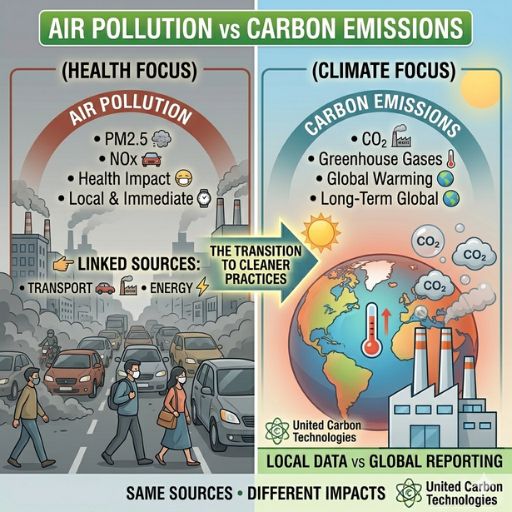
Scope 1 emissions are direct greenhouse gas emissions from sources owned or controlled by a business, such as fuel combustion, company vehicles, and industrial processes.
Managing these emissions is essential for regulatory compliance and long-term sustainability goals.
Did you know? Direct emissions from fuel usage are often one of the largest contributors to a company’s carbon footprint.
What Are Scope 1 Emissions?
- Fuel combustion in boilers and generators
- Company-owned vehicles
- Industrial production processes
- On-site energy generation
Learn how sustainability and carbon data impact your business decisions.
Key Strategies to Reduce Scope 1 Emissions
1. Improve Fuel Efficiency
- Upgrade to efficient machinery
- Optimize fuel usage
- Regular maintenance of equipment
2. Transition to Cleaner Fuels
- Shift from coal to natural gas
- Use biofuels where possible
- Adopt alternative low-carbon fuels
3. Optimize Industrial Processes
- Reduce energy-intensive operations
- Improve process efficiency
- Minimize waste and emissions
4. Electrification of Operations
- Replace fuel-based systems with electric alternatives
- Use renewable-powered electricity where possible
5. Monitor and Track Emissions
- Implement carbon tracking systems
- Set reduction targets
- Continuously monitor performance
Common Challenges Businesses Face
- High initial investment costs
- Lack of data and tracking systems
- Limited awareness of solutions
Benefits of Reducing Scope 1 Emissions
- Lower operational costs over time
- Improved regulatory compliance
- Better brand reputation
- Increased investor confidence
Why It Matters in India
With growing regulatory pressure and sustainability goals, Indian businesses must actively reduce emissions to stay competitive and compliant.
Built as part of ongoing climate-tech research and ESG innovation initiatives supported by early-stage incubation and grant programs.
Related Climate Insights
Explore
🔗 Scope 1,2,3 Explained
🔗 Measure Carbon Footprint
🔗 Carbon Accounting Guide
🔗 MSME Emissions Reduction
- Scope 1 emissions are direct emissions from operations
- Reducing them improves compliance and efficiency
- Strategies include fuel efficiency and cleaner energy
- Tracking and monitoring are essential
Frequently Asked Questions
What are Scope 1 emissions?
They are direct emissions from sources owned or controlled by a business.
How can companies reduce Scope 1 emissions?
By improving efficiency, switching fuels, and optimizing processes.
Why is Scope 1 reduction important?
It directly impacts a company’s carbon footprint and compliance.
Start Your Climate Learning Journey
Learn ESG, sustainability, and climate strategies.
Join early learners building climate intelligence.
Comments
Post a Comment