

How Water Usage Impacts Your Carbon Footprint (Hidden Climate Link)
By United Carbon Technologies | Climate Knowledge Hub India
Water usage is closely linked to energy consumption and carbon emissions. From pumping and heating to treatment and distribution, every drop of water has a hidden carbon cost.
How does water usage affect carbon emissions?
Water usage affects carbon emissions because energy is required to pump, treat, heat, and distribute water, increasing overall carbon footprint.
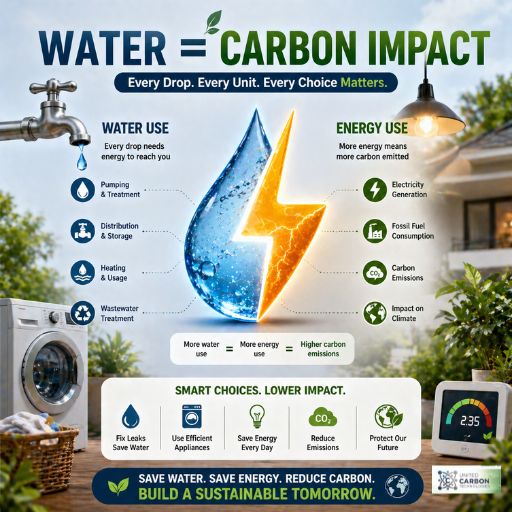
Most people think of carbon emissions only in terms of fuel or electricity. However, water usage also plays a significant role in your carbon footprint.
Understanding this connection helps individuals and families take smarter actions toward sustainability.
Did you know? Heating water at home is one of the largest contributors to household energy consumption.
The Water-Energy-Carbon Connection
Water and energy are deeply connected. Every stage of water usage requires energy:
- Pumping groundwater or supply systems
- Water treatment and purification
- Heating water for daily use
- Wastewater treatment and disposal
Learn how sustainability and carbon data impact your business decisions.
Common Activities That Increase Carbon Footprint
- Long hot showers
- Using geysers excessively
- Washing clothes in hot water
- Water wastage in kitchens and bathrooms
Simple Ways to Reduce Water & Carbon Impact
- Take shorter showers
- Fix leaks immediately
- Use water-efficient fixtures
- Heat only required water
- Reuse water where possible
Why This Matters for Indian Households
In India, where water scarcity and energy demand are both growing, reducing water usage can significantly lower environmental impact and conserve resources.
Small Changes, Big Impact
Even small reductions in daily water use can lead to meaningful reductions in energy consumption and carbon emissions over time.
Part of ongoing climate awareness and sustainability initiatives supported by research and innovation programs.
Related Water vs Carbon Insights
Explore
🔗 Household Emissions
🔗 Daily Habits
🔗 Sustainable Lifestyle
🔗 Waste Management.
- Water usage has a hidden carbon cost
- Energy is required to pump and heat water
- Reducing water usage lowers emissions
- Small actions can create meaningful impact
Frequently Asked Questions
Does saving water reduce carbon emissions?
Yes, because less energy is needed for water supply and heating.
What is the biggest source of water-related emissions?
Heating water for daily use is a major contributor.
How can households reduce water impact?
By conserving water, fixing leaks, and using efficient systems.
Start Your Climate Learning Journey
Understand your daily impact on the environment.
Join a growing community of climate learners.