
Simple Daily Habits to Reduce Carbon Footprint at Home (India Guide)
By United Carbon Technologies | Climate Knowledge Hub India
Join readers learning about carbon footprint, sustainable living, climate technology, and ESG in India.
Reducing your carbon footprint at home does not require expensive technology or major lifestyle changes. Simple daily habits such as saving electricity, reducing waste, conserving water, using sustainable transportation, and making mindful purchasing decisions can significantly reduce greenhouse gas emissions while lowering household expenses.
Part of the Climate Knowledge Hub by United Carbon Technologies—building India's climate intelligence ecosystem through sustainability education, carbon awareness, ESG research, and climate technology.
How can you reduce your carbon footprint at home?
You can reduce your carbon footprint at home by using electricity efficiently, conserving water, reducing waste, choosing sustainable transportation, buying only what you need, eating responsibly, and adopting everyday habits that lower greenhouse gas emissions.
Household carbon footprint reduction is becoming increasingly important in India as electricity demand, urbanization, transportation, and consumer lifestyles continue to grow. Every family can contribute to climate action through practical, low-cost daily habits.
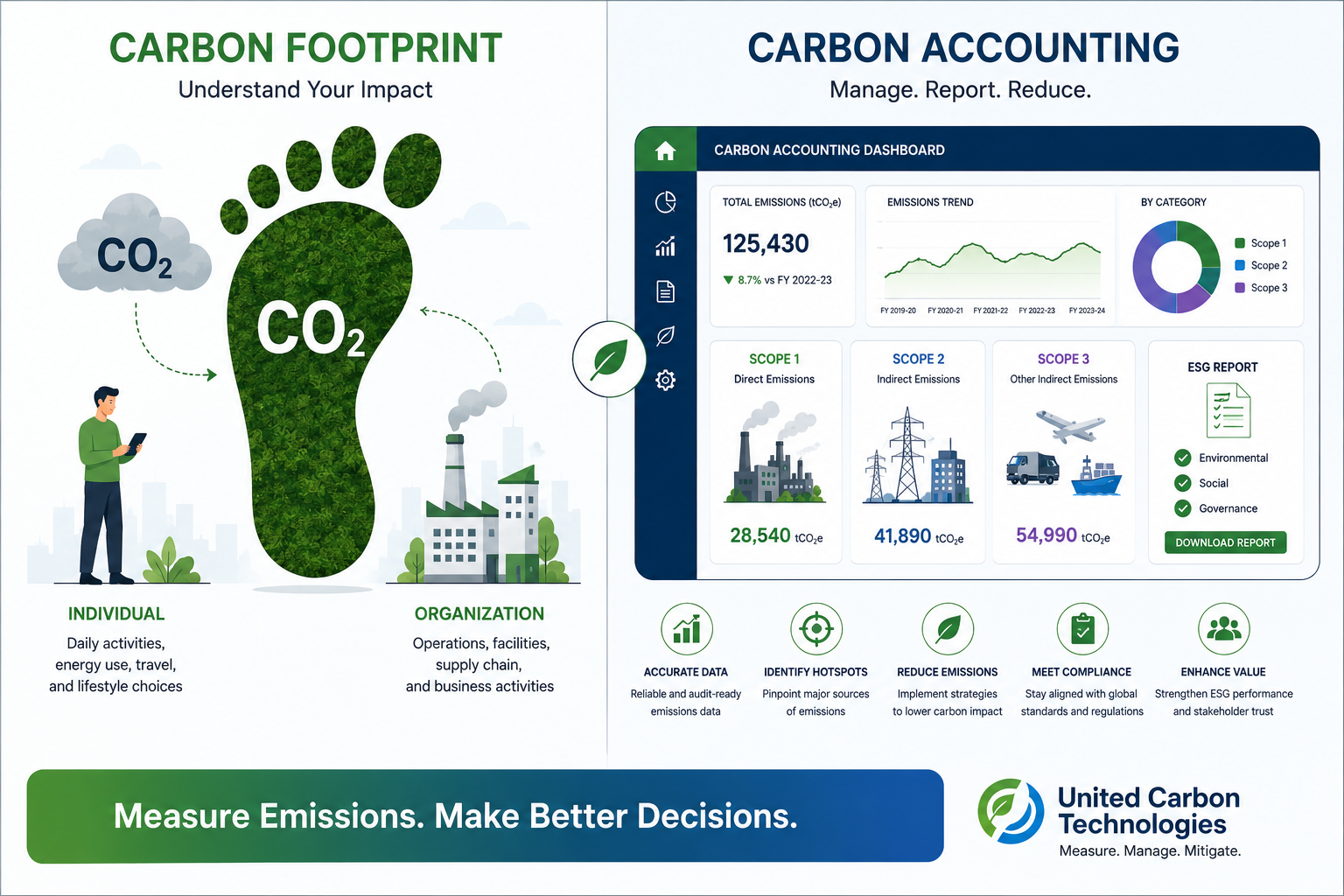
Climate change often appears to be a global challenge driven by governments and industries, but households play an equally important role. Every time we switch on lights, travel, cook meals, purchase products, or dispose of waste, we generate greenhouse gas emissions that contribute to our carbon footprint.
The encouraging news is that reducing emissions usually starts with simple decisions rather than major investments. Saving electricity, avoiding unnecessary consumption, reducing food waste, and using cleaner transport not only help the environment but can also reduce monthly household expenses.
As India continues expanding renewable energy, electric mobility, and sustainable infrastructure, individuals and families can actively participate in building a cleaner, healthier, and more climate-resilient future.
Did you know?
Many household carbon emissions come from everyday activities such as electricity use, transportation, heating or cooling, cooking, shopping, and food waste. Small improvements across these areas can create significant long-term environmental benefits.
Daily Habits That Make the Biggest Difference
Reducing your household carbon footprint does not require perfection—it requires consistency. Small sustainable habits practiced every day can collectively reduce greenhouse gas emissions while improving energy efficiency, lowering utility bills, and conserving natural resources.
The most effective daily habits usually focus on five areas:
- Using electricity more efficiently
- Conserving water
- Choosing cleaner transportation
- Reducing household waste
- Making responsible purchasing and food choices
While each action may appear small on its own, their combined impact over months and years can significantly reduce your family's environmental footprint.
Save Electricity Every Day
Electricity generation remains one of the largest contributors to carbon emissions. Although India's renewable energy capacity continues to expand, much of the electricity supply still depends on conventional energy sources. Using electricity wisely reduces both emissions and monthly expenses.
Simple energy-saving habits
- Switch off lights when leaving a room.
- Unplug chargers and electronics when not in use.
- Replace old bulbs with LED lighting.
- Use five-star rated energy-efficient appliances.
- Set air conditioners between 24°C and 26°C for better efficiency.
- Take advantage of natural daylight whenever possible.
- Run washing machines and dishwashers only with full loads.
- Maintain refrigerators and air conditioners regularly for optimal performance.
Lower electricity consumption directly reduces greenhouse gas emissions while helping households save money throughout the year.
Conserve Water to Reduce Hidden Carbon Emissions
Water and carbon emissions are closely connected. Treating, pumping, heating, and distributing water all require energy. By reducing unnecessary water use, households indirectly reduce electricity demand and associated emissions.
Easy water-saving practices
- Repair leaking taps and pipes promptly.
- Take shorter showers.
- Turn off taps while brushing your teeth.
- Reuse water where appropriate, such as for gardening.
- Install low-flow showerheads and faucets.
- Harvest rainwater where feasible.
- Operate washing machines only with full loads.
Water conservation supports climate resilience while helping communities manage increasing water stress across many parts of India.
Understanding your emissions is the first step toward reducing them. United Carbon Technologies is building India-focused climate intelligence tools that will help individuals measure, understand, and improve their environmental impact.
Choose Sustainable Transportation
Transportation is one of the largest sources of household carbon emissions. Choosing cleaner ways to travel not only lowers emissions but also reduces fuel costs, traffic congestion, and air pollution.
Lower-carbon travel choices
- Walk or cycle for short distances.
- Use public transportation whenever possible.
- Carpool with family members or colleagues.
- Combine multiple errands into one trip.
- Maintain proper tyre pressure to improve fuel efficiency.
- Consider electric vehicles when replacing older vehicles.
- Work remotely when practical to reduce commuting.
As India's electric mobility ecosystem and public transportation networks continue to expand, households will have even more opportunities to reduce transportation-related emissions.
Many organizations are now measuring employee commuting emissions, operational energy use, and supply chain carbon footprints as part of their ESG and BRSR reporting.
Reduce Household Waste
Waste generated at home has a significant environmental impact. Organic waste in landfills produces methane, a greenhouse gas that is much more potent than carbon dioxide over the short term. Reducing waste helps conserve resources, lower emissions, and create cleaner communities.
Simple waste reduction habits
- Separate biodegradable and recyclable waste.
- Compost kitchen waste whenever possible.
- Carry reusable shopping bags.
- Avoid single-use plastic products.
- Reuse containers instead of buying disposable items.
- Donate clothes, books, and household items that are still usable.
- Purchase products with minimal packaging.
Following the principles of Reduce, Reuse, and Recycle is one of the simplest ways households can reduce their overall environmental footprint.
Shop More Sustainably
Every product we buy has a carbon footprint created during manufacturing, transportation, packaging, and disposal. Making thoughtful purchasing decisions reduces unnecessary emissions throughout the supply chain.
Smarter purchasing habits
- Buy only what you genuinely need.
- Choose durable products that last longer.
- Support local businesses to reduce transportation emissions.
- Select products made from recycled or sustainable materials.
- Repair household items instead of replacing them whenever possible.
- Avoid fast fashion and disposable consumer products.
- Look for energy-efficient appliances when upgrading your home.
Responsible consumption not only reduces waste but also encourages manufacturers to adopt more sustainable production practices.
Adopt Climate-Friendly Food Habits
Food production contributes significantly to greenhouse gas emissions through agriculture, transportation, refrigeration, processing, and packaging. Small dietary changes can meaningfully reduce your household carbon footprint.
Easy sustainable food practices
- Plan meals to avoid food waste.
- Buy seasonal fruits and vegetables.
- Support locally produced food whenever possible.
- Store food properly to increase shelf life.
- Compost food scraps instead of sending them to landfill.
- Reduce unnecessary packaged foods.
- Practice mindful consumption instead of overbuying.
Reducing food waste is one of the easiest and most effective climate actions that every household can take.
Create a Greener Home Environment
Small improvements around your home can improve biodiversity, reduce heat, and create healthier living spaces. Green homes also help strengthen resilience against rising temperatures and changing climate conditions.
- Plant native trees and flowering plants.
- Grow herbs or vegetables in home gardens.
- Create balcony or rooftop gardens where space allows.
- Increase natural ventilation to reduce cooling needs.
- Use natural shade from trees to lower indoor temperatures.
- Encourage pollinator-friendly plants that support biodiversity.
Greener homes not only reduce environmental impact but also improve air quality and make neighbourhoods more climate resilient.
Why Climate Awareness Starts at Home
The transition to a low-carbon future begins with informed citizens. When families understand how daily activities affect greenhouse gas emissions, they are more likely to make sustainable choices that benefit both the environment and future generations.
Children who grow up learning sustainable habits often carry those behaviours into adulthood, creating long-term positive environmental impact. Communities that promote climate awareness also tend to adopt cleaner technologies, improve waste management, and support renewable energy initiatives more quickly.
United Carbon Technologies is building India's climate intelligence ecosystem to help individuals, businesses, and institutions better understand carbon emissions, sustainability, ESG reporting, and climate technology through practical education and digital innovation.
Benefits of Reducing Your Household Carbon Footprint
Reducing your carbon footprint is not only beneficial for the environment—it also improves your quality of life, reduces household expenses, and contributes to India's long-term sustainability goals. Many eco-friendly habits provide immediate financial and health benefits while supporting climate action.
Key benefits include:
- Lower electricity bills through energy-efficient appliances and mindful electricity usage.
- Cleaner air by reducing dependence on fossil fuels and supporting cleaner transportation.
- Water conservation that protects valuable natural resources for future generations.
- Reduced household waste through recycling, composting, and responsible consumption.
- Improved family health by adopting cleaner lifestyles, walking, cycling, and consuming fresh local foods.
- Greater climate resilience by helping communities reduce greenhouse gas emissions collectively.
- Support for India's sustainability goals through responsible everyday actions.
The cumulative impact of millions of households making small improvements can significantly reduce national emissions while building a more sustainable future.
How Technology Can Help Households Reduce Carbon Footprint
Digital technology is making sustainable living easier than ever. Smart devices, energy monitoring systems, and carbon calculators help households understand where emissions come from and identify opportunities to reduce them.
- Smart electricity meters
- Home energy monitoring apps
- Water consumption tracking
- Solar energy monitoring systems
- Electric vehicle charging management
- Household carbon footprint calculators
- AI-powered climate intelligence platforms
As climate technology continues to evolve, households will increasingly have access to digital tools that simplify sustainable living and make carbon reduction measurable.
Household Climate Action in India
India is expanding renewable energy, electric mobility, waste management initiatives, and sustainable infrastructure at an unprecedented pace. However, achieving long-term climate goals also depends on millions of households adopting environmentally responsible lifestyles.
Simple actions such as saving electricity, reducing food waste, conserving water, and choosing cleaner transportation can collectively reduce emissions while supporting India's transition toward a low-carbon economy.
Every household has an opportunity to become part of India's climate solution.
Continue Learning: ESG, Carbon & Sustainability
Continue exploring India's growing climate intelligence ecosystem with these beginner-friendly guides on ESG reporting, carbon accounting, Net Zero, sustainability, and climate technology.
- What Is ESG? A Complete Beginner Guide
- What Is Carbon Footprint in India?
- What Are Scope 1, Scope 2 & Scope 3 Emissions?
- What Is Carbon Accounting?
- What Are Carbon Credits in India?
- Carbon Markets in India Explained
- What Is Net Zero? Complete Guide
- India's Carbon Intelligence Platform Explained
- How Businesses Measure Operational Carbon
- How Businesses Collect Scope 3 Data
- Sustainability KPIs Every Company Should Track
- Carbon Reporting Software: What Businesses Should Look For
- Climate Technologies That Can Help Save the Planet
- How Renewable Energy Reduces Carbon Emissions
- Explore All ESG & Sustainability Articles
- Daily habits play a major role in reducing household carbon emissions.
- Saving electricity remains one of the most effective climate actions.
- Water conservation also reduces hidden carbon emissions.
- Waste reduction and recycling help lower methane emissions.
- Sustainable transportation reduces fuel consumption and air pollution.
- Responsible shopping minimizes supply chain emissions.
- Reducing food waste supports both climate action and resource conservation.
- Climate awareness starts with everyday decisions at home.
- Digital climate intelligence tools will make carbon tracking easier.
- Every Indian household can contribute to building a more sustainable future.
Frequently Asked Questions
1. What is a carbon footprint?
A carbon footprint is the total amount of greenhouse gases, primarily carbon dioxide (CO₂), released directly or indirectly through human activities such as electricity use, transportation, food consumption, shopping, and waste generation.
2. Why should households reduce their carbon footprint?
Reducing household carbon emissions helps slow climate change, lowers electricity and fuel bills, conserves natural resources, improves air quality, and supports India's long-term sustainability goals.
3. What are the easiest ways to reduce carbon footprint at home?
Simple actions include switching off unused lights, using LED bulbs, conserving water, reducing food waste, recycling household waste, using public transport, and choosing energy-efficient appliances.
4. Does saving electricity really reduce carbon emissions?
Yes. Electricity generation often involves greenhouse gas emissions. Using less electricity through energy-efficient appliances and responsible consumption helps reduce both emissions and household energy costs.
5. How does transportation affect household carbon footprint?
Private vehicles powered by petrol or diesel contribute significantly to household emissions. Walking, cycling, carpooling, using public transport, and adopting electric vehicles can substantially lower transportation-related carbon emissions.
6. Can reducing food waste help fight climate change?
Yes. Food waste contributes to methane emissions when it decomposes in landfills. Planning meals, storing food properly, composting organic waste, and buying only what is needed help reduce emissions and conserve resources.
7. Does conserving water reduce carbon emissions?
Yes. Treating, pumping, heating, and distributing water require energy. Conserving water reduces energy consumption, indirectly lowering greenhouse gas emissions while protecting valuable water resources.
8. How can renewable energy reduce household carbon footprint?
Renewable energy sources such as rooftop solar panels generate electricity with significantly lower greenhouse gas emissions than conventional fossil-fuel-based power, helping households reduce both emissions and long-term electricity costs.
9. Can technology help measure household carbon footprint?
Yes. Smart meters, energy-monitoring systems, household carbon calculators, and climate intelligence platforms help families understand their emissions, identify improvement opportunities, and monitor progress over time.
10. Why are households important for India's climate goals?
Millions of Indian households collectively influence national energy consumption, transportation demand, water usage, and waste generation. Small sustainable actions adopted by families across the country can create a significant positive impact on India's climate resilience and low-carbon transition.
Start Your Climate Knowledge Journey Today
Every sustainable action begins with awareness. Learn how carbon footprints, climate technology, ESG, Net Zero, and carbon accounting are shaping the future of India.
Whether you're a student, professional, business owner, or simply someone who wants to make a positive environmental impact, building climate knowledge is the first step toward meaningful action.
Join thousands of readers exploring practical climate education through the United Carbon Technologies Climate Knowledge Hub.
✔ Learn Climate Science
✔ Understand Carbon Footprint & ESG
✔ Explore Climate Technology & AI
✔ Build Sustainability Skills for the Future
United Carbon Technologies is building India's Climate Intelligence Ecosystem through climate education, ESG solutions, carbon accounting, sustainability software, and AI-powered climate intelligence platforms designed for businesses, institutions, and future climate leaders.
Comments
Post a Comment