

Waste Management and Its Role in Climate Change in India
By United Carbon Technologies | Climate Knowledge Hub India
Waste management plays a critical role in climate change, especially in a rapidly growing country like India. Improper waste disposal leads to greenhouse gas emissions, while efficient waste management can significantly reduce environmental impact.
How does waste management affect climate change?
Waste management affects climate change by influencing greenhouse gas emissions. Poor waste handling produces methane from landfills, while proper recycling and waste reduction help lower emissions.
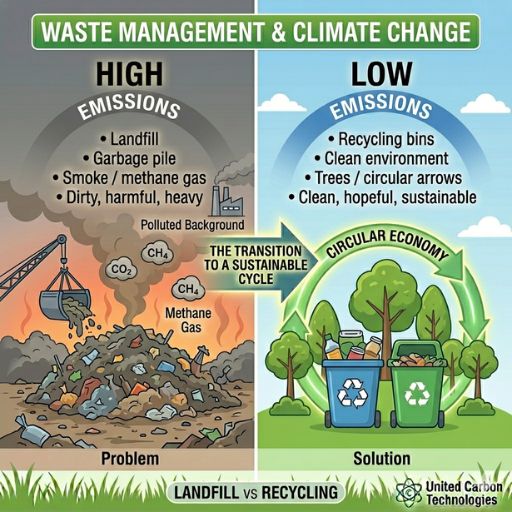
India generates a significant amount of waste daily, and how this waste is managed has a direct impact on the environment. Improper waste disposal contributes to pollution and greenhouse gas emissions.
Effective waste management practices can reduce emissions, conserve resources, and support sustainable development.
Did you know? Landfills are a major source of methane emissions, a greenhouse gas that is more potent than carbon dioxide.
How Waste Contributes to Climate Change
- Methane emissions from landfills
- Open burning of waste
- Inefficient recycling systems
- Excessive use of single-use plastics
Waste-related emissions contribute to overall carbon footprint and impact India climate.
Importance of Proper Waste Management
- Reduces greenhouse gas emissions
- Improves public health
- Conserves natural resources
- Supports circular economy
Start by managing waste effectively and adopting sustainable habits.
Waste Management Solutions
- Segregation of waste at source
- Recycling and composting
- Waste-to-energy technologies
- Reducing single-use plastics
Role of Individuals and Businesses
- Adopt sustainable consumption habits
- Reduce waste generation
- Support recycling initiatives
- Implement waste management systems
Understanding waste management and climate change in India helps individuals and businesses reduce emissions and support sustainability.
- Waste contributes to greenhouse gas emissions
- Proper waste management reduces climate impact
- Recycling and segregation are key solutions
- Individual actions play an important role
Learn more about sustainable living, carbon footprint, and climate action.
Frequently Asked Questions
Why is waste management important for climate change?
It reduces greenhouse gas emissions and environmental pollution.
What gas is produced by landfills?
Methane is the primary gas produced by decomposing waste.
How can individuals improve waste management?
By reducing waste, recycling, and segregating waste properly.
Learn how United Carbon Technologies helps organizations with carbon accounting, ESG reporting, climate intelligence, and sustainability strategy.
How Landfills Contribute to Climate Change
Landfills are among the largest human-made sources of methane emissions. When organic waste such as food scraps, garden waste, and paper decomposes without oxygen inside landfills, methane gas is produced. Unlike carbon dioxide, methane has a much higher warming effect over the short term, making landfill management a critical climate issue.
Many Indian cities continue to rely on open dumping grounds where waste remains untreated for years. Besides greenhouse gas emissions, these sites contaminate groundwater, create foul odors, attract pests, and pose significant health risks to nearby communities.
- Methane emissions from decomposing organic waste
- Leachate polluting groundwater and nearby rivers
- Frequent landfill fires releasing toxic smoke
- Loss of recyclable materials buried in waste
- Higher environmental cleanup costs
The Importance of Waste Segregation at Source
Waste segregation is the foundation of an efficient waste management system. Separating waste where it is generated makes recycling easier, improves compost quality, reduces landfill waste, and lowers greenhouse gas emissions.
Households, offices, schools, and industries should separate waste into categories such as:
- Wet or biodegradable waste
- Dry recyclable waste
- Plastic waste
- Electronic waste (E-waste)
- Hazardous waste such as batteries and chemicals
- Biomedical waste where applicable
Simple segregation practices significantly increase recycling efficiency while reducing the burden on municipal waste collection systems.
Recycling and the Circular Economy
Traditional economies follow a "take, make, and dispose" model. A circular economy replaces this approach by keeping materials in use for as long as possible through reuse, repair, recycling, and recovery.
Instead of treating waste as garbage, the circular economy views waste as a valuable resource that can re-enter production cycles.
Benefits include:
- Lower demand for virgin raw materials
- Reduced industrial emissions
- Energy savings during manufacturing
- Lower landfill dependency
- Creation of green jobs
- Improved resource efficiency
Many Indian businesses are now integrating circular economy principles into their ESG and sustainability strategies to reduce costs while improving environmental performance.
Waste-to-Energy: Opportunity and Challenges
Waste-to-Energy (WtE) facilities convert certain types of waste into electricity or heat through controlled technologies. While these plants can reduce landfill volumes, they are most effective when waste is properly segregated beforehand.
Waste-to-energy should complement—not replace—recycling and composting. Recovering valuable materials generally delivers greater environmental benefits than burning recyclable waste.
Successful Waste-to-Energy projects require:
- Proper waste segregation
- Strict emission monitoring
- Modern pollution control systems
- High-quality municipal waste collection
- Strong environmental regulations
Waste Management Challenges in India
India's rapidly growing urban population has increased the pressure on municipal waste management systems. Although many cities have introduced segregation initiatives and improved collection services, challenges remain across infrastructure, public awareness, and recycling capacity.
Key challenges include:
- Rapid growth in municipal solid waste generation
- Limited segregation at household level
- Overloaded landfill sites
- Plastic pollution in urban and coastal regions
- Informal waste collection systems
- Low recycling rates for several waste streams
- Increasing electronic waste generation
Government initiatives such as the Swachh Bharat Mission, Plastic Waste Management Rules, Extended Producer Responsibility (EPR), and municipal solid waste regulations are encouraging better waste management practices across India.
Why United Carbon Technologies Covers Waste Management
Waste management is closely connected to carbon emissions, ESG reporting, resource efficiency, and circular economy practices. As climate regulations continue evolving, organizations increasingly need reliable emissions data and sustainability insights to improve environmental performance.
United Carbon Technologies develops carbon intelligence solutions that help businesses understand emissions, strengthen sustainability strategies, and prepare for the low-carbon economy.
Continue Learning
- What Is a Carbon Footprint? Complete Beginner Guide
- How Transportation Impacts Carbon Emissions in India
- What Is esg compliance vs sustainability
- Carbon Credit Market in India Explained
- Top Climate Technologies Transforming India
- How Individuals Can Achieve a Net Zero Lifestyle
- ESG Compliance vs Sustainability Explained
- Climate Change Explained for Beginners
Quick Summary
- Improper waste management contributes significantly to greenhouse gas emissions.
- Methane released from landfills is a powerful contributor to global warming.
- Waste segregation is the first step toward effective recycling.
- Recycling conserves resources while reducing industrial emissions.
- Composting organic waste helps divert biodegradable materials from landfills.
- The circular economy keeps materials in use for longer and minimizes waste generation.
- Businesses can reduce costs and strengthen ESG performance through better waste management.
- Government policies are encouraging improved waste collection, recycling, and plastic management across India.
- Individual actions collectively make a measurable climate impact.
- Better waste management supports India's journey toward a low-carbon future.
Key Takeaways
- Waste management is both an environmental and climate issue.
- Reducing waste is more effective than managing waste after it is generated.
- Segregation, recycling, and composting remain the most practical climate solutions.
- Circular economy practices reduce resource consumption and emissions.
- Businesses should integrate waste reduction into ESG and sustainability strategies.
- Every household can contribute through responsible consumption and proper waste disposal.
Frequently Asked Questions
1. How does waste management affect climate change?
Poor waste management produces methane, carbon dioxide, and other greenhouse gases that contribute to global warming. Proper recycling, composting, and waste reduction help lower emissions.
2. Why is methane from landfills dangerous?
Methane is a highly potent greenhouse gas released when organic waste decomposes without oxygen in landfills.
3. What is waste segregation?
Waste segregation means separating biodegradable, recyclable, hazardous, plastic, and electronic waste before disposal to improve recycling efficiency.
4. How does recycling reduce carbon emissions?
Manufacturing products from recycled materials generally uses less energy than producing them from raw materials, resulting in lower emissions.
5. What is the circular economy?
The circular economy focuses on reducing waste by reusing, repairing, recycling, and recovering materials instead of discarding them after one use.
6. What role do businesses play in waste management?
Businesses can reduce waste through sustainable procurement, recycling programs, efficient production, packaging improvements, and ESG initiatives.
7. How does food waste contribute to climate change?
Food waste decomposes in landfills and releases methane while also wasting the energy, water, and resources used during food production.
8. What are India's biggest waste management challenges?
Major challenges include poor segregation, growing urban waste, plastic pollution, landfill dependence, and limited recycling infrastructure.
9. Can individuals reduce waste-related emissions?
Yes. Reducing consumption, composting kitchen waste, recycling properly, avoiding single-use plastics, and repairing products all lower emissions.
10. Why is waste management important for ESG?
Waste reduction improves environmental performance, supports regulatory compliance, reduces operational costs, and strengthens sustainability reporting.
Build a Smarter Waste & Carbon Strategy
Waste reduction is one of the quickest ways to lower emissions and improve sustainability performance. Whether you're an individual, startup, MSME, or large enterprise, understanding your environmental impact is the first step toward meaningful climate action.
United Carbon Technologies is building carbon intelligence solutions that help organizations measure emissions, strengthen ESG reporting, and accelerate their transition toward a circular, low-carbon economy.
Join thousands of climate learners, sustainability professionals, and businesses building a greener future with United Carbon Technologies.