

Materiality Assessment Explained for ESG Reporting (2026)
Learn what a materiality assessment is, why it matters in ESG reporting, and how businesses identify their most significant sustainability topics.
By United Carbon Technologies | Climate Knowledge Hub India
Published: July 2026 | Last Updated: July 2026 | 12 min read
Join readers learning about ESG Reporting, Sustainability Strategy, Carbon Accounting, Climate Intelligence, Corporate Governance, and responsible business practices.
Every organization faces numerous environmental, social, and governance (ESG) challenges, but not every issue has the same impact on business performance or stakeholder decisions. A materiality assessment helps organizations identify which sustainability topics matter most to both the business and its stakeholders.
Materiality assessments are a key component of modern ESG reporting frameworks, including GRI, IFRS Sustainability Disclosure Standards, and many corporate sustainability strategies. By prioritizing the most significant ESG topics, businesses can focus resources where they create the greatest value and impact.
This beginner-friendly guide explains what a materiality assessment is, why it is important, how the process works, and how organizations can use the results to improve ESG reporting, risk management, and long-term sustainability performance.
Featured Snippet
A materiality assessment is a structured process that identifies the environmental, social, and governance issues most important to a business and its stakeholders. It helps organizations prioritize ESG topics, improve sustainability reporting, manage risks, and support better business decisions.
Introduction
Sustainability reporting has evolved beyond simply publishing environmental data. Today, organizations are expected to disclose the ESG issues that genuinely influence their business performance and matter most to investors, customers, employees, regulators, and communities.
A materiality assessment provides a structured approach to identifying and prioritizing these issues. Rather than treating every sustainability topic equally, businesses evaluate which issues have the greatest potential to affect long-term value creation, operational resilience, and stakeholder trust.
Whether an organization is preparing its first ESG report or strengthening an existing sustainability strategy, conducting a materiality assessment ensures reporting remains focused, transparent, and aligned with stakeholder expectations.
As ESG reporting becomes increasingly important across global markets, materiality assessments are becoming a foundational step in responsible corporate governance.
Carbon Intelligence • ESG Strategy • Better Business Decisions
Helping Organizations Prioritize What Matters Most
United Carbon Technologies is developing Carbon Intelligence and ESG solutions that help organizations identify material sustainability topics, strengthen ESG reporting, improve stakeholder engagement, and build data-driven sustainability strategies.
💡 Did You Know?
- Materiality assessments are widely used in ESG reporting frameworks such as GRI and IFRS Sustainability Disclosure Standards.
- A well-designed materiality assessment helps businesses focus on the sustainability issues with the greatest strategic importance.
- Stakeholder engagement is one of the most important parts of identifying material ESG topics.
- Materiality assessments should be reviewed periodically as business priorities, risks, and stakeholder expectations evolve.
1. What Is a Materiality Assessment?
A materiality assessment is a systematic process used to determine which ESG topics are most significant to an organization and its stakeholders. It helps businesses prioritize sustainability issues that have the greatest impact on long-term business success, risk management, and stakeholder decision-making.
Rather than reporting every possible sustainability topic, organizations identify the issues that are most relevant to their operations, industry, value chain, and stakeholder expectations.
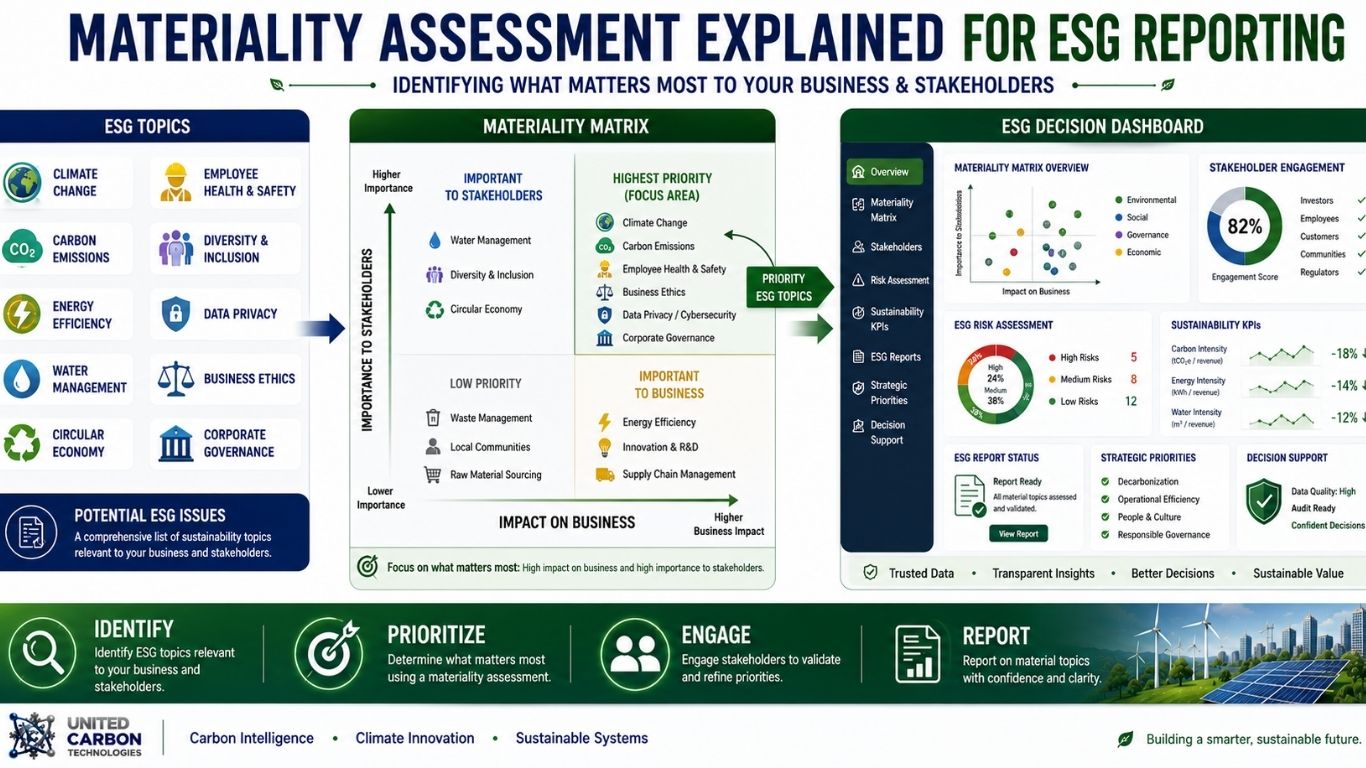
The outcome is typically presented as a materiality matrix, showing which ESG topics are considered the highest priorities for both the business and its stakeholders.
Examples of Material ESG Topics
- Climate change and greenhouse gas emissions
- Energy efficiency
- Water management
- Waste and circular economy
- Employee health and safety
- Diversity, equity and inclusion
- Business ethics and compliance
- Data privacy and cybersecurity
2. Why Materiality Assessments Matter
Materiality assessments help organizations focus their ESG efforts where they create the greatest value. By understanding which issues matter most, businesses can allocate resources more effectively, improve reporting quality, strengthen stakeholder trust, and make better strategic decisions.
They also reduce unnecessary reporting by ensuring sustainability disclosures remain relevant, meaningful, and aligned with internationally recognized ESG frameworks.
Benefits of a Materiality Assessment
- Improves ESG reporting quality.
- Supports strategic decision-making.
- Strengthens stakeholder engagement.
- Helps identify ESG risks and opportunities.
- Improves transparency and accountability.
- Aligns sustainability initiatives with business goals.
A well-executed materiality assessment helps organizations focus on sustainability issues that drive long-term value and stakeholder trust.
United Carbon Technologies is developing Carbon Intelligence and ESG solutions that help organizations conduct materiality assessments, prioritize sustainability topics, and build data-driven ESG reporting frameworks.
3. How a Materiality Assessment Works
A materiality assessment follows a structured process that helps organizations identify, evaluate, and prioritize the ESG topics that are most significant to both the business and its stakeholders. Although the exact methodology varies by organization and reporting framework, the overall approach remains similar.
The goal is to ensure that sustainability reporting focuses on issues with the greatest strategic importance rather than attempting to cover every possible ESG topic equally.
Typical Materiality Assessment Process
- Identify potential ESG topics.
- Map key stakeholders.
- Collect stakeholder feedback.
- Evaluate business impacts.
- Prioritize material issues.
- Create a materiality matrix.
- Validate findings with leadership.
- Integrate results into ESG strategy and reporting.
4. Understanding the Materiality Matrix
The results of a materiality assessment are commonly presented using a materiality matrix. This visual tool helps organizations compare the importance of ESG topics from two different perspectives—stakeholder importance and business impact.
Typical Axes of a Materiality Matrix
- Horizontal Axis: Importance to the Business
- Vertical Axis: Importance to Stakeholders
Topics appearing in the upper-right corner of the matrix represent the highest-priority issues because they are considered highly significant by both the organization and its stakeholders.
Examples of High-Priority Material Topics
- Climate Change
- Carbon Emissions
- Energy Efficiency
- Occupational Health & Safety
- Business Ethics
- Supply Chain Sustainability
- Cybersecurity
- Corporate Governance
5. Stakeholder Engagement in Materiality Assessments
Stakeholder engagement is one of the most important components of a materiality assessment. Organizations gather insights from individuals and groups that are affected by—or can influence—the business and its sustainability performance.
Common Stakeholders
- Employees
- Customers
- Investors
- Suppliers
- Regulators
- Communities
- Business Partners
- Industry Associations
Stakeholder feedback is typically collected through surveys, interviews, workshops, questionnaires, focus groups, and management discussions.
6. Benefits of Conducting a Materiality Assessment
Organizations that regularly perform materiality assessments gain a better understanding of emerging ESG risks, stakeholder expectations, and long-term sustainability opportunities.
Key Benefits
- Improves ESG reporting quality.
- Supports better risk management.
- Strengthens stakeholder trust.
- Improves sustainability strategy.
- Enhances board-level decision-making.
- Prioritizes resource allocation.
- Supports long-term business resilience.
7. Common Challenges and Mistakes
While materiality assessments provide valuable insights, organizations often face challenges when collecting stakeholder feedback, evaluating ESG impacts, or maintaining consistent assessment methodologies.
Common Mistakes
- Engaging too few stakeholders.
- Ignoring emerging ESG risks.
- Treating the assessment as a one-time exercise.
- Failing to document the methodology.
- Not updating material topics regularly.
- Focusing only on compliance instead of strategic value.
- Insufficient executive involvement.
8. Best Practices for Effective Materiality Assessments
- Use internationally recognized ESG frameworks.
- Engage a diverse group of stakeholders.
- Collect both qualitative and quantitative feedback.
- Document assumptions and evaluation criteria.
- Review material topics periodically.
- Align results with business strategy.
- Use digital ESG platforms to improve transparency.
9. Materiality Assessments in the Indian Business Context
As Indian companies expand globally and strengthen sustainability reporting, materiality assessments are becoming increasingly important. Businesses preparing Business Responsibility and Sustainability Reports (BRSR), voluntary ESG disclosures, or international sustainability reports benefit from identifying the ESG issues that matter most to investors, regulators, customers, and society.
Industries including manufacturing, infrastructure, pharmaceuticals, IT, financial services, and energy are increasingly integrating materiality assessments into their ESG governance processes.
10. Building a Strong ESG Strategy Through Materiality
A materiality assessment is more than a reporting exercise—it is a strategic planning tool. By identifying the sustainability issues with the greatest business impact and stakeholder importance, organizations can develop focused ESG strategies that create long-term value.
When integrated into governance, risk management, and corporate strategy, materiality assessments help organizations improve resilience, strengthen stakeholder relationships, and support sustainable growth.
Transform ESG Priorities into Business Value
United Carbon Technologies is developing Carbon Intelligence and ESG solutions that help organizations conduct materiality assessments, identify priority sustainability topics, strengthen stakeholder engagement, and build data-driven ESG reporting strategies.
India Context
With increasing expectations around BRSR disclosures, responsible business practices, and sustainable finance, Indian organizations are placing greater emphasis on identifying material ESG topics. Companies that conduct regular materiality assessments are better positioned to meet stakeholder expectations, improve governance, and demonstrate long-term sustainability performance.
What's Next?
After identifying your organization's most important ESG topics, the next step is learning how to establish meaningful ESG goals, define measurable Key Performance Indicators (KPIs), and monitor sustainability performance over time.
Related Reads
- Operational Boundaries in Carbon Accounting Explained
- How Businesses Improve Carbon Data Quality
- What Is ESG Reporting? A Beginner's Guide
- Understanding Scope 3 Emissions
- How Businesses Define Organizational Boundaries for Carbon Accounting
- Carbon Accounting Explained
💡 Expert Insight
Leading organizations no longer view materiality assessments as a compliance exercise. Instead, they use them to align sustainability initiatives with corporate strategy, identify emerging ESG risks, improve stakeholder communication, and create long-term business value. As reporting standards continue to evolve, maintaining an up-to-date materiality assessment will become an essential part of effective ESG governance.
Conclusion
A materiality assessment helps organizations focus on the ESG issues that truly matter. By identifying and prioritizing significant sustainability topics, businesses can improve reporting quality, allocate resources effectively, strengthen stakeholder relationships, and support informed decision-making.
As sustainability expectations continue to grow worldwide, organizations that regularly assess material ESG topics will be better prepared to manage risks, capture opportunities, and build resilient businesses for the future.
Quick Summary
- A materiality assessment identifies the ESG topics most important to a business and its stakeholders.
- It supports focused and meaningful ESG reporting.
- Stakeholder engagement is central to the assessment process.
- A materiality matrix helps prioritize sustainability issues.
- Regular reviews ensure assessments remain relevant.
- Materiality strengthens governance, strategy, and risk management.
- It creates a strong foundation for long-term sustainability performance.
Frequently Asked Questions (FAQs)
1. What is a materiality assessment?
A materiality assessment identifies and prioritizes the ESG issues that are most important to an organization and its stakeholders.
2. Why is a materiality assessment important?
It helps businesses focus sustainability efforts on issues that have the greatest business impact and stakeholder relevance.
3. What is a materiality matrix?
A materiality matrix visually ranks ESG topics based on stakeholder importance and business impact.
4. Who should participate in a materiality assessment?
Employees, customers, investors, suppliers, regulators, communities, and senior management are common stakeholders.
5. How often should a materiality assessment be updated?
Most organizations review and update their assessment annually or whenever significant business or regulatory changes occur.
6. Which ESG frameworks use materiality assessments?
Frameworks such as GRI, IFRS Sustainability Disclosure Standards, and BRSR encourage or incorporate materiality assessments.
7. Can small businesses conduct a materiality assessment?
Yes. Organizations of all sizes can benefit by identifying their most significant sustainability issues.
8. How does stakeholder engagement improve materiality?
It ensures the assessment reflects diverse perspectives and identifies issues that matter most to affected groups.
9. What are examples of material ESG topics?
Examples include climate change, carbon emissions, employee health and safety, diversity, governance, and responsible sourcing.
10. How does a materiality assessment support ESG reporting?
It helps organizations produce focused, transparent, and decision-useful sustainability disclosures aligned with stakeholder expectations.
Key Takeaways
- Materiality assessments prioritize the ESG issues that matter most.
- Stakeholder engagement is essential for meaningful results.
- Materiality matrices simplify ESG prioritization.
- Regular updates improve reporting relevance.
- Materiality supports stronger ESG strategies and long-term business resilience.
Build a Stronger ESG Strategy with United Carbon Technologies
Understanding what matters most is the foundation of effective sustainability management. Explore more ESG and Carbon Intelligence guides from United Carbon Technologies to strengthen your reporting, improve stakeholder engagement, and build a future-ready sustainability strategy.