

Renewable Energy Certificates (RECs) Explained
By United Carbon Technologies | Climate Knowledge Hub India
Join readers exploring renewable energy, carbon markets, ESG reporting, climate intelligence, and sustainability.
As businesses work toward sustainability goals and lower-carbon operations, Renewable Energy Certificates (RECs) have become an important mechanism for supporting renewable electricity generation. Understanding how RECs work helps organizations strengthen ESG strategies and demonstrate renewable energy commitments.
What are Renewable Energy Certificates (RECs)?
A Renewable Energy Certificate (REC) is a market-based certificate that represents the environmental attributes of one megawatt-hour (MWh) of electricity generated from renewable energy sources such as solar, wind, hydro, or biomass. Businesses can purchase RECs to support renewable energy generation and demonstrate renewable electricity use.
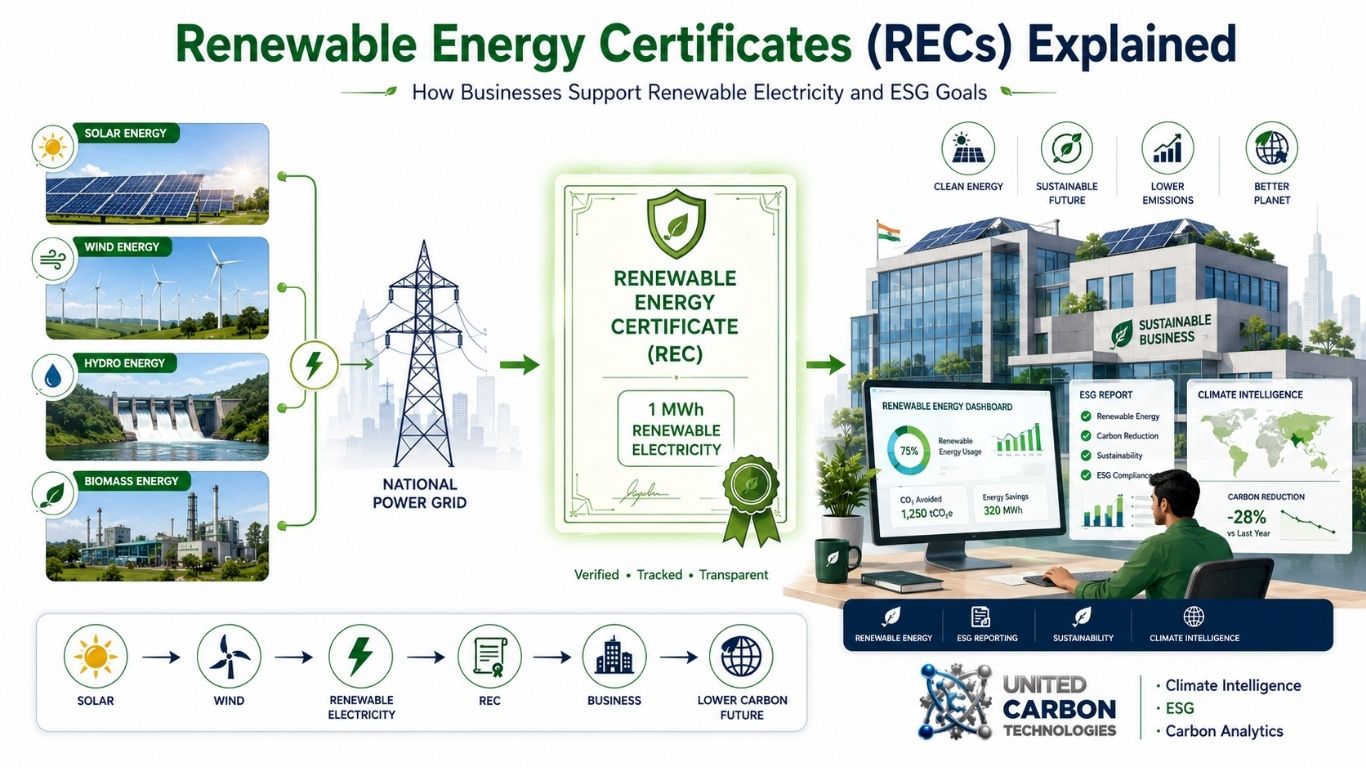
Electricity delivered through a power grid comes from many different generation sources, making it difficult to identify the exact origin of the electricity consumed by an individual business.
Renewable Energy Certificates provide a transparent accounting mechanism that allows organizations to financially support renewable energy production, even when renewable electricity cannot be delivered directly to their facilities.
Today, RECs are widely used by businesses, educational institutions, government agencies, and multinational companies as part of broader sustainability and climate commitments.
Did you know?
One Renewable Energy Certificate (REC) typically represents the environmental benefits associated with generating one megawatt-hour (1 MWh) of electricity from an eligible renewable energy source.
Why Renewable Energy Certificates Exist
Renewable electricity generation provides environmental benefits that extend beyond the physical electricity produced. RECs were developed to separate these environmental attributes from the electricity itself, creating a market that encourages additional renewable energy investment.
- Promote renewable electricity generation
- Support clean energy investments
- Encourage lower-carbon electricity systems
- Help organizations meet renewable energy goals
- Increase transparency in renewable energy markets
- Provide flexibility for businesses operating across multiple locations
How Renewable Energy Certificates Work
When an eligible renewable energy facility generates electricity, it produces both electrical power and the associated environmental attributes. These environmental benefits are issued as Renewable Energy Certificates, which can be traded separately from the electricity itself.
- Renewable electricity is generated.
- A Renewable Energy Certificate is created.
- The electricity enters the power grid.
- The REC may be sold separately.
- A business purchases and retires the REC.
- The purchaser can claim support for renewable electricity generation according to applicable reporting standards.
Common Renewable Energy Sources That Generate RECs
- Solar power
- Wind energy
- Hydroelectric power
- Biomass energy
- Geothermal energy
- Certain eligible waste-to-energy projects
Eligibility depends on national regulations and renewable energy certification programs.
Understanding renewable energy markets helps businesses make informed sustainability investments while strengthening ESG reporting and long-term climate strategies.
United Carbon Technologies helps businesses build climate intelligence capabilities, improve ESG readiness, and understand renewable energy reporting for a more sustainable future.
Benefits of Renewable Energy Certificates
Renewable Energy Certificates provide organizations with a practical way to support renewable energy development while demonstrating environmental responsibility. They are often incorporated into corporate sustainability programs and renewable electricity strategies.
- Support renewable energy generation
- Strengthen ESG reporting
- Help achieve renewable electricity targets
- Demonstrate environmental commitment
- Enhance corporate sustainability initiatives
- Improve stakeholder confidence
- Support long-term climate strategies
How Businesses Use RECs
Organizations across many industries purchase Renewable Energy Certificates to complement their sustainability programs and renewable energy commitments.
- Reduce reported electricity-related emissions
- Support renewable energy procurement strategies
- Strengthen ESG disclosures
- Meet voluntary sustainability commitments
- Demonstrate renewable electricity usage
- Support corporate climate goals
RECs are particularly useful for companies operating from leased facilities or locations where direct renewable energy procurement may not yet be practical.
Renewable Energy Certificates vs Carbon Credits
Although both instruments support sustainability initiatives, Renewable Energy Certificates and Carbon Credits serve different purposes.
| Renewable Energy Certificates (RECs) | Carbon Credits |
|---|---|
| Represent renewable electricity generation | Represent one metric tonne of CO₂e reduced or removed |
| Measured in megawatt-hours (MWh) | Measured in tonnes of CO₂ equivalent |
| Support renewable energy markets | Support emissions reduction or carbon removal projects |
| Focus on electricity consumption | Focus on greenhouse gas emissions |
Challenges When Using RECs
While RECs play an important role in renewable energy markets, businesses should understand both their benefits and limitations when developing sustainability strategies.
- Different certification standards across regions
- Need for accurate tracking and retirement
- Potential misunderstanding of environmental claims
- Should complement—not replace—energy efficiency efforts
- Require transparent sustainability reporting
Organizations generally achieve stronger sustainability outcomes by combining renewable electricity procurement, energy efficiency improvements, emissions reduction initiatives, and responsible REC purchases.
Renewable Energy Certificates in India
India has established a Renewable Energy Certificate mechanism to encourage renewable electricity generation and support the country's transition toward cleaner energy sources. As renewable energy capacity continues to grow, RECs remain an important market-based instrument that promotes investment in renewable power.
Many businesses operating in India are increasingly incorporating renewable energy procurement into their ESG strategies, sustainability reporting, and long-term climate action plans.
Renewable Energy & Climate Intelligence
Understanding renewable energy markets is becoming increasingly important for organizations working toward net-zero goals. United Carbon Technologies is developing climate intelligence solutions that help businesses understand carbon accounting, ESG reporting, renewable energy strategies, and sustainability analytics through its ACIS platform.
Related Reads
- Renewable Energy Careers in India
- What Is a Carbon Disclosure Report?
- ESG Reporting Checklist for Businesses
- How to Set Science-Based Climate Targets for Businesses
- Carbon Reporting Software: What Businesses Should Look For
- How Climate Data Helps Businesses Make Decisions
- Complete Guide to Carbon Footprint in India
- Understanding Carbon Disclosure: What Companies Need to Report
Renewable Energy Certificates in India's Clean Energy Transition
India is rapidly expanding its renewable energy capacity through large-scale investments in solar, wind, hydro, and other clean energy technologies. Renewable Energy Certificates support this transition by creating a market-based mechanism that encourages renewable electricity generation while helping organizations participate in India's clean energy ecosystem.
As businesses strengthen their ESG strategies and climate commitments, understanding RECs is becoming increasingly valuable for sustainability managers, procurement teams, ESG professionals, and corporate decision-makers.
- Renewable Energy Certificates represent the environmental attributes of renewable electricity.
- One REC generally represents one megawatt-hour (1 MWh) of renewable electricity generated.
- Businesses use RECs to support renewable energy generation and strengthen ESG commitments.
- RECs differ from carbon credits and serve different sustainability objectives.
- Renewable energy strategies are becoming an important part of corporate climate action.
Frequently Asked Questions
What is a Renewable Energy Certificate (REC)?
A Renewable Energy Certificate is a market-based certificate representing the environmental benefits associated with generating one megawatt-hour of electricity from eligible renewable energy sources.
How are RECs different from carbon credits?
RECs represent renewable electricity generation, while carbon credits represent verified reductions or removals of greenhouse gas emissions measured in tonnes of CO₂ equivalent.
Why do businesses buy Renewable Energy Certificates?
Organizations purchase RECs to support renewable electricity generation, strengthen ESG reporting, demonstrate renewable energy commitments, and contribute to broader sustainability goals.
Can RECs help businesses achieve sustainability goals?
Yes. RECs can support renewable electricity strategies and ESG objectives when combined with energy efficiency improvements and emissions reduction initiatives.
Are Renewable Energy Certificates used in India?
Yes. India operates a Renewable Energy Certificate mechanism that supports renewable electricity generation and encourages greater adoption of clean energy across the country.
Build Your Climate Intelligence Knowledge
Explore practical guides on renewable energy, carbon accounting, ESG reporting, climate technology, and sustainability to prepare for the future of business.
Join thousands of readers learning about climate intelligence, renewable energy, and sustainable business practices.