

Industrial Electrification: How Indian Industries Can Replace Fossil-Fuel Energy
Search Description: Discover how industrial electrification can help Indian industries replace fossil-fuel energy, reduce emissions and build efficient, low-carbon operations.
By United Carbon Technologies | Climate Knowledge Hub India
Published: October 3, 2026 | Updated: October 3, 2026
Follow United Carbon Technologies for practical insights on ESG, carbon accounting, climate intelligence, sustainability and emerging climate technologies.
+ Follow for ESG Insights
Industrial electrification is becoming an important part of the global transition toward cleaner and more efficient industrial operations. For India, where manufacturing, infrastructure development and industrial energy demand continue to shape economic growth, replacing fossil-fuel-based processes with electricity-powered alternatives presents both an opportunity and a practical challenge.
From electric boilers and industrial heat pumps to induction furnaces, electric vehicles used in industrial logistics and advanced electric heating systems, several technologies are changing how factories and industrial facilities consume energy.
However, industrial electrification is not simply about replacing every gas-fired or coal-fired machine with an electric alternative. Businesses must consider process temperatures, equipment compatibility, electricity availability, operating costs, production requirements and the emissions associated with their electricity supply.
For Indian manufacturers and industrial operators, the central question is increasingly important: Where can electrification realistically replace fossil-fuel energy, and how can businesses integrate it into their long-term decarbonization strategies?
Featured Snippet: What Is Industrial Electrification?
Industrial electrification is the process of replacing equipment, heating systems and industrial operations powered by fossil fuels with technologies that use electricity. Examples include electric boilers, heat pumps, induction furnaces, electric process heating and electrically powered industrial machinery.
When powered by low-emission electricity, industrial electrification can reduce direct fossil-fuel combustion, improve energy efficiency in suitable applications and support industrial decarbonization.
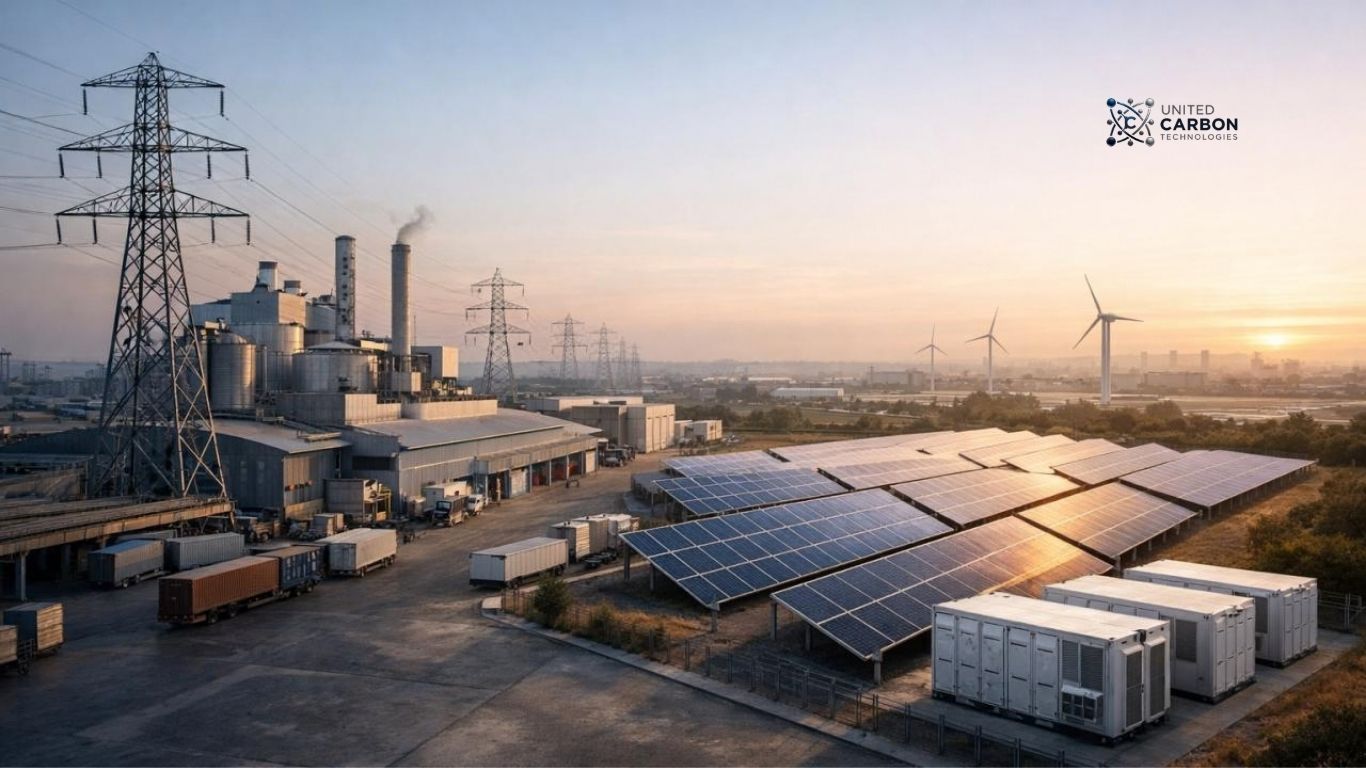
Industrial electrification can help Indian factories transition from fossil-fuel-powered equipment to modern electricity-based production systems.
Introduction: Why Industrial Electrification Matters for India
India's industrial sector depends on a diverse range of energy sources. Coal, natural gas, petroleum products, electricity and other fuels support activities ranging from steel production and cement manufacturing to textiles, food processing, chemicals and engineering.
Many industrial operations use fossil fuels not only to generate electricity but also to produce heat, steam and mechanical energy. These energy requirements can create substantial direct greenhouse-gas emissions, particularly when industrial equipment relies on the combustion of coal, diesel, furnace oil or natural gas.
Industrial electrification offers an alternative pathway by shifting selected energy-consuming processes toward electricity-powered equipment and technologies.
The potential benefits extend beyond emissions reduction. Electrification can also improve process control, support automation, reduce exposure to certain fuel-price fluctuations and create opportunities to integrate renewable electricity into industrial energy systems.
Nevertheless, its climate benefits depend on the electricity source. Electrifying a process using electricity with a high emissions intensity may deliver a different environmental outcome from electrifying the same process using renewable or otherwise low-emission electricity.
This makes industrial electrification an important topic for companies developing credible carbon-reduction strategies, energy-transition plans and long-term sustainability roadmaps.
Related Reads
Explore these related UCT guides to understand the wider industrial decarbonization and climate-technology landscape.
→ Climate Technology: Explore Emerging Solutions for Industrial Decarbonization
Discover how emerging climate technologies are changing the way businesses approach emissions reduction and sustainable operations.
→ Green Hydrogen in India: Where It Can Help Businesses Reduce Industrial Emissions
Understand where green hydrogen can complement electrification in hydrogen-intensive and hard-to-abate industrial sectors.
→ Marginal Abatement Cost Curves Explained: How Companies Can Prioritize Carbon Reduction Projects
Learn how companies can compare emissions-reduction opportunities and assess potential decarbonization investments.
→ What Is a Corporate Climate Transition Plan? A Practical Guide for Indian Businesses
Explore how businesses can organize climate targets, operational improvements and technology investments into a structured transition strategy.
→ Climate Scenario Analysis: How Businesses Can Test Their Resilience Against Future Climate Risks
Understand how climate scenarios can help companies examine future energy, operational and transition-related risks.
Measure Before You Electrify
Every industrial electrification strategy should begin with an understanding of existing energy consumption and emissions.
Identifying major fossil-fuel-consuming processes, electricity demand and emissions sources can help businesses determine where electrification may provide meaningful environmental and operational benefits.
Explore UCT Climate IntelligenceDid You Know?
Industrial electrification is not limited to replacing fossil-fuel-powered machinery with electric motors. Technologies such as industrial heat pumps can deliver useful heat at significantly higher efficiency than conventional electric resistance heating in suitable applications. Their practical performance depends on the required temperature, heat source and system design.
1. Understanding the Concept of Industrial Electrification
Industrial electrification refers to the transition from fossil-fuel-powered industrial processes toward electricity-based alternatives. It can involve individual machines, entire production lines or broader factory energy systems.
The concept covers several distinct industrial applications, each with its own technical requirements and decarbonization potential.
Electrification of Industrial Heating
Industrial heating is a major energy requirement in sectors such as textiles, food processing, chemicals, paper manufacturing and metal processing.
Conventional systems often use coal, natural gas, furnace oil or other fuels to generate steam and process heat. Electric boilers, heat pumps, induction heating and other electric thermal technologies can replace fossil-fuel-based heating in selected applications.
The feasibility depends on the temperature required, heating profile, production process and available electrical infrastructure.
Electrification of Industrial Machinery
Electric motors already play a central role in modern manufacturing. Pumps, compressors, conveyors, fans and material-handling equipment can operate using electricity instead of direct fossil-fuel combustion.
Replacing older, inefficient motor systems with modern electric alternatives and variable-frequency drives can improve energy performance while supporting production automation.
Electrification of Industrial Transport
Industrial facilities also consume energy through internal logistics and material movement. Electric forklifts, battery-powered industrial vehicles and selected electric transport systems can reduce dependence on diesel and other fossil fuels within factories and industrial campuses.
Their suitability depends on operating hours, payload requirements, charging infrastructure and the specific working environment.
Electrification of Industrial Production Processes
Some industrial processes can use electricity directly to generate heat or enable chemical and physical transformations.
Examples include induction melting, electric arc furnaces and selected electrochemical processes. These technologies can offer alternatives to conventional fossil-fuel-based production pathways, although the feasibility varies considerably across industries.
2. Why Indian Industries Are Exploring Electrification
India's industrial landscape includes both energy-intensive heavy industries and a large base of small and medium-sized manufacturers. Their energy requirements differ, but both face questions about operating efficiency, energy security, environmental performance and long-term competitiveness.
Industrial electrification can address several of these considerations when the technology is appropriately matched to the process.
Reducing Direct Fossil-Fuel Consumption
When an industrial process shifts from coal, natural gas or petroleum-based fuels to electric equipment, direct fuel combustion at that process can be reduced or eliminated.
This can lower a company's direct operational emissions, depending on the original process and the new equipment configuration.
Improving Energy Efficiency
Certain electrification technologies can deliver useful energy more efficiently than conventional combustion-based systems.
Industrial heat pumps are one example. They transfer heat from one source to another rather than generating all the required heat through direct energy conversion. This can make them particularly relevant for low- and medium-temperature industrial heating.
Supporting Renewable Energy Integration
Electrification can create opportunities for businesses to integrate renewable electricity into their industrial operations.
Companies may evaluate rooftop solar, open-access renewable power, green electricity procurement or other arrangements, depending on applicable regulations, location and operational requirements.
The combination of efficient electric equipment and lower-emission electricity can provide a pathway toward reducing both energy-related emissions and dependence on fossil fuels.
Strengthening Long-Term Energy Planning
Electricity-based industrial systems can offer greater flexibility for integrating digital monitoring, automation, energy management and modern control technologies.
For manufacturers planning equipment upgrades or new facilities, electrification can therefore become part of a broader modernization strategy rather than an isolated environmental investment.
Identify Your Industrial Energy-Reduction Opportunities
Not every industrial process needs the same decarbonization solution. An energy and emissions assessment can help companies identify fossil-fuel-intensive operations, evaluate electrification opportunities and compare alternative technologies.
Understanding the baseline is an important first step toward building a practical industrial transition strategy.
Talk to Our ESG Team3. The Role of Industrial Electrification in India's Low-Carbon Transition
Industrial electrification is closely connected to India's wider energy transition. As renewable electricity capacity, power infrastructure and industrial technologies develop, businesses have opportunities to reconsider how they meet their energy requirements.
India's industrial transition involves several interconnected priorities: improving energy productivity, expanding clean electricity, modernizing manufacturing, reducing industrial pollution and addressing greenhouse-gas emissions.
Electrification can connect these priorities by shifting selected industrial energy demand toward electricity-based systems.
However, the emissions benefit is closely linked to the electricity supply. A factory that electrifies its heating systems but relies heavily on carbon-intensive grid electricity may achieve a different emissions outcome from a factory that combines electrification with low-emission electricity procurement.
For Indian businesses, this means industrial electrification and electricity decarbonization should be considered together.
The long-term opportunity is not simply to use more electricity. It is to use electricity more efficiently and increasingly source it through lower-emission energy systems.
```html4. Key Industrial Electrification Technologies Transforming Manufacturing
Industrial electrification is supported by a growing range of technologies designed to replace fossil-fuel-powered equipment, improve energy efficiency and support cleaner production systems. The most appropriate technology depends on the industrial process, operating temperature, production requirements and electricity infrastructure.
For Indian industries, several electrification technologies are particularly relevant to existing manufacturing operations and future industrial investments.
4.1 Industrial Heat Pumps
Industrial heat pumps transfer thermal energy from one source to another to deliver useful heat. Unlike conventional boilers that generate heat primarily through fuel combustion, heat pumps use electricity to move available heat and can deliver more thermal energy than the electricity they consume.
They can be particularly relevant for industrial operations requiring low- and medium-temperature heat, including food processing, textiles, paper manufacturing and selected chemical processes.
Heat pumps may also recover waste heat from industrial equipment, wastewater or exhaust streams, reducing the need for additional heating energy.
Their practical application depends on the required delivery temperature, available heat sources, operating conditions and integration with existing production equipment.
4.2 Electric Boilers and Steam Generation
Steam is widely used across Indian industries for heating, cleaning, sterilization, drying and several manufacturing operations.
Conventional industrial boilers commonly use coal, natural gas, biomass or liquid fuels. Electric boilers offer an alternative by converting electrical energy into steam without direct fuel combustion at the equipment.
Electric boilers may be suitable for facilities with access to adequate electrical capacity, appropriate steam requirements and competitive electricity procurement arrangements.
They can also complement renewable electricity systems and other flexible energy-management strategies where operational conditions permit.
4.3 Induction Heating and Electric Furnaces
Induction heating uses electromagnetic fields to generate heat within electrically conductive materials. It is widely associated with metal processing, melting, forging and heat-treatment applications.
Compared with conventional fuel-fired heating systems, induction technologies can provide rapid heating, precise temperature control and reduced direct combustion emissions.
Electric furnaces, including electric arc furnaces, are also important in selected metal production and recycling pathways.
For Indian manufacturers, these technologies can support production modernization while creating opportunities to integrate lower-emission electricity.
4.4 Electric Process Heating
Electric process heating includes technologies such as resistance heating, infrared heating, electric radiant systems and specialized industrial heating equipment.
These systems can serve applications involving drying, curing, thermal processing, surface treatment and other manufacturing activities.
Industries that require controlled heating over specific production cycles may find electric process heating suitable for selected operations.
The important considerations include heating uniformity, process temperature, production speed, equipment compatibility and the cost of electricity relative to existing fuels.
4.5 Electrification of Motors, Pumps and Compressors
Electric motors already form the backbone of industrial manufacturing. However, older equipment, oversized motors and inefficient operating systems can create unnecessary electricity demand.
Replacing inefficient motors with high-efficiency alternatives, installing variable-frequency drives and optimizing pumping and compressed-air systems can reduce energy consumption.
Although these improvements do not always represent a transition from fossil-fuel combustion, they form an important part of industrial electrification and energy-efficiency planning.
For businesses, combining equipment modernization with digital energy monitoring can help identify additional opportunities to improve industrial energy performance.
5. How Different Indian Industries Can Benefit from Electrification
The potential for industrial electrification varies considerably across India's manufacturing landscape. Some sectors have readily identifiable applications for electric heating and machinery, while others face more complex technical challenges involving high temperatures, chemical reactions or specialized production processes.
Understanding these differences is essential for identifying realistic decarbonization opportunities.
5.1 Textile and Garment Manufacturing
India's textile industry uses energy for spinning, weaving, dyeing, washing, drying, finishing and other production activities.
Several of these operations require thermal energy, often supplied through steam boilers and conventional heating equipment.
Electrification opportunities may include:
- Electric boilers for selected steam requirements.
- Industrial heat pumps for suitable low- and medium-temperature applications.
- Electric drying and finishing equipment.
- High-efficiency electric motors and variable-frequency drives.
- Improved heat recovery and automated energy management.
Textile manufacturers can examine which thermal processes are compatible with electric alternatives and whether integrating renewable electricity can improve the overall emissions profile.
5.2 Food Processing and Beverage Manufacturing
Food processing facilities require heat for cooking, pasteurization, sterilization, drying, cleaning and other production activities.
These operations can create opportunities for industrial heat pumps, electric boilers, electric heating systems and heat-recovery solutions.
For example, a food-processing facility may evaluate heat pumps for suitable hot-water requirements while using electric boilers for steam-intensive processes.
Temperature requirements, food-safety standards, production schedules and equipment integration are important factors in determining the appropriate technology.
5.3 Steel and Metal Manufacturing
Steel and metal manufacturing involve substantial energy requirements for melting, reheating, rolling, forging and heat treatment.
Electric arc furnaces and induction heating systems already play important roles in selected steelmaking and metal-processing pathways.
Additional opportunities may include electric reheating systems, advanced thermal controls, waste-heat recovery and electrification of suitable material-handling equipment.
However, the transition is more complex for integrated steel plants that depend on blast furnaces and coal-based ironmaking. Electrifying auxiliary equipment alone does not eliminate the process emissions associated with conventional iron production.
Companies therefore need to distinguish between electrifying supporting operations and changing the underlying steelmaking process.
5.4 Cement Manufacturing
Cement manufacturing presents a particularly challenging electrification opportunity because its emissions arise from both energy use and the chemical transformation of limestone during clinker production.
Electricity can support several parts of cement manufacturing, including grinding, material handling, ventilation and selected auxiliary systems.
Electrification of certain thermal processes is also an area of technological development, although replacing conventional high-temperature kiln systems at industrial scale presents significant technical and economic challenges.
For Indian cement producers, electrification is therefore best considered alongside energy efficiency, alternative fuels, clinker substitution, renewable electricity and emerging carbon-capture technologies.
5.5 Chemical and Pharmaceutical Industries
Chemical and pharmaceutical manufacturing includes a wide range of processes involving heating, cooling, drying, mixing, separation and specialized thermal operations.
Potential electrification applications include:
- Industrial heat pumps for suitable heating and cooling requirements.
- Electric boilers for selected steam applications.
- Electric process heaters for compatible production processes.
- High-efficiency electric motors and pumping systems.
- Advanced temperature controls and heat-recovery equipment.
In pharmaceutical manufacturing, equipment selection must also account for product quality, validation, temperature consistency and applicable production standards.
Chemical manufacturers may face additional complexity where fossil fuels are used as chemical feedstocks rather than solely as energy sources. Such applications require process-specific solutions rather than simple equipment substitution.
5.6 Engineering and General Manufacturing
Engineering, machinery, automotive components and other manufacturing businesses use electricity and thermal energy across machining, surface treatment, assembly, material handling and supporting infrastructure.
Many facilities can identify electrification opportunities through equipment modernization and process optimization.
Examples include electric material-handling equipment, efficient electric drives, induction heating, electric curing systems and improved compressed-air management.
For small and medium-sized manufacturers, phased equipment upgrades can make electrification easier to integrate into regular capital expenditure planning.
6. Industrial Electrification vs Fossil-Fuel-Based Energy Systems
The transition from fossil-fuel energy to electricity involves more than comparing the price of coal, diesel, natural gas or electricity. Businesses need to consider the complete energy system, including equipment efficiency, maintenance, emissions, production requirements and electricity sourcing.
The following comparison illustrates the major differences between conventional fossil-fuel-based systems and electricity-based industrial alternatives.
| Factor | Fossil-Fuel Systems | Electric Alternatives |
|---|---|---|
| Energy source | Coal, natural gas, diesel and other fuels | Grid electricity and potentially renewable electricity |
| Direct combustion emissions | Generally present in fuel-fired equipment | Generally absent at the point of electric equipment use |
| Energy efficiency | Depends on fuel and equipment technology | Can be substantially higher for suitable technologies such as heat pumps |
| Electricity dependence | May be lower for directly fuel-fired processes | Requires suitable electricity infrastructure and supply |
| Renewable integration | Generally requires separate fuel-transition measures | Can integrate with renewable electricity procurement |
| Capital requirements | Varies by equipment and fuel infrastructure | Varies by electric equipment, grid upgrades and process changes |
| Industrial suitability | Established in many high-temperature and specialized applications | Depends on temperature, process requirements and technology maturity |
The comparison highlights why electrification should be evaluated at the process level. Some applications can transition relatively easily, while others may require hybrid systems, alternative fuels or more substantial industrial redesign.
7. The Role of Renewable Electricity in Industrial Electrification
Industrial electrification and renewable electricity are closely connected. Replacing fossil-fuel-powered equipment with electric alternatives can reduce direct combustion emissions, but the overall climate benefit depends partly on the electricity used to operate that equipment.
For Indian industries, renewable electricity procurement can become an important part of the transition.
Rooftop Solar for Industrial Facilities
Factories with suitable roof areas may evaluate rooftop solar installations to generate electricity for daytime operations.
Rooftop solar can complement electric machinery, lighting, cooling and selected industrial processes, subject to generation capacity, operational demand, grid arrangements and applicable regulations.
Open-Access Renewable Electricity
Some industrial consumers may consider purchasing renewable electricity through eligible open-access arrangements or other procurement structures.
These arrangements can provide access to renewable generation beyond the physical boundaries of an industrial facility.
Businesses need to evaluate applicable state regulations, charges, contract structures, scheduling requirements and the accounting treatment of purchased electricity.
Energy Storage and Flexible Electricity Demand
As industrial electricity demand increases, energy storage and demand-management strategies may help businesses manage peak loads, integrate variable renewable generation and improve operational flexibility.
Battery storage, thermal storage and flexible industrial processes can play different roles depending on the facility's energy profile and production requirements.
These options are particularly relevant when electrification creates significant new electricity demand or when businesses seek to coordinate industrial operations with renewable power availability.
Key Takeaway
Industrial electrification offers Indian businesses multiple pathways to reduce fossil-fuel dependence, from electric heating and industrial heat pumps to modern motors, electric furnaces and renewable electricity integration. The practical opportunity varies by sector, and successful implementation requires matching the technology to the production process, electricity supply and emissions-reduction objectives.
8. A Step-by-Step Roadmap for Industrial Electrification
Industrial electrification is most effective when businesses approach it as a phased operational and energy-management initiative rather than replacing every fossil-fuel system at once. A structured roadmap helps companies identify suitable processes, assess costs, manage operational risks, and measure emissions reductions.
Step 1: Map Existing Energy Use
Begin by documenting how energy is consumed across the facility. Identify major fuel-consuming equipment, including boilers, furnaces, ovens, dryers, kilns, process heaters, and backup systems.
- Record monthly electricity, coal, natural gas, diesel, furnace oil, and other fuel consumption.
- Identify the equipment's operating hours, load patterns, age, and maintenance requirements.
- Measure process temperatures and distinguish between low-, medium-, and high-temperature heat requirements.
- Review production schedules and identify processes that operate continuously or have flexible operating windows.
This energy baseline helps businesses understand where electrification could have the greatest operational and environmental relevance.
Step 2: Identify Electrification Opportunities
Not every process needs the same technology. Compare the technical requirements of each process with available electric alternatives.
- Low-temperature heating: Assess heat pumps and electric water-heating systems.
- Medium-temperature processes: Evaluate electric boilers, resistance heating, and suitable heat-pump configurations.
- High-temperature processes: Examine induction, electric furnaces, infrared heating, and other process-specific technologies.
- Mechanical energy: Review opportunities to replace inefficient motors, pumps, compressors, and drives with appropriately sized electric equipment.
Technology selection should be based on process compatibility, operating conditions, energy efficiency, reliability, and total cost of ownership.
Step 3: Conduct a Technical and Financial Feasibility Study
Before making an investment, assess whether the proposed equipment can meet production requirements and whether the facility's electrical infrastructure can support it.
A feasibility study should consider:
- Equipment purchase, installation, and integration costs.
- Electrical connection, transformer, cabling, and distribution upgrades.
- Expected electricity consumption and applicable tariff structure.
- Fuel costs avoided by replacing existing systems.
- Maintenance, equipment life, downtime, and production implications.
- Potential renewable electricity supply and available financing options.
Compare alternatives using lifecycle cost, energy consumption per unit of production, and sensitivity analysis. Electricity and fuel prices can change, so businesses should test multiple operating-cost scenarios rather than relying on a single forecast.
Step 4: Check Electrical Infrastructure and Power Availability
Electrification can increase a facility's electricity demand, especially when large thermal processes are converted. Businesses should assess the capacity and reliability of their electricity supply before installation.
- Review sanctioned load, maximum demand, transformer capacity, and distribution equipment.
- Evaluate whether additional electrical connections or infrastructure upgrades are needed.
- Assess the facility's exposure to outages and voltage fluctuations.
- Explore load management, thermal storage, backup arrangements, and flexible operating schedules where appropriate.
For Indian industrial facilities, coordination with the relevant electricity distribution company and qualified electrical professionals may be necessary when significant changes to connected load or infrastructure are planned.
Step 5: Pilot the Technology
A pilot project allows the company to test equipment performance under actual operating conditions before committing to a larger conversion.
Choose a process with measurable energy use and clearly defined operating requirements. Monitor:
- Energy consumed per unit of output.
- Temperature consistency and process quality.
- Equipment availability, maintenance, and downtime.
- Operating costs compared with the existing system.
- Electricity-related emissions and other environmental indicators.
Use the pilot results to refine equipment specifications, operating procedures, and the business case for scaling up.
Step 6: Scale Up and Integrate Renewable Electricity
Once the pilot demonstrates technical and operational suitability, businesses can develop a phased implementation plan. Prioritize projects according to process compatibility, investment requirements, expected energy savings, emissions impact, and operational risk.
Where feasible, combine electrification with renewable electricity procurement, rooftop solar, open-access renewable power, or energy storage. The right combination depends on the facility's load profile, available space, local regulations, electricity tariffs, and reliability requirements.
Step 7: Track Results and Improve Performance
Electrification is not a one-time equipment replacement. Continuous monitoring helps businesses verify performance and identify further improvements.
Establish a regular review process covering energy intensity, electricity demand, production output, equipment performance, operating costs, and emissions. Use the findings to adjust operating schedules, maintenance plans, and future investment priorities.
9. Key Challenges Indian Industries Should Consider
Although electrification creates opportunities to improve industrial energy performance, implementation can involve technical, financial, and operational challenges. Recognizing these issues early helps businesses develop realistic transition plans.
High Initial Investment
Replacing boilers, furnaces, heating systems, and supporting infrastructure may require substantial capital expenditure. Some electric technologies also require process redesign or specialized installation.
Businesses can assess phased replacement, leasing, equipment financing, energy-service arrangements, and pilot projects to manage investment requirements. Financial evaluation should include long-term energy and maintenance costs rather than comparing equipment purchase prices alone.
Grid Capacity and Electricity Reliability
Some industrial facilities may need additional electrical infrastructure to support new loads. In locations where power reliability is a concern, businesses must also plan for continuity of production.
Load management, energy storage, thermal storage, efficient equipment, and carefully designed backup systems may help address specific reliability requirements. These options need to be evaluated against the facility's process and financial conditions.
High-Temperature Process Requirements
Industries that depend on very high temperatures, specialized furnace atmospheres, or particular combustion characteristics may face more complex electrification decisions.
Electric alternatives are not interchangeable across all industrial processes. Companies should involve process engineers and equipment specialists to assess heat transfer, temperature control, material properties, product quality, and production throughput.
Electricity Costs and Tariff Structures
The financial case for electrification depends partly on the relationship between electricity prices and the fuels being replaced. Demand charges, time-of-day tariffs, power-factor requirements, and contracted demand can influence the total cost of operating electric equipment.
Businesses should examine their actual tariff structure and operating profile. Shifting flexible processes to lower-cost periods or coordinating equipment operation with renewable electricity generation may improve the economics where operationally feasible.
Workforce Skills and Operational Readiness
New equipment may require different maintenance practices, control systems, electrical safety procedures, and technical capabilities. Employees should receive appropriate training before systems are commissioned.
Involving operators, maintenance teams, safety personnel, and production managers early can improve project design and reduce disruption during implementation.
Managing the Transition Without Disrupting Production
Industrial processes often operate within strict production schedules. Equipment replacement may require planned shutdowns, temporary production arrangements, or gradual integration with existing systems.
A phased approach can reduce disruption. Businesses should coordinate installation with scheduled maintenance, test new equipment before full integration, and maintain clear contingency procedures during commissioning.
10. Industrial Electrification, Carbon Accounting, and ESG Reporting
Industrial electrification can change a company's emissions profile. However, replacing a fossil-fuel system with an electric alternative does not automatically eliminate emissions. The climate impact depends on the energy efficiency of the new system and the emissions associated with the electricity it consumes.
Understanding Scope 1 and Scope 2 Emissions
Under the Greenhouse Gas Protocol's organizational emissions framework, direct emissions from fuel combustion in equipment owned or controlled by a company are generally reported as Scope 1 emissions. Emissions associated with purchased electricity consumed by the company are generally reported as Scope 2 emissions.
When a facility replaces a fossil-fuel boiler with an electric boiler, for example, direct combustion emissions from that boiler may decrease. At the same time, electricity consumption and related Scope 2 emissions may increase.
The overall emissions outcome depends on the fuel previously used, the efficiency of the new equipment, the quantity of electricity consumed, and the applicable electricity emissions factor.
Measure Emissions Before and After Conversion
Companies should establish a consistent baseline before implementing electrification projects. A useful measurement approach includes:
- Recording the quantity and type of fuels consumed by the existing equipment.
- Collecting electricity consumption data for the new system.
- Tracking production output to calculate energy and emissions intensity.
- Applying documented and appropriate emissions factors.
- Comparing results over equivalent operating periods and production conditions.
Where production volumes or operating conditions change substantially, businesses should explain these changes when comparing emissions performance.
Connect Electrification with ESG and Climate Transition Planning
Electrification projects can contribute to a company's broader energy transition and climate strategy. ESG and sustainability teams can work with engineering, finance, procurement, and operations teams to connect project-level data with corporate reporting.
Relevant indicators may include:
- Fuel consumption reduced through equipment conversion.
- Electricity consumption and renewable electricity share.
- Energy use per unit of production.
- Scope 1 and Scope 2 emissions trends.
- Capital investment and operating-cost performance.
- Progress against approved energy and emissions targets.
For Indian companies preparing applicable sustainability disclosures, reliable project data can support internal monitoring and relevant reporting processes, including BRSR disclosures where applicable. Reporting requirements and boundaries should be checked against the company's specific obligations and reporting period.
Explore UCT Climate Intelligence
United Carbon Technologies is developing carbon measurement and ESG reporting solutions for Indian businesses. Build a clearer picture of your organization's energy use, emissions data, and sustainability performance.
Explore UCT Solutions11. The Role of Industrial Electrification in India's Energy Transition
India's industrial landscape includes large manufacturers, energy-intensive facilities, and a wide range of micro, small, and medium enterprises. Their energy requirements vary significantly by sector, process, location, and scale.
For large facilities, electrification may involve major process redesign, high-capacity equipment, and long-term electricity procurement strategies. For smaller businesses, opportunities may begin with specific equipment such as electric heating systems, efficient motors, compressors, or process-level upgrades.
Industrial electrification can also complement other decarbonization measures. Energy efficiency reduces the amount of energy required, renewable electricity can lower the emissions intensity of power consumption, and process improvements can make electrification more practical.
In some applications, direct electrification may not be technically or economically suitable today. Businesses can evaluate alternatives such as improved thermal efficiency, waste-heat recovery, lower-carbon fuels, or other process-specific solutions while monitoring technology developments.
The transition will therefore involve multiple pathways rather than a single technology or timetable. Facility-level assessments can help companies identify actions that fit their operating realities and longer-term climate objectives.
Quick Summary: Industrial Electrification
- Industrial electrification replaces fossil-fuel-powered equipment or processes with electric alternatives.
- Potential applications include industrial heating, boilers, furnaces, motors, pumps, compressors, and selected production processes.
- Technology selection depends on temperature requirements, process compatibility, efficiency, reliability, and lifecycle cost.
- Renewable electricity can complement electrification and may reduce the emissions associated with increased electricity use.
- Implementation should begin with an energy audit, technical and financial assessment, and carefully monitored pilot projects.
- Challenges may include capital expenditure, grid capacity, tariff structures, process constraints, and workforce training.
- Carbon accounting is essential because electrification can shift emissions from direct fuel combustion to purchased electricity.
- Indian businesses can integrate suitable electrification projects into energy management, ESG reporting, and climate transition planning.
Frequently Asked Questions
1. What is industrial electrification?
Industrial electrification is the process of replacing equipment and industrial processes powered by fossil fuels with electric technologies. Examples include replacing fuel-fired boilers with electric boilers, using induction heating, and converting suitable process-heating applications to electric systems.
2. Why is industrial electrification important for decarbonization?
Electrification can reduce direct fossil-fuel combustion at industrial facilities and improve energy efficiency in suitable applications. Its overall emissions benefit depends on the efficiency of the electric technology and the emissions intensity of the electricity supply.
3. Which industries can benefit from industrial electrification?
Potential applications exist in textiles, food processing, chemicals, pharmaceuticals, engineering, metal processing, and other manufacturing sectors. The suitability of electrification varies by process, temperature, equipment, and operating requirements.
4. Can small and medium-sized businesses adopt industrial electrification?
Yes. MSMEs can assess individual equipment and process-level opportunities instead of attempting to electrify an entire facility at once. Suitable projects may include efficient motors, electric heating, heat pumps, or selected production equipment, depending on the business's needs and electricity supply.
5. Is industrial electrification always cheaper than fossil-fuel energy?
No. Costs depend on equipment investment, energy prices, tariffs, operating hours, maintenance, infrastructure upgrades, and process efficiency. A lifecycle cost assessment is needed to determine whether a specific project is financially suitable.
6. Can high-temperature industrial processes be electrified?
Some high-temperature processes can use technologies such as electric furnaces, induction heating, and other specialized systems. However, feasibility depends on the required temperature, heat-transfer method, production process, material characteristics, and equipment availability.
7. Does industrial electrification eliminate Scope 1 emissions?
Electrifying a particular fossil-fuel-powered process can reduce or eliminate its direct combustion emissions. However, other direct emissions may remain elsewhere in the facility, and electricity-related emissions are generally accounted for under Scope 2.
8. How does renewable energy support industrial electrification?
Renewable electricity can reduce the emissions intensity of the electricity used by electrified industrial equipment. Businesses may evaluate rooftop solar, open-access renewable power, storage, and other procurement arrangements according to their location, load profile, and applicable requirements.
9. What should a company do before starting an electrification project?
A company should map its energy use, identify suitable processes, assess technical and financial feasibility, review electrical infrastructure, and define performance indicators. A pilot project can help validate expected performance before wider implementation.
10. How can industrial electrification support ESG reporting?
Electrification projects can generate useful data on fuel consumption, electricity use, energy intensity, and emissions performance. When collected consistently and supported by appropriate emissions factors, this information can contribute to internal ESG monitoring and relevant sustainability disclosures.
Build a Practical Pathway to Lower-Emission Operations
Industrial electrification is one part of a broader approach to energy efficiency, carbon measurement, and industrial decarbonization. Understanding your facility's energy profile is an important first step.
Explore climate knowledge, carbon measurement, and ESG reporting resources from United Carbon Technologies.
Explore UCTAbout United Carbon Technologies
United Carbon Technologies is an India-focused climate-tech initiative working on carbon intelligence, climate education, emissions measurement, and ESG reporting solutions. Through its Climate Knowledge Hub India, UCT shares practical explainers to help businesses and readers understand sustainability and the changing landscape of climate action.
Disclaimer: This article is intended for general educational purposes. Technology selection, financial feasibility, emissions accounting, and regulatory reporting should be assessed using facility-specific data and applicable professional guidance.