

Climate Anxiety: Understanding Eco Anxiety in Today's World
By United Carbon Technologies | Climate Knowledge Hub India
Join readers exploring climate science, ESG, sustainability, carbon intelligence, and environmental awareness.
As climate change becomes one of the defining challenges of our time, many people are experiencing worry, uncertainty, and emotional distress about the future of the planet. This growing emotional response is often referred to as climate anxiety or eco anxiety.
What is climate anxiety?
Climate anxiety, also known as eco anxiety, is the persistent worry, fear, or stress people experience about climate change, environmental degradation, biodiversity loss, and the future impacts these issues may have on society and future generations.
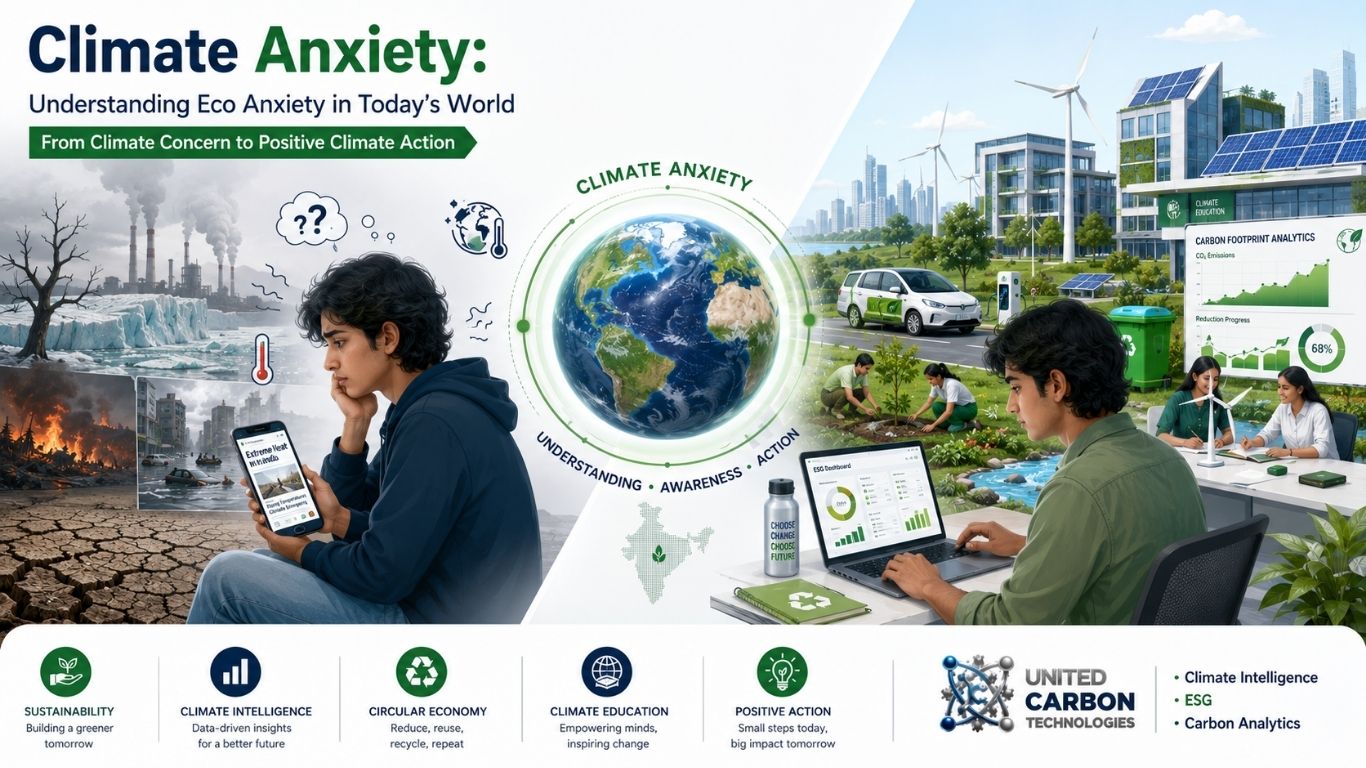
Climate change is no longer viewed as a distant environmental issue. Rising temperatures, extreme weather events, wildfires, floods, water shortages, and biodiversity loss are becoming more visible across the world, including India.
As awareness grows, so do emotional responses. Students, professionals, parents, researchers, and business leaders are increasingly concerned about how climate change may affect their future, careers, health, communities, and quality of life.
While these feelings are natural, understanding climate anxiety can help people respond in healthier and more constructive ways.
Did you know?
Psychologists increasingly recognize climate anxiety as a normal emotional response to environmental uncertainty rather than a medical disorder. Many experts believe awareness combined with positive action can improve resilience.
What Causes Climate Anxiety?
Climate anxiety develops from a combination of environmental awareness, uncertainty, and concern about future risks. Unlike everyday stress, it is often linked to events that feel global and difficult for one individual to control.
- Increasing news about climate change
- Extreme weather events
- Floods, droughts, and heatwaves
- Loss of biodiversity and wildlife
- Air pollution and environmental degradation
- Concerns about future generations
- Uncertainty about government and global action
Common Signs of Eco Anxiety
People experience climate anxiety differently. Some may simply feel concerned, while others may find environmental news emotionally overwhelming.
- Persistent worry about climate change
- Feeling helpless about environmental problems
- Fear about the future
- Difficulty concentrating after climate-related news
- Feelings of sadness or frustration
- Concern for children's future
- Overthinking environmental issues
Who Experiences Climate Anxiety?
Climate anxiety can affect people of all ages, but research suggests it is particularly common among younger generations who expect to live with the long-term impacts of climate change.
- Students
- Young professionals
- Parents
- Environmental professionals
- Scientists and researchers
- Farmers and climate-dependent communities
- People living in disaster-prone regions
Understanding climate science and focusing on practical sustainability actions can transform anxiety into informed decision-making and positive environmental impact.
Climate intelligence platforms can help organizations monitor environmental data, measure emissions, support ESG reporting, and make informed sustainability decisions.
How Climate Anxiety Affects Society
Climate anxiety extends beyond individual emotions and increasingly influences society, education, workplaces, and public conversations about sustainability. As awareness grows, organizations are also recognizing the importance of supporting employees and communities facing climate-related concerns.
- Greater public demand for climate action
- Growing interest in sustainability careers
- Changes in consumer purchasing decisions
- Support for environmentally responsible businesses
- Increased community participation in conservation
- Higher expectations for corporate ESG performance
Climate Anxiety Among Young People
Young people are often at the center of climate conversations because they will experience many of the long-term impacts of climate change throughout their lives. This has contributed to increased concern about future careers, health, biodiversity, and quality of life.
Many students are responding by learning about sustainability, environmental science, renewable energy, ESG, climate technology, and green innovation—turning concern into meaningful action.
Healthy Ways to Manage Eco Anxiety
Experts suggest that climate anxiety becomes more manageable when people balance awareness with practical action. Small, positive steps often provide a greater sense of purpose and control.
- Learn climate science from reliable sources
- Reduce your personal environmental impact
- Participate in community sustainability initiatives
- Spend time in nature
- Focus on solutions instead of constant negative news
- Talk openly with family, friends, or support networks
- Support organizations working on climate solutions
Turning Climate Concern into Climate Action
Many of today's sustainability professionals, climate entrepreneurs, researchers, and innovators began their journeys because they cared deeply about environmental challenges.
Climate anxiety can become a powerful motivation for learning new skills, supporting sustainable businesses, improving resource efficiency, reducing emissions, and contributing to climate solutions that benefit society.
The Role of Climate Education
Education plays an important role in reducing fear and uncertainty. Understanding how climate systems work, how emissions are measured, and how businesses and governments respond to environmental challenges helps replace misinformation with knowledge.
Climate literacy empowers individuals to make informed decisions while encouraging innovation, collaboration, and long-term sustainability.
Building Climate Knowledge for the Future
United Carbon Technologies is building India's Climate Intelligence ecosystem through sustainability education, ESG learning, carbon accounting tools, climate analytics, and environmental technology designed to help individuals and businesses make informed decisions.
Related Reads
- How AI Is Changing Climate Intelligence
- Future of Sustainability Careers in India
- Renewable Energy Careers in India
- What Is Climate Intelligence in Business?
- How Climate Data Helps Businesses Make Decisions
- How Plastic Pollution Contributes to Climate Change
- What Is Greenwashing?
- Life Cycle Assessment (LCA): A Beginner Guide
Climate Anxiety in India
India is increasingly experiencing the effects of climate change through rising temperatures, extreme rainfall, droughts, heatwaves, and changing weather patterns. These events have made climate awareness more relevant for students, professionals, businesses, policymakers, and local communities.
As India continues its transition toward sustainable development, improving climate education and encouraging practical environmental action can help build resilience while reducing unnecessary fear about the future.
- Climate anxiety is growing as awareness of climate change increases.
- Eco anxiety affects people of all ages, especially younger generations.
- Knowledge and practical action can help reduce feelings of helplessness.
- Climate education improves resilience and informed decision-making.
- Positive sustainability actions can transform concern into meaningful impact.
Frequently Asked Questions
What is climate anxiety?
Climate anxiety, also called eco anxiety, is the emotional stress, worry, or concern people experience about climate change, environmental degradation, and the future of the planet.
Is climate anxiety a medical condition?
Climate anxiety itself is not generally considered a medical diagnosis. It is widely recognized as a natural emotional response to growing awareness of environmental challenges. However, if these feelings become overwhelming or interfere with daily life, professional mental health support may be beneficial.
Who is most affected by eco anxiety?
Anyone can experience eco anxiety, but it is especially common among young people, students, parents, environmental professionals, researchers, and individuals living in regions affected by climate-related disasters.
How can I reduce climate anxiety?
Learning from credible sources, limiting exposure to distressing news, participating in environmental activities, supporting sustainability initiatives, and focusing on practical climate solutions can help reduce feelings of anxiety.
Can climate anxiety lead to positive action?
Yes. Many people transform climate concern into meaningful action by adopting sustainable lifestyles, supporting environmental initiatives, learning new green skills, pursuing sustainability careers, and encouraging climate-positive decisions in their communities and workplaces.
Build Your Climate Intelligence
Explore climate science, ESG, sustainability, carbon accounting, renewable energy, and climate technology through practical, beginner-friendly learning resources.
Join thousands of readers preparing for a more sustainable future through knowledge and informed action.