

How Rainwater Harvesting Supports Climate Resilience
By United Carbon Technologies | Climate Knowledge Hub India
Join readers exploring climate resilience, water conservation, ESG, sustainability, and climate intelligence.
Climate change is making rainfall patterns increasingly unpredictable. While some regions experience severe droughts, others face intense rainfall and flooding. Rainwater harvesting offers a practical solution that helps communities, businesses, and households adapt to these changing conditions while improving long-term water security.
How does rainwater harvesting support climate resilience?
Rainwater harvesting supports climate resilience by capturing and storing rainwater for future use, reducing dependence on groundwater, lowering flood risks, improving drought preparedness, and strengthening sustainable water management.
Water is one of the resources most affected by climate change. Rising temperatures, changing rainfall patterns, population growth, and urbanization are placing increasing pressure on freshwater supplies worldwide.
Rainwater harvesting is an age-old practice that is becoming increasingly relevant in today's climate. By collecting rainwater from rooftops and other surfaces, communities can reduce water shortages while improving resilience against climate-related risks.
From homes and schools to industries and commercial buildings, rainwater harvesting is now recognized as an important component of sustainable development and climate adaptation strategies.
Did you know?
A significant portion of annual rainfall often flows away as runoff. Proper rainwater harvesting systems can capture and store this valuable resource, reducing pressure on municipal water supplies and groundwater resources.
What Is Rainwater Harvesting?
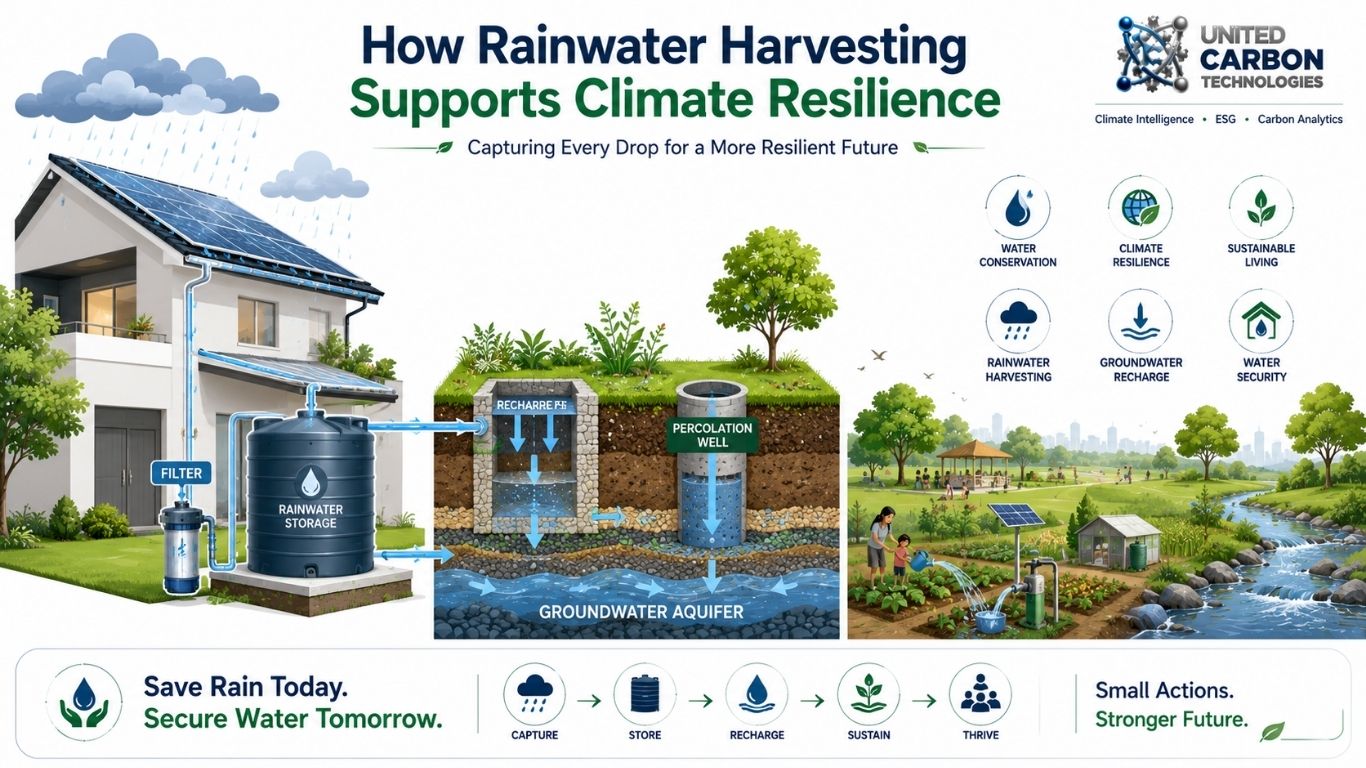
Rainwater harvesting is the process of collecting, filtering, storing, or directing rainwater for future use. Depending on the system design, harvested rainwater may be used for irrigation, landscaping, industrial processes, groundwater recharge, or non-potable household applications.
Modern systems combine storage tanks, filtration units, drainage networks, and recharge structures to maximize water conservation while minimizing wastage.
Climate Change Is Increasing Water Challenges
Climate change affects the natural water cycle in several ways, making water management more challenging for communities and businesses.
- More frequent droughts
- Intense rainfall events
- Urban flooding
- Declining groundwater levels
- Water supply uncertainty
- Growing demand for freshwater resources
Rainwater harvesting helps reduce these risks by improving local water availability and increasing resilience during both dry and wet seasons.
How Rainwater Harvesting Builds Climate Resilience
- Stores water during rainy seasons for future use
- Reduces dependence on groundwater extraction
- Supports drought preparedness
- Helps reduce urban flooding
- Improves groundwater recharge
- Strengthens local water security
- Supports sustainable agriculture
- Reduces pressure on public water infrastructure
Simple solutions like rainwater harvesting can help communities and businesses adapt to climate change while protecting valuable water resources.
Climate resilience starts with understanding environmental risks. United Carbon Technologies helps organizations strengthen ESG readiness, climate intelligence, and sustainability strategies for a changing world.
Environmental Benefits of Rainwater Harvesting
Rainwater harvesting offers multiple environmental benefits beyond water conservation. By reducing runoff and improving groundwater recharge, these systems help ecosystems become more resilient to climate change.
- Conserves freshwater resources
- Reduces soil erosion
- Minimizes stormwater runoff
- Supports groundwater recharge
- Protects local rivers and lakes
- Improves urban water sustainability
- Reduces pressure on reservoirs
Benefits for Homes and Communities
Households and residential communities can benefit significantly from harvesting rainwater, especially in areas that experience seasonal rainfall or water shortages.
- Lower dependence on municipal water
- Reduced water bills
- Reliable backup water supply
- Improved water availability during droughts
- Supports gardens and landscaping
- Encourages responsible water use
How Businesses Benefit from Rainwater Harvesting
Businesses are increasingly incorporating rainwater harvesting into sustainability programs as part of broader ESG and climate resilience strategies.
- Reduce operational water consumption
- Support ESG and sustainability goals
- Improve climate resilience planning
- Lower long-term water costs
- Enhance environmental reputation
- Strengthen resource efficiency initiatives
- Improve compliance with sustainability policies
Rainwater Harvesting and Climate Adaptation
Climate adaptation focuses on helping societies prepare for changing environmental conditions. Rainwater harvesting is considered one of the most practical adaptation measures because it directly addresses increasing water stress caused by climate change.
Combined with efficient irrigation, water recycling, green infrastructure, and climate-smart urban planning, rainwater harvesting contributes to long-term environmental resilience.
Simple Rainwater Harvesting Systems
Rainwater harvesting systems can be designed for homes, schools, offices, industries, and public infrastructure. Common components include:
- Roof catchment areas
- Gutters and downpipes
- First-flush diverters
- Water filters
- Storage tanks
- Groundwater recharge pits
- Percolation wells
- Distribution systems
The appropriate system depends on rainfall patterns, available space, water demand, and local regulations.
The Future of Water Security
As climate change continues to influence rainfall patterns and water availability, decentralized water conservation solutions will become increasingly important. Rainwater harvesting complements modern climate resilience strategies by improving local water security while reducing dependence on stressed freshwater resources.
Governments, businesses, educational institutions, and communities are expected to invest more heavily in sustainable water management as part of broader climate adaptation and resilience planning.
Climate Intelligence for Sustainable Resource Management
Climate resilience extends beyond carbon management. United Carbon Technologies is building climate intelligence solutions that help organizations understand environmental data, sustainability performance, ESG reporting, and climate-related risks, enabling smarter decisions for a resilient future.
Related Reads
- Climate Anxiety: Understanding Eco Anxiety in Today's World
- How Plastic Pollution Contributes to Climate Change
- Renewable Energy Certificates (RECs) Explained
- What Is Life Cycle Assessment (LCA)? A Beginner Guide
- How Climate Data Helps Businesses Make Decisions
- How AI Is Changing Climate Intelligence
- ESG Reporting Checklist for Businesses
- Complete Guide to Carbon Footprint in India
Rainwater Harvesting in India
India receives substantial annual rainfall, yet many regions experience recurring water shortages because rainwater is not effectively captured or stored. Rapid urbanization, groundwater depletion, and changing rainfall patterns have increased the importance of rainwater harvesting across cities and rural communities.
Many Indian states now encourage or require rainwater harvesting in residential, commercial, and institutional buildings. These systems help improve groundwater recharge, reduce urban flooding, strengthen water security, and contribute to national climate adaptation efforts.
- Rainwater harvesting captures and stores rainfall for future use.
- It improves climate resilience by reducing drought and flood risks.
- Groundwater recharge supports long-term water availability.
- Homes, businesses, and communities all benefit from water conservation.
- Rainwater harvesting is a practical climate adaptation strategy for India.
Frequently Asked Questions
What is rainwater harvesting?
Rainwater harvesting is the process of collecting, storing, and using rainwater for future purposes such as irrigation, groundwater recharge, and non-potable domestic or industrial use.
How does rainwater harvesting help climate resilience?
It increases water availability during droughts, reduces flood risks, improves groundwater recharge, and strengthens communities against changing rainfall patterns caused by climate change.
Can businesses benefit from rainwater harvesting?
Yes. Businesses can reduce water costs, improve operational resilience, strengthen ESG initiatives, and demonstrate responsible environmental management through rainwater harvesting systems.
Is rainwater harvesting important in India?
Yes. With increasing water stress, groundwater depletion, and climate variability, rainwater harvesting is becoming an essential water conservation strategy across India.
Can rainwater harvesting reduce urban flooding?
Yes. By capturing rainfall before it becomes surface runoff, rainwater harvesting systems help reduce pressure on drainage systems and lower the risk of localized flooding during heavy rainfall.
Build Climate Resilience Through Knowledge
Discover practical insights on climate resilience, water conservation, ESG, renewable energy, and sustainability that help individuals and businesses prepare for a changing climate.
Join readers exploring climate intelligence and sustainable solutions for a resilient future.
```