

What Is Sustainable Consumption? A Complete Guide for Everyday Living
By United Carbon Technologies | Climate Knowledge Hub India
Join thousands of readers learning about sustainability, carbon footprint, climate technology, ESG, Net Zero, and responsible living.
Sustainable consumption means using products, energy, water, and natural resources responsibly while minimizing waste and environmental impact. It helps individuals, businesses, and governments protect the planet, reduce carbon emissions, and ensure resources remain available for future generations.
What is sustainable consumption?
Sustainable consumption is the practice of using goods, services, energy, and natural resources efficiently while reducing waste, pollution, and greenhouse gas emissions. It encourages people and businesses to make responsible choices that meet today's needs without compromising the ability of future generations to meet theirs.
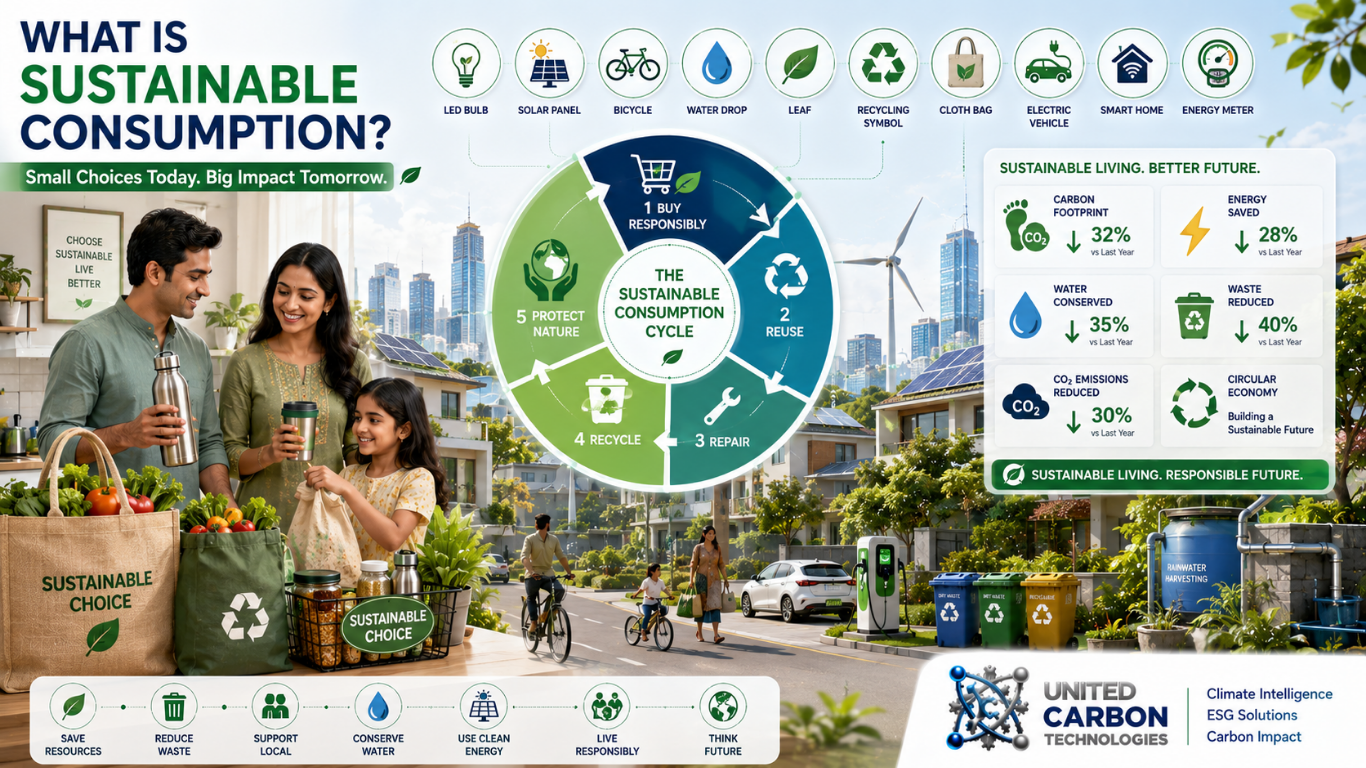
Every product we buy, every meal we eat, every kilometer we travel, and every unit of electricity we consume has an environmental impact. As populations grow and natural resources become increasingly limited, adopting sustainable consumption has become essential for creating a healthier planet and a more resilient economy.
Sustainable consumption is not about sacrificing comfort or avoiding modern lifestyles. Instead, it focuses on making smarter choices—buying only what we need, choosing durable products, reducing waste, conserving energy, supporting responsible businesses, and embracing practices that minimize our carbon footprint.
For India, sustainable consumption is particularly important. Rapid urbanization, rising energy demand, growing waste generation, and increasing climate risks make responsible resource use a key part of achieving national sustainability goals while supporting long-term economic growth.
The world's population consumes natural resources faster than the Earth can regenerate them. By adopting sustainable consumption habits, individuals and businesses can reduce waste, lower carbon emissions, conserve water and energy, and contribute to a more sustainable future.
What Does Sustainable Consumption Mean?
Sustainable consumption means meeting our daily needs while using fewer natural resources and generating less waste. It encourages thoughtful purchasing decisions, efficient use of energy and water, responsible waste management, and support for products and services that have lower environmental and social impacts.
Rather than focusing solely on consuming less, sustainable consumption emphasizes consuming better. This includes selecting energy-efficient appliances, reducing food waste, choosing reusable products, supporting environmentally responsible companies, and extending the lifespan of products through repair, reuse, and recycling.
Why Sustainable Consumption Matters
Our consumption choices influence climate change, biodiversity, pollution, and resource availability. Every purchase sends a signal to manufacturers about the products and practices consumers value. Sustainable consumption helps create demand for cleaner production, renewable energy, ethical supply chains, and environmentally responsible innovation.
- Reduces carbon footprint and greenhouse gas emissions.
- Conserves water, energy, forests, and natural resources.
- Minimizes waste sent to landfills.
- Supports the circular economy.
- Encourages responsible manufacturing.
- Protects biodiversity and ecosystems.
- Promotes long-term economic resilience.
- Improves quality of life for future generations.
Sustainable Consumption vs Overconsumption
Overconsumption occurs when people use more resources than necessary, leading to excessive waste, pollution, and depletion of natural resources. Sustainable consumption takes the opposite approach by encouraging efficient resource use, conscious purchasing, product longevity, and responsible disposal.
Choosing quality over quantity, repairing instead of replacing, reducing unnecessary purchases, and recycling materials are practical examples of sustainable consumption that benefit both individuals and the environment.
Core Principles of Sustainable Consumption
Sustainable consumption is guided by a set of practical principles that help individuals, businesses, and communities use resources more responsibly. These principles encourage reducing environmental impact while maintaining economic growth and improving quality of life.
Instead of focusing only on buying "green" products, sustainable consumption considers the entire lifecycle of a product—from raw material extraction and manufacturing to transportation, usage, and end-of-life disposal.
The Five Core Principles
- Use Only What You Need: Avoid unnecessary purchases and reduce overconsumption.
- Choose Sustainable Products: Buy products that are durable, repairable, recyclable, and made using responsible practices.
- Reduce Waste: Minimize waste generation by reusing, repairing, and recycling materials.
- Improve Resource Efficiency: Use energy, water, and natural resources wisely.
- Support Responsible Businesses: Purchase from companies committed to sustainability, ethical sourcing, and ESG practices.
Together, these principles help reduce environmental pressure while promoting a healthier economy and society.
Understanding your carbon footprint is the first step toward sustainable living. Small daily improvements—such as saving electricity, reducing waste, and making informed purchasing decisions—can collectively create a significant positive environmental impact.
Sustainable Consumption in Everyday Life
Many people believe sustainable living requires major lifestyle changes. In reality, it begins with simple daily decisions. Whether at home, at work, or while shopping, every choice affects resource consumption and carbon emissions.
By making conscious decisions consistently, individuals can significantly reduce their environmental footprint while often saving money over the long term.
At Home
- Switch off unused lights and appliances.
- Use LED lighting.
- Choose energy-efficient appliances.
- Repair household items instead of replacing them.
- Reduce food waste.
- Separate recyclable waste.
Food Choices
- Buy seasonal fruits and vegetables.
- Support local farmers and businesses.
- Plan meals to reduce food waste.
- Avoid excessive food packaging.
- Carry reusable shopping bags and containers.
Transportation
- Walk or cycle whenever possible.
- Use public transportation.
- Carpool for daily commuting.
- Choose electric vehicles where practical.
- Reduce unnecessary travel.
Water Conservation
- Fix leaking taps promptly.
- Install water-efficient fixtures.
- Harvest rainwater where feasible.
- Reuse water for gardening and cleaning.
- Avoid unnecessary water wastage.
Energy Conservation
- Use natural lighting during the day.
- Set air conditioners at energy-efficient temperatures.
- Switch off standby electronics.
- Install rooftop solar panels if possible.
- Monitor monthly electricity consumption.
Making Sustainable Shopping Decisions
Every purchase has an environmental footprint. From extracting raw materials to manufacturing, transportation, packaging, and disposal, products consume resources throughout their lifecycle. Sustainable shopping helps reduce this impact by encouraging thoughtful purchasing decisions.
Choose Products That:
- Have minimal packaging.
- Are made from recycled materials.
- Last longer and are easy to repair.
- Can be reused or recycled.
- Are produced using ethical and sustainable practices.
- Use less energy during operation.
Instead of asking "Is this product cheap?", sustainable consumers ask "How long will this product last?" and "What environmental impact does it have?"
The Circular Economy and Sustainable Consumption
Traditional economies often follow a "take, make, use, dispose" model that generates large amounts of waste. Sustainable consumption supports the circular economy, where products and materials remain in use for as long as possible through reuse, repair, refurbishment, remanufacturing, and recycling.
A circular economy reduces pressure on natural resources, lowers greenhouse gas emissions, minimizes landfill waste, and creates new economic opportunities through resource efficiency and innovation.
The 10R Framework for Sustainable Consumption
One of the most effective approaches to sustainable living is the 10R Framework, which encourages responsible consumption throughout a product's lifecycle.
- Refuse unnecessary products.
- Rethink consumption habits.
- Reduce resource use.
- Reuse products whenever possible.
- Repair instead of replacing.
- Refurbish old products.
- Remanufacture components into new products.
- Repurpose items for different uses.
- Recycle materials responsibly.
- Recover energy and resources from unavoidable waste.
Following these principles helps individuals and businesses reduce waste, conserve valuable resources, lower carbon emissions, and support a more sustainable and circular economy.
Sustainable Consumption in India
India has long embraced the idea of living with limited resources. Traditional practices such as repairing household items, reusing containers, conserving water, and minimizing waste have been part of Indian culture for generations. Today, these practices are being recognized globally as examples of sustainable consumption.
However, rapid urbanization, rising incomes, growing consumerism, and expanding cities have significantly increased the demand for electricity, transportation, packaged goods, and natural resources. As India's economy continues to grow, adopting sustainable consumption practices will be essential for balancing development with environmental protection.
Key Sustainability Challenges Facing India
- Growing municipal solid waste.
- Increasing plastic pollution.
- Higher electricity demand.
- Water scarcity in many regions.
- Rapid urbanization.
- Air pollution in major cities.
- Climate change impacts on agriculture.
- Rising greenhouse gas emissions.
Addressing these challenges requires collective action from individuals, businesses, governments, and communities. Sustainable consumption plays a central role in achieving India's climate goals while supporting economic development.
How Businesses Practice Sustainable Consumption
Sustainable consumption is not limited to individuals. Businesses also influence resource consumption through manufacturing, procurement, logistics, packaging, energy use, and product design. Companies that embrace sustainable consumption often improve operational efficiency while reducing costs and environmental impacts.
Examples of Sustainable Business Practices
- Improving energy efficiency across facilities.
- Reducing water consumption.
- Using renewable energy.
- Designing recyclable products.
- Reducing packaging materials.
- Eliminating single-use plastics.
- Sourcing raw materials responsibly.
- Implementing circular economy initiatives.
- Reducing supply chain emissions.
- Monitoring sustainability KPIs.
Many organizations now integrate sustainable consumption into their Environmental, Social, and Governance (ESG) strategies, helping them improve resilience, strengthen stakeholder trust, and prepare for future regulations.
Building the Future of Climate Intelligence
At United Carbon Technologies, we are developing ACIS (Advanced Carbon Intelligence System)—an AI-powered climate intelligence platform designed to help organizations measure carbon emissions, monitor sustainability KPIs, simplify ESG reporting, and support data-driven climate action.
Future ACIS modules will enable businesses to:
- Measure organizational carbon footprints.
- Track Scope 1, Scope 2 & Scope 3 emissions.
- Monitor energy and resource consumption.
- Generate ESG and sustainability dashboards.
- Support BRSR and ESG reporting.
- Use AI-driven insights to improve sustainability performance.
As sustainability reporting evolves from annual disclosures to continuous climate intelligence, platforms like ACIS will help organizations make faster, smarter, and more sustainable decisions.
The Future of Sustainable Consumption
Technology is transforming how individuals and businesses consume resources. Artificial Intelligence, Internet of Things (IoT), smart homes, digital product passports, carbon tracking applications, and climate intelligence platforms are making sustainable decisions easier than ever before.
Consumers are increasingly choosing products that are transparent, ethically produced, recyclable, and energy efficient. Businesses are adopting AI-powered sustainability platforms to optimize resource use, reduce emissions, and improve operational efficiency.
Emerging Trends
- AI-powered sustainability recommendations.
- Smart energy management systems.
- Digital carbon footprint tracking.
- Circular product design.
- Green supply chains.
- Eco-labels and product transparency.
- Climate intelligence platforms.
- Net Zero-focused business strategies.
Sustainable consumption is no longer simply about protecting the environment—it is becoming a foundation for economic resilience, innovation, and long-term competitiveness in a low-carbon world.
Continue Learning: ESG, Carbon & Sustainability
Continue exploring India's growing climate intelligence ecosystem with these beginner-friendly guides on ESG reporting, carbon accounting, Net Zero, sustainability, and climate technology.
- What Is ESG? A Complete Beginner Guide
- What Is Carbon Footprint in India?
- What Are Scope 1, Scope 2 & Scope 3 Emissions?
- What Is Carbon Accounting?
- What Are Carbon Credits in India?
- Carbon Markets in India Explained
- What Is Net Zero? Complete Guide
- India's Carbon Intelligence Platform Explained
- How Businesses Measure Operational Carbon
- How Businesses Collect Scope 3 Data
- Sustainability KPIs Every Company Should Track
- Carbon Reporting Software: What Businesses Should Look For
- Climate Technologies That Can Help Save the Planet
- How Renewable Energy Reduces Carbon Emissions
- Explore All ESG & Sustainability Articles
- Sustainable consumption means using resources responsibly while minimizing environmental impact.
- It helps reduce carbon emissions, conserve natural resources, and minimize waste.
- Simple lifestyle changes can significantly lower your personal carbon footprint.
- Businesses adopt sustainable consumption through efficient resource management and circular economy practices.
- India's future development depends on balancing economic growth with responsible resource use.
- Technology, AI, and climate intelligence platforms are making sustainable living easier than ever.
- Every sustainable choice—no matter how small—contributes to a healthier planet and a more resilient future.
Frequently Asked Questions (FAQs)
1. What is sustainable consumption?
Sustainable consumption is the responsible use of products, energy, water, and natural resources in ways that reduce environmental impact while meeting present needs without compromising the ability of future generations to meet theirs.
2. Why is sustainable consumption important?
Sustainable consumption helps reduce carbon emissions, conserve natural resources, minimize waste, protect biodiversity, and support long-term economic and environmental sustainability.
3. How does sustainable consumption reduce carbon footprint?
Choosing energy-efficient appliances, reducing waste, using public transport, buying durable products, conserving electricity, and supporting renewable energy all help lower greenhouse gas emissions and reduce your overall carbon footprint.
4. What are examples of sustainable consumption at home?
Simple examples include using LED lighting, reducing food waste, conserving water, recycling household waste, carrying reusable bags, purchasing energy-efficient appliances, and switching off unused electrical devices.
5. What is the difference between sustainable consumption and sustainable production?
Sustainable consumption focuses on how individuals and organizations use products and resources responsibly, while sustainable production emphasizes manufacturing goods using environmentally friendly processes and efficient resource management.
6. What is the circular economy?
The circular economy is an economic model that keeps products and materials in use for as long as possible through repairing, reusing, refurbishing, remanufacturing, and recycling, thereby reducing waste and conserving resources.
7. How can businesses promote sustainable consumption?
Businesses can promote sustainable consumption by improving energy efficiency, reducing waste, designing recyclable products, using renewable energy, implementing circular economy practices, and providing transparent sustainability information.
8. How does sustainable consumption support India's climate goals?
Responsible resource use helps India reduce greenhouse gas emissions, improve energy efficiency, conserve water, minimize waste, and move closer to achieving its Net Zero and sustainable development commitments.
9. Can technology support sustainable consumption?
Yes. Technologies such as Artificial Intelligence (AI), Internet of Things (IoT), smart energy systems, carbon footprint calculators, and climate intelligence platforms help individuals and businesses monitor resource use and make more sustainable decisions.
10. What is the first step toward sustainable consumption?
The first step is becoming aware of your environmental impact. Small actions like reducing unnecessary purchases, saving electricity, minimizing waste, and choosing sustainable products can create meaningful long-term environmental benefits.
Start Your Climate Knowledge Journey Today
Climate change is one of the defining challenges of our generation—but understanding it is the first step toward solving it. Whether you're a student, professional, business owner, sustainability practitioner, investor, or simply someone who wants to make a difference, building climate knowledge empowers better decisions for yourself, your organization, and the planet.
Join thousands of learners exploring practical topics such as ESG, BRSR, carbon accounting, carbon footprint, sustainable living, circular economy, Net Zero, renewable energy, climate technology, and climate intelligence through India's growing Climate Knowledge Hub.
The transition to a low-carbon economy is creating new opportunities for businesses, professionals, entrepreneurs, and future sustainability leaders. The knowledge you build today can help shape smarter decisions, stronger careers, and a more sustainable future.
Learn Today. Live Sustainably. Lead Tomorrow.
✔ Free Climate Learning Resources | ✔ Weekly Sustainability Insights | ✔ Early Access to ACIS Climate Intelligence Platform | ✔ Join India's Next Generation of Climate Leaders